In the final two episodes of Season 2, Ragnar’s hopes of securing land in Wessex collide with King Horik’s hunger for revenge. As the Vikings advance towards King Ecbert’s villa, they walk straight into a carefully prepared Saxon response. The resulting battle is brutal, leaving Rollo gravely wounded and forcing Ragnar to reconsider what victory should really mean. While Horik still dreams of plunder and vengeance, Ragnar begins to see a different future: Farmland for his people, an alliance with Ecbert and the possibility of using Viking strength in the struggle for Mercia. Back in Kattegat, however, the most dangerous battle is no longer being fought with Saxons. Horik becomes convinced that Ragnar has grown too powerful and secretly prepares to destroy him and his entire family. Floki appears to turn against Ragnar, Siggy is drawn into Horik’s plans and every friendship suddenly becomes suspect. But beneath the deception, Ragnar is quietly testing the loyalty of those closest to him. What follows is a tense and violent reckoning in which betrayal is answered with betrayal, old alliances are shattered and Ragnar’s rise reaches a decisive new stage.
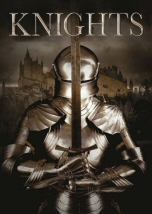
From ordinary mounted warriors to the legendary figures who came to embody courage, honour and chivalry, medieval knights dominated European life for centuries. Through dramatic reconstructions, historical experiments and surviving evidence, this series reveals the harsh reality behind the romantic image: brutal battles and personal feuds, swordsmanship and tournaments, the construction and defense of castles, courtly love and the strict codes of honour that could turn an insult into a fight to the death. It also follows knights to the Holy Land, where crusaders risked everything in pursuit of glory, wealth and salvation, while figures such as John of Bohemia and Joan of Arc show how courage and legend became inseparable from the medieval warrior. Presented here as all three episodes consecutively in a single video, the complete story also reveals how the world that created the knight eventually destroyed him. The rise of robber knights such as Götz von Berlichingen, the spread of mercenary warfare and increasingly spectacular tournaments mark the final years of an old order, while longbows, cannon, artillery and massed infantry transform the battlefield forever. Emperor Maximilian, celebrated as the “Last of the Knights,” embraces these new weapons even as he glorifies the traditions of chivalry. By the end, the armoured horseman who had ruled castles, battlefields and entire communities for centuries has become obsolete in war—but immortal in legend.
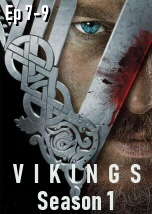
In the final three episodes of Season 1, Ragnar's ambition drives him toward his boldest gamble yet as a daring raid strikes at the heart of one of England's most powerful kingdoms. While victory promises unimaginable wealth and lasting fame, every decision carries devastating consequences, forcing alliances to shift and loyalties to be tested in ways no one expects. As the Vikings make their sacred pilgrimage to Uppsala, faith, sacrifice, and destiny collide in an unforgettable journey that changes the lives of Ragnar, Lagertha, and Athelstan forever. Political intrigue soon follows when Ragnar is sent to negotiate with the dangerous Jarl Borg, where diplomacy hangs by a thread and a single mistake could ignite a brutal conflict. Filled with epic battles, emotional turning points, and unforgettable characters, these episodes deliver a gripping conclusion that leaves you eager for the next season.
Join us on an unforgettable voyage through one of the most desolate periods in human history as the rulers, conflicts, and cataclysmic societal breakdown of Early Middle Ages are brought to light. At its height in the second century A.D., the Roman Empire was the beacon of learning, trade, power and prosperity in the western world. But the once-powerful Rome--rotten to the core by the fifth century--lay open to barbarian warriors who came in wave after wave of invasion, slaughtering, stealing, and ultimately, settling. As chaos replaced culture, Europe was beset by famine, plague, persecutions, and a state of war that was so persistent it was only rarely interrupted by peace. The documentary profiles those who battled to shape the future, from the warlords whose armies threatened to case the demise of European society, like Alaric, Charles the Hammer, and Clovis; to the men and women who valiantly tended the flames of justice, knowledge, and innovation including Charlemagne, St. Benedict, Empress Theodora, and other brave souls who fought for peace and enlightenment. It was in the shadows of this turbulent millennium that the seeds of modern civilization were sown.
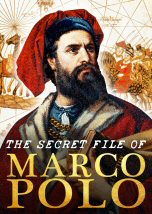
Did Marco Polo, the most illustrious traveller in history, ever go to China? To this day doubt lingers, among some scholars, as to whether the Venetian’s book is a personal account of China’s 13th-century Middle Kingdom and its marvels. Scientists, western scholars and Chinese historians have uncovered striking new evidence that the son of Venetian merchants actually had been to China. Explore the mysteries of the historical figure in this featured documentary.
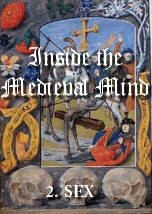
Leading authority on the Middle Ages, Professor Robert Bartlett, presents a series which examines the way we thought during medieval times. In the second episode, Bartlett unearths remarkable evidence of the complex passions of Medieval men and women. The Church preached hatred of the flesh, promoted the cult of virginity and condemned woman as the sinful heir to Eve. Yet this was the era that gave birth to the idea of romantic love.









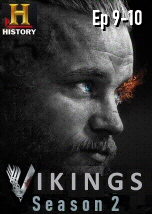




Back in Kattegat, however, the most dangerous battle is no longer being fought with Saxons. Horik becomes convinced that Ragnar has grown too powerful and secretly prepares to destroy him and his entire family. Floki appears to turn against Ragnar, Siggy is drawn into Horik’s plans and every friendship suddenly becomes suspect. But beneath the deception, Ragnar is quietly testing the loyalty of those closest to him. What follows is a tense and violent reckoning in which betrayal is answered with betrayal, old alliances are shattered and Ragnar’s rise reaches a decisive new stage.