The Moon Landing celebrates the historic 50th anniversary of Apollo 11, in a fresh and distinctive style. This inspiring documentary subverts usual conventions by beginning with the momentous event, exploring the preceding dramatic sixty minutes in granular detail. Packed with surprising details which reveal a whole new perspective on the story of how humans landed on the moon, this documentary rewinds one hour before Neil Armstrong's famous footstep to reveal a whole untold story, hidden in the forensic moment-by-moment details driven by powerful footage from the time and authentic audio recordings from the capsule and the command module and mission control in Houston. In the last 60 minutes, the Apollo mission could fall apart. Without dazzling on-the-spot ingenuity, a 240,000-mile helpline to Houston, and almost unnatural abilities to remain calm under incredible pressure, the first step onto another world might not happen at all.
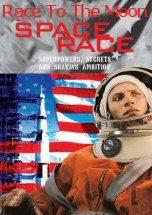
During 1964-1969 both sides now plan to put a man on the Moon - while the Soviets struggle, the Americans pull ahead in the space race with Project Gemini, but then suffer a disaster with the Apollo 1 fire. The Soviet space programme suffers its own blows: Sergei Korolev dies when his heart fails during an operation, Soyuz 1 crashes and kills cosmonaut Vladimir Komarov, and their planned moon rocket, the N-1 rocket, fails to successfully launch. In America, von Braun has difficulties with the Saturn V, but they are overcome, and the rocket successfully launches the first manned lunar mission, Apollo 8, and the first manned lunar landing, Apollo 11.
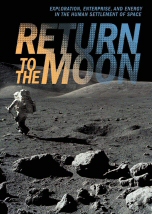
The Apollo equipment has sat abandoned on the lunar surface for over 40 years. Now there is a renewed excitement and drive to return to the moon. This time, not to just plant a flag, but to colonize. How would we accomplish this? And why would we do it? The race is on to colonize the Moon, to uncover its hidden riches and discover if humanity can really survive on another world. The Moon is our gateway to our solar system, it's the stepping stone we have to become a multi-planetary species.
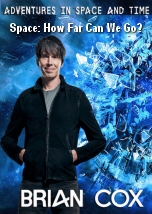
Professor Brian Cox tackles some of the most challenging and intriguing questions facing science. He looks back on a decade of discovery and towards the next space frontier. Brian believes we are at the start of a new age of space travel, where space flight is on the verge of becoming routine. In this episode, he explores the latest science and takes a new look at his old films and asks: how far can we go in our exploration of the cosmos?
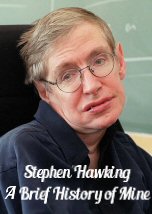
This new feature-length biographical film tells the extraordinary and dramatic story of the planet's most famous living scientist, told for the first time in his own words and by those closest to him. Made with unique access to his private life, this is an intimate and moving journey into Stephen Hawking's past and present. Interviewees include Stephen Hawking's sister Mary, his ex-wife Jane, carers and students, as well as colleagues such as Roger Penrose, plus Apollo astronaut Buzz Aldrin, actors Benedict Cumberbatch and Jim Carrey, and Sir Richard Branson This inspirational portrait of an iconic figure relates Hawking's incredible personal journey from boyhood underachiever to scientific genius and multi-million-selling author. And it charts how he overcame being diagnosed with motor neurone disease - and being given just two years to live - to make amazing scientific discoveries and become a symbol of triumph over adversity. Born exactly 300 years after the death of Galileo, Hawking grew up in a family some regarded as eccentric. Always asking questions, he was nicknamed 'Einstein' at school. Hawking blossomed at Oxford, although he only spent an hour a day studying. He noticed that he was becoming clumsy and fell over for no apparent reason. He was diagnosed with motor neurone disease, but nevertheless started a family and embarked on his academic career, finding himself at the heart of a searing scientific debate about the origins of the universe. And as he lost the use of his body, Hawking had to find new ways to think. He went on to write the huge bestseller A Brief History of Time, and the film reveals the high and lows of his resulting fame and fortune.
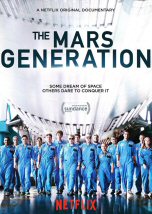
This history of NASA includes a look at a group of youths attending a space camp, whose enthusiasm could be the key to launching an expedition to Mars. 'Ever since we first began exploring space, every generation has had a craft to transport their dreams into space. We have seen the Apollo Era, the Shuttle Era, and now we are ready to see the Orion Era. My generation, the Mars Generation, will make it happen. It's our time, we are ready.' - Astronaut Abby.











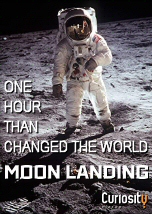


Packed with surprising details which reveal a whole new perspective on the story of how humans landed on the moon, this documentary rewinds one hour before Neil Armstrong's famous footstep to reveal a whole untold story, hidden in the forensic moment-by-moment details driven by powerful footage from the time and authentic audio recordings from the capsule and the command module and mission control in Houston. In the last 60 minutes, the Apollo mission could fall apart. Without dazzling on-the-spot ingenuity, a 240,000-mile helpline to Houston, and almost unnatural abilities to remain calm under incredible pressure, the first step onto another world might not happen at all.