This remarkable science-history series investigates the blistering pace of human endeavour in space exploration, computing, energy, resources, Earth science and our understanding of the evolution of life itself. Across the last 50 years, humans have set a blistering pace and scientific discovery. We've crossed the boundaries of our solar system, made machines that can learn harnessed the power of the sun and built life from scratch. It's a period like no other in history, where human endeavour is changing everything: this is The Great Acceleration. As we race toward the future, we must examine the journey. In the first episode, Dr Shalin Naik explores the ambitious space shuttle mission that began in the '70s plus the future colonization of Mars. Over the past 50 years, space has become central to everything, from communications to entertainment to climate modelling. And as private enterprise enters space exploration, our understanding of the universe will only continue to expand. We will know if we can survive on other objects - the moon, maybe Mars, maybe even some of the moons of Jupiter and Saturn. Deep space is the last and infinite frontier. That's what we do as human beings. We explore, we learn, we make discoveries, from the moment we're born to the moment we die.
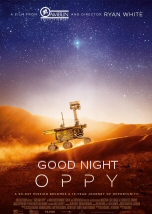
The film follows Opportunity, the Mars exploration rover launched in 2003, affectionately dubbed Oppy by her creators and scientists at NASA. Oppy was originally expected to live for only 90 days but she ultimately explored Mars for nearly 15 years. With access to archival and interview footage with scientists and engineers and re-creations of the rover's treks over the Martian landscape in search of water, we will explore her groundbreaking journey on Mars and the remarkable bond forged between a robot and her humans creators millions of miles away. The narrative interrogates the significance of Opportunity's endurance for the future of interstellar discovery.
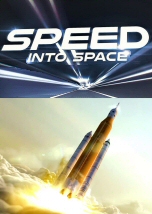
The most innovative area of human motion lies not on Earth, but with the exploration of space. Space is the most hostile environment we know. Navigating it involves crossing unprecedented distances. It's the greatest engineering challenge humanity has ever undertaken. Meet the pioneers who've dreamed of reaching other worlds, pushing the boundaries of space exploration, and the private space entrepreneurs jostling to offer the tantalizing prospect of cheap, frequent travel beyond the atmosphere into Earth orbit.
The Rosetta mission was a ground-breaking expedition to land on a comet for the first time, the 67P/Churyumov-Gerasimenko comet. The Rosetta mission tries to answer our most fundamental questions and to change our understanding of the cosmos forever. Special access reveals what this cutting-edge journey discovered and how these mysterious objects helped create life on Earth.
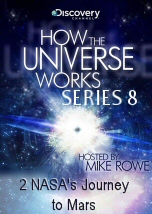
NASA is on a mission to send humans to Mars within just 15 years, but to reach this next frontier of space exploration, experts must discover new technology and cutting-edge science that protects astronauts from the Red Planet's deadliest killers.
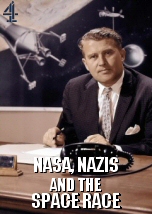
Against the backdrop of Cold War tensions and a global race for supremacy, this riveting film unveils a deeply unsettling chapter in space history. It reveals how the triumph of the 1969 Moon landing was made possible through the morally contentious recruitment of former Nazi scientists—most notably Wernher von Braun—who had engineered Germany’s V‑2 rockets during World War II through Operation Paperclip. As America navigated the ethical maze of enlisting men with dark pasts, these scientists became pivotal in crafting the mighty Saturn V rocket and ushering in the age of space exploration. This documentary invites viewers to confront the unspoken complexity behind progress: the collision of ambition, conscience, and the weight of history.

























In the first episode, Dr Shalin Naik explores the ambitious space shuttle mission that began in the '70s plus the future colonization of Mars. Over the past 50 years, space has become central to everything, from communications to entertainment to climate modelling. And as private enterprise enters space exploration, our understanding of the universe will only continue to expand. We will know if we can survive on other objects - the moon, maybe Mars, maybe even some of the moons of Jupiter and Saturn. Deep space is the last and infinite frontier. That's what we do as human beings. We explore, we learn, we make discoveries, from the moment we're born to the moment we die.