Stephen Fry embarks on a fascinating journey to discover the stories behind some of the world’s most fantastic beasts. Discover the magic and mystery behind humanity's timeless fascination with mythical creatures in this captivating documentary. Journey through history to uncover the origins of legendary beasts that have captured our imaginations for centuries. Why do these fantastical beings still enchant us in today's world of science and technology? This film reveals the hidden truths behind the myths, showing how real animals often inspired these legendary tales. Embark on an exhilarating adventure to uncover the secrets of beloved mythical creatures, from dragons and unicorns to the phoenix and the elusive Loch Ness Monster. Explore the labyrinthine corridors of the Natural History Museum, meet experts who shed light on ancient legends, and see how cutting-edge technology brings these creatures to life on the big screen. This documentary offers a mesmerizing blend of history, science, and fantasy, showing that the natural world holds wonders that rival even the most magical beasts. Don't miss this enchanting exploration that will leave you questioning what might still be out there, waiting to be discovered.
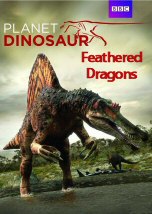
In a late Jurassic forest in what is now China, an Epidexipteryx escapes from a juvenile Sinraptor by climbing a tree. It finds a beetle grub in the tree bark, being shown to use its elongated fingers in a similar way to a modern day aye-aye. However, its prey is stolen by another, larger Epidexipteryx, and after a brief bout of posturing, the smaller individual goes to find more food. It drops a second grub to the forest floor, where the other Epidexipteryx retrieves it, only to be killed by the juvenile Sinraptor. The episode then cuts to a desert in late Cretaceous Mongolia, where a Saurornithoides is shown brooding a nest of eggs. When it leaves the nest, an Oviraptor raids it, fleeing when the troodontid returns. The Saurornithoides is suddenly attacked and eaten by a Gigantoraptor, which then heads to compete in a breeding ritual for mates. The males use their feathers for display, a brief fight between two erupting at one point, allowing the females to choose the best suitor. The episode finally cuts to an early Cretaceous forest in China, where a Xianglong is being hunted by a Microraptor, which uses its feathers to pursue the gliding lizard in the air. A Sinornithosaurus attacks it, and after a brief chase the Microraptor manages a lucky escape. The Sinornithosaurus, alongside two other members of its species is then shown hunting a Jeholosaurus and its three young. The group brings down the parent, the narrator explaining that their possibly venomous bite allowed them to tackle animals much larger than themselves. A montage is then shown of the feathered dinosaurs featured in the programme, with the narrator saying that Microraptor not only hints at how flight might have developed, but also that dinosaurs still live amongst us today, as birds.
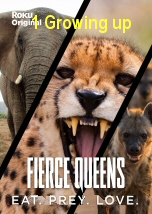
Reese Witherspoon hosts this nature series that explores the fabulous females of the animal kingdom. From ants to cheetahs, these ladies call the shots in their world and sit at the top of the social hierarchy earning them the title 'Fierce Queens'. In the first episode, Reese takes us on a journey with two teenage cheetah sisters, coming of age in the wild and learning how to work together to survive.
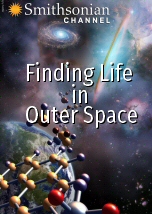
Over billions of years, planet Earth has become home to an amazing interdependent ecosystem, containing a dizzying variety of animals and plants. But how did life here begin? And does it exist anywhere outside of our solar system? We uncover the secrets of our world by tracking the evolution of the cosmos itself, from the Big Bang onwards. Follow scientists responsible for some of the major breakthroughs in understanding the origins of life and witness how their discoveries are fundamentally changing the way we perceive the universe.
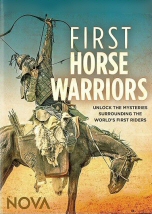
Horses. Powerful, graceful, and thunderously fast. No animal has made a greater impact on society or given humans more freedom and mobility. In a spectacular adventure, the film unlocks the mystery of the first horse warriors on the vast, grassy plains of Kazakhstan, where horses still roam free, and nomadic herders follow their traditional way of life. Investigating clues from archaeology and genetics, researchers reveal vivid evidence of the very first horsemen. They also discover warriors who swept across Europe and turn out to be the ancestors of millions today.
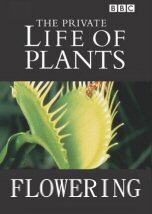
The third episode is devoted to the ways in which plants reproduce. Pollen and a stigma are the two components needed for fertilisation. Most plants carry both these within their flowers and rely on animals to transport the pollen from one to the stigma of another. To do this, they attract their couriers with colour, scent and nectar. It isn't just birds that help pollination: some mammals and reptiles also do so. However, it is mostly insects that are recruited to carry out the task. To ensure that pollen is not wasted by being delivered to the wrong flower, some species of plant have developed exclusive relationships with their visitors, and the gentian and its attendant carpenter bees is one example. Since pollen can be expensive to produce in terms of calories, some plants, such as orchids, ration it by means of pollinia and a strategically placed landing platform. Other orchids offer no reward for pollination, but instead mislead their guests by mimicking their markings and aroma, thus enticing males to 'mate' with them (Pseudocopulation). The most extreme fertilisation method is one of imprisonment, and one plant that uses it is the dead horse arum. It is often found near gull colonies, and mimics the appearance and smell of rotting flesh. Blow-flies are attracted to it, and are forced to stay the night before being allowed to depart in the morning, laden with pollen. Finally, Attenborough introduces the world's largest inflorescence: that of the titan arum.

















Embark on an exhilarating adventure to uncover the secrets of beloved mythical creatures, from dragons and unicorns to the phoenix and the elusive Loch Ness Monster. Explore the labyrinthine corridors of the Natural History Museum, meet experts who shed light on ancient legends, and see how cutting-edge technology brings these creatures to life on the big screen. This documentary offers a mesmerizing blend of history, science, and fantasy, showing that the natural world holds wonders that rival even the most magical beasts. Don't miss this enchanting exploration that will leave you questioning what might still be out there, waiting to be discovered.