The meteoric rise of renewable energy has consequences for our electricity supply. While coal and gas fired power stations can generate electricity whenever you need it, renewables are intermittent by nature. So we need a backup plan for when the wind stops or the sun goes down. All over the world, engineers and scientists are racing to solve one key problem; how to safely and efficiently store electricity at a huge scale but at a low cost. The quest is producing some truly remarkable ideas and this episode details three of them.
Pluto is one of the Smaller than our own Moon, Pluto has never had a single visitor from Earth - until now. We keep saying, 'This is it, this is humanity's trip to Pluto. For the first time in human history, Pluto is about to be revealed. We can expect surprises, it's almost guaranteed. Until then, we can only guess what Pluto looks like. And recently, astronomers decided not to call it a planet any more. Once thought to be an isolated oddity, Pluto now marks the beginning of a whole new frontier. it's as if the explorers had climbed up to the top of the Rockies and were looking over and could see the lands of California on the other side. There has never been a better time to venture where no human has gone before. To follow in the footsteps of our robot pioneers and explore beyond the planets of our Solar System.
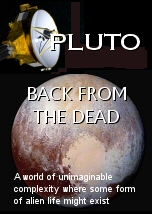
The incredible story of how Pluto has been propelled from an unremarkable ball of ice on the edge of the solar system to a world of unimaginable complexity - where some form of alien life might exist. New discoveries from the edge of the solar system are transforming what is known about Pluto, thanks to the New Horizons space probe that took the first-ever close up images of the planet. Pluto was once thought to be geologically dead, but the pictures revealed it to be an active world of stunning complexity, with mountains carved from ice, a nitrogen glacier that appeared to be moving and a recently active volcano, with data sent back lead some scientists to speculate that there may even be life on Pluto today.
It has taken 4.6 billion years for the Earth to evolve from a barren rock into the world we know today. Explore the forces beyond our planet that have determined Earth’s destiny -- forces of destruction and regeneration in the solar system that created the planet and still protect it. And now the remarkable planet is facing a new challenge: humankind. The question is, how will it survive?
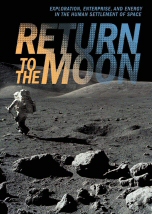
The Apollo equipment has sat abandoned on the lunar surface for over 40 years. Now there is a renewed excitement and drive to return to the moon. This time, not to just plant a flag, but to colonize. How would we accomplish this? And why would we do it? The race is on to colonize the Moon, to uncover its hidden riches and discover if humanity can really survive on another world. The Moon is our gateway to our solar system, it's the stepping stone we have to become a multi-planetary species.
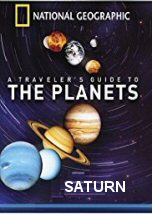
No planet beats Saturn for jaw-dropping beauty. Saturn is the most photogenic planet in all the solar system. Some of the pictures are to die for. But the postcards only tell part of the story. It really is rolling and seething inside. For ringside action, soar above the planet with its six-sided storms. Even more mystery surrounds the impressive Fountains of Enceladus where the secrets of life might spring from the moons salty geysers. And the samples are coming out in space, there's a big sign there: Free Samples: Take One.













All over the world, engineers and scientists are racing to solve one key problem; how to safely and efficiently store electricity at a huge scale but at a low cost. The quest is producing some truly remarkable ideas and this episode details three of them.