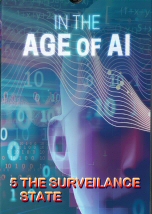
Frequent security expos feature companies like Megvii and its facial- recognition technology. They show off cameras with A.I. that can track cars, and identify individuals by face, or just by the way they walk. In China it's been projected that over 600 million cameras will be deployed by 2020. Here, they may be used to discourage jaywalking, but they also serve to remind people that the state is watching. Matching with the most advanced artificial intelligence algorithm, they can actually use this data, real-time data, to pick up a face or pick up a action. A.I. is a technology that can be used for good and for evil. So, how do governments limit themselves in, on the one hand, using this A.I. technology and the database to maintain a safe environment for its citizens, but not to encroach on a individual's rights and privacies?
David Attenborough discovers the plants that have evolved to shed their dependency on water enabling them to survive in the driest environments. The story begins at midnight in midsummer as David steps into the Princess of Wales Conservatory to witness the extraordinary nocturnal blooming of a cactus. The queen of the night, with its giant flowers, is the centre piece of a stunning symphony of cacti blooms that burst open in the desert (and at Kew) at night. In a mesmerizing 3D slow motion sequence, we discover the extraordinary connections between cacti and their natural pollinators: bats. As the sun rises, David meets other amazing plants. Species like the century plant, the Agave franzosini, which grows steadily for over 50 years, only to then flower itself to death with one mighty telegraph pole sized bloom which literally bursts out of the roof of Kew’s green house.
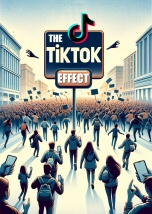
What connects amateur sleuths turning up at crime scenes, anti-social behaviour in schools and riots? Marianna Spring has spent one year investigating harmful behaviour on TikTok spilling out into the real-world. As well as crunching the numbers, Marianna tracks down TikTok users, victims and former employees to interrogate and expose how extremely high engagement on TikTok around particular topics appears to be creating these 'frenzies'. The documentary explores how users go to extreme lengths in order to get more engagement in a battle for followers and likes. Marianna investigates the role TikTok's algorithm and format plays in what’s happening and reveals insiders’ concerns about the app. The film seeks to find out if this is the real danger and what impact it is having on society.
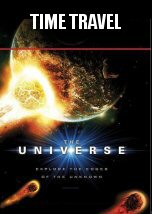
One of the Universe's most enduring mysteries is Time Travel. In this episode, we explore the possibilities. Discover why Time Travel into the future is unavoidable in the Einsteinian world of Relativity. As for the past... the laws of physics do not tell us it's impossible, but the bizarre consequences of going into the past and altering the future make for mind-bending science. Finally, we go for the future by traveling to the nearest star, 4.3 light years away... in only 45 days. Our destination may be an Earth-like planet; a planet scientists are now hunting for, and may find in the next 3 to 4 years.
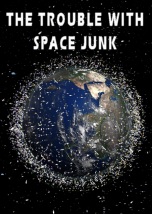
In 2014, the International Space Station had to move three times to avoid lethal chunks of space debris and there is an increasing problem of satellites mysteriously breaking down. With first-hand accounts from astronauts and experts, know the scale of the problem of space junk. Our planet is surrounded by hundreds of millions of pieces of junk moving at 17,000 miles per hour. Now the US government is investing a billion dollars to track them, and companies around the world are developing ways to clear up their mess - from robot arms to nets and harpoons. Learn the science behind the hit film Gravity and discovers the reality is far more worrying than the Hollywood fiction.
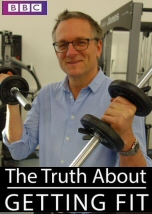
Medical journalist Michael Mosley teams up with scientists whose latest research is turning common knowledge about fitness on its head. They reveal why 10,000 steps is just a marketing ploy and that two minutes of exercise is all a person needs each week. They discover how to get people to stick to their fitness plans and what exercise can actually make everyone more intelligent. Whether it is for couch potatoes who hate the thought of exercise, someone too busy to consider the gym, or even for fitness fanatics who are desperate to do more - science can help everyone exercise better. By the end of January many people struggle to keep up their resolutions to be more active. The result is that people wastes millions on unused gym memberships. But new science has the answers.













A.I. is a technology that can be used for good and for evil. So, how do governments limit themselves in, on the one hand, using this A.I. technology and the database to maintain a safe environment for its citizens, but not to encroach on a individual's rights and privacies?