COVID-19 is far from the first pandemic to wreak havoc in the world. A long line of infectious diseases have devastated and in some cases destroyed entire societies. Almost all of them started in animals and made the jump to humans. The Black Death spread across Europe and Asia in the 14th century leaving millions dead in its wake. Between the 15th and 18th centuries, European colonists brought smallpox to the Americas, the Pacific region and to Australia. In Europe, the 17th century saw a series of major epidemics. And at the end of the First World War, more people died of the Spanish flu than on the battlefield. This documentary examines the causes of these epidemics - whether it be lack of hygiene, interaction with animals, overcrowding, or the growth of cities - and how people travelling helped to spread disease and promote pandemics. It also sheds a light on the impact these infectious diseases have had on politics and societal change. Over the centuries, scientists managed to develop treatments and medicines to help control or even eradicate infectious diseases. Virologists are facing that task again with the coronavirus, as the world frantically searches for ways to overcome a pandemic which threatens our modern way of life.
Step into a gripping political thriller that uncovers the unsettling power of Christian fundamentalists in the United States. Backed by millions of dollars and direct ties to government corridors, this movement is not just preaching—they are mobilizing for what they call The Holy War, determined to bring about the prophesied Armageddon. The film takes viewers behind the scenes of their world, exposing the powerful megachurch leaders who rally their followers toward a "final battle" they believe will trigger the Second Coming of Christ. With unprecedented access, Praying for Armageddon explores the alarming intersection of faith, power, and political influence. It reveals how ideology can shape decisions at the highest levels, raising urgent questions about the far-reaching consequences of religious extremism. This is not just a documentary—it’s a wake-up call to understand the forces shaping a precarious future.
Predictions underlie nearly every aspect of our lives, from sports, politics, and medical decisions to the morning commute. With the explosion of digital technology, the internet, and 'big data,' the science of forecasting is flourishing. But why do some predictions succeed spectacularly while others fail abysmally? And how can we find meaningful patterns amidst chaos and uncertainty? From the glitz of casinos and TV game shows to the life-and-death stakes of storm forecasts and the flaws of opinion polls that can swing an election, 'Prediction by the Numbers' explores stories of statistics in action. Yet advances in machine learning and big data models that increasingly rule our lives are also posing big, disturbing questions. How much should we trust predictions made by algorithms when we don't understand how they arrive at them? And how far ahead can we really forecast?
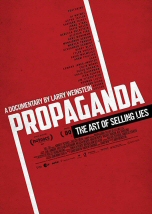
As media outlets become increasingly polarised, and as social media rules information feeds, where does propaganda come into play? This documentary demystifies the predominant methods of persuasion employed by those seeking power, analysing the present day and contextualising it by looking back at periods when propaganda defined nations and kept populations in check.
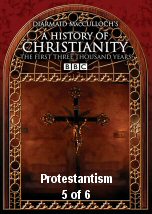
Diarmaid MacCulloch traces the growth of an exuberant expression of faith that has spread across the globe - Evangelical Protestantism. Today, it is associated with conservative politics, but the whole story is distinctly more unexpected. It is easily forgotten that the evangelical explosion has been driven by a concern for social justice and the claim that one could stand in a direct emotional relationship with God. It allowed the Protestant faith to burst its boundaries from its homeland in Europe. In America, its preachers marketed Christianity with all the flair and swashbuckling enterprise of American commerce. In Africa, it converted much of the continent by adapting to local traditions, and now it is expanding into Asia. But is Korean Pentecostalism and its message of prosperity in the here and now an adaptation too far?
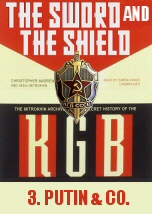
Although the end of the Soviet Union also meant the end of the KGB, it did not mean the end of secret service activities. FSB and the foreign intelligence service SVR took over the tasks. Under the secret service officer Vladimir Putin, the tasks of the secret service were redefined, and digital age with the Internet brought new possibilities for internal and external espionage and for the manipulation of public opinion. Coup d'etats, assassinations, sex scandals, radioactive poisoning....it's the stuff of a Bond movie. But in today's Russia, it's all very real. Under Vladimir Putin, the FSB rules Russia with an iron rod directly from the Kremlin. To challenge its authority, even from apparent safety abroad, means risking your life. The KGB has even managed to outlive communism itself. Today, Russia is no longer a State with a Security Service: instead, the Security Service has a State.


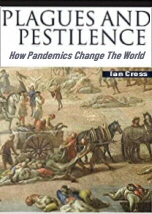





This documentary examines the causes of these epidemics - whether it be lack of hygiene, interaction with animals, overcrowding, or the growth of cities - and how people travelling helped to spread disease and promote pandemics. It also sheds a light on the impact these infectious diseases have had on politics and societal change. Over the centuries, scientists managed to develop treatments and medicines to help control or even eradicate infectious diseases. Virologists are facing that task again with the coronavirus, as the world frantically searches for ways to overcome a pandemic which threatens our modern way of life.