










Last Watched

"War "  Sort by

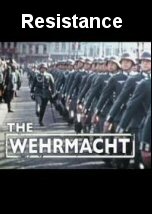
Resistance

   2007    History
Among the ranks of the Wehrmacht there was limited opposition to Hitler. Most officers initially felt enthusiastic about the prospect of war and were grateful to Hitler whose war-mongering had furthered their personal careers. Furthermore all soldiers had to make an oath of allegiance to the Führer and, up until the very end, there were many who felt unable to break this pledge. There were, however, some officers who opposed Hitler. For some it was on moral grounds and for others because they thought that his military tactics would lose them the war. There were plots against Hitler and attempted coups, the best known being the July bomb plot led by Claus von Stauffenberg. Some soldiers refused to bear arms and were shot, others deserted, others still carried out quiet acts of sabotage and subversion. By and large, however, the Wehrmacht carried out the orders Hitler issued, even if it involved perpetrating acts of atrocity.
Series: The Wehrmacht


Retrograde

   2022    History
‘Retrograde’ offers a deeply intimate account of the end of Americas's longest war and humanizes the individuals most impacted through both US and Afghan perspectives. With a character-driven, cinema-verite approach, the film functions as an up-close record of a turning point in American and Afghan history while also providing an emotional reminder of the human costs of war.
‘Retrograde’ focuses in the relationship between American Green Berets and the Afghan officers they trained.

Revolution

   2019    History
Rasputin is gone, but Nicholas II continues his catastrophic policies in war and at home. When Nicholas goes back to military headquarters, he is in fact leaving control of government, exactly when Russia needed to be held together by its Czar. The war by this time is deeply unpopular. It's not only unpopular, it's also arguably the engine that's causing enormous economic crisis, that's causing general unrest. Deprivation pushes the population from unrest to revolution.
Series: The Last Czars

Roosevelt Truman and Wallace

   2012    History
This episode examines the end of and the period immediately after World War II. It looks at Stalin's efforts to seize control of Poland and Eastern Europe, Democratic part bosses efforts to drop Henry Wallace from the 1944 presidential ticket, and British efforts to maintain their colonial holdings after the war.
Series: The Untold History of the United States

Rudolf Hess

       History
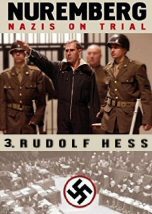
Episode three explores the mind of one of the most fanatical of all Nazis and the insight that gives into the psychology of dictatorship. Hess is brought to Nuremberg from the UK where he had flown 4 years earlier much to the bemusement of the British. Overy explains that they must have quickly realised he was not normal. In the intervening time Hess’s mental state has further deteriorated and when interviewed by Chief Interrogator Colonel John Amen proclaims amnesia. Chief Interpreter Richard Sonnenfeldt explains that they brought in Göring to confront Hess but that he too failed to make an impression.
Psychopathologist Prof. Edgar Jones proposes Hess’s behaviour patterns may be his way of escaping reality as he is forced to face the extent of the atrocities and choose between accepting his part of the blame or forsaking his Führer. However, as history Professor Robert Gellatel explains it is difficult to construct a case against Hess as he was imprisoned in England when the worst of the atrocities were carried out so British Prosecutor Mervyn Griffith-Jones must argue a conspiracy charge linking the pre-1939 persecutions to the post-1939 atrocities and a crimes against peace charge proving the flight to Scotland was merely a ruse.
Series: Nuremberg: Nazis on Trial

Samurai Massacre

       History
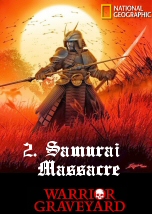
The unearthing of a gruesome grave filled with thousands of skeletons at the beach of Kamakura in Japan could be about to unlock the true extent of the merciless violence and mystery surrounding the true origins of one of the most feared and revered warriors of all time: the Samurai.
In the Middle Ages, Kamakura was the capital of Japan. The 'Shogun', a kind of aristocratic military dictator, ruled here. This shogunate ended in 1333 with the Battle of Kamakura. A drastic event in Japanese history, because this resulted in not only political, but also social, philosophical and technical innovations. The remains of the samurai warriors who fell near Kamakura now provide scientists with detailed insights into the time of the Kamakura shogunate and the bloody conflict between the shogun and the emperor.
The chilling burial ground dates back to 1333. Kamakura was one of the most heavily fortified regions of Japan. When the Emperor became angered by the growing powers of the ruling Hojo family, he sought to retake control of the region, setting the stage for a war that would change the shape of the nation. Among over 4000 sets of remains, six have a unique story to tell: the husband and wife involved in a sword fight to the death; the warrior monk; a peasant boy soldier; and members of the ruling Hojo family, captured and decapitated, with their heads displayed as trophies of victory. These remains reveal the secrets of the Samurai, their ferocious fighting skills and their merciless killing techniques.
Series: Warrior Graveyard
The Last Dance

The Last Dance

2020  Culture
The Human Body

The Human Body

1998  Medicine
Asia

Asia

2024  Nature
Ancient Apocalypse

Ancient Apocalypse

2022  History
Secrets of the Dead

Secrets of the Dead

2017  History