Having explained the science behind global warming, and addressed the arguments of the climate change sceptics earlier in the series, Dr Iain Stewart concludes the series by looking at the biggest challenge now facing climate scientists - Just how can they predict exactly what changes global warming will bring? It's a journey that takes him from early attempts to model the climate system with dishpans, to supercomputers, and to the frontline of climate research today: Greenland. Most worryingly he discovers that scientists are becoming increasingly concerned that their models are actually underestimating the speed of changes already underway.
Dr Iain Stewart investigates the counter-attack that was launched by the global warming sceptics in the 1990s. At the start of the 1990s it seemed the world was united. At the Rio Earth summit the world signed up to a programme of action to start tackling climate change. Even George Bush was there. But the consensus didn't last. Iain examines the scientific arguments that developed as the global warming sceptics took on the climate change consensus. The sceptics attacked almost everything that scientists held to be true. They argued that the planet wasn't warming up, that even if it was it was nothing unusual, and certainly whatever was happening to the climate was nothing to do with human emissions of greenhouse gases. Iain interviews some of the key global warming sceptics, and discovers how their positions have changed over time.
In the last episode, in the years after Steven and Brendan's very public trials, the various members of the Avery family struggle to mend their broken lives.
Could the fabled lost city of Atlantis have been located? Professor Freund explained how he led a pursuit to find the lost civilisation, believed by many to be an ancient Greek myth, by using deep-ground radar, digital mapping and satellite imagery. He contends that Atlantis, described by Plato in 360BC, in Spain's Donaña National Park, north of Cadiz, and was wiped out by a giant tsunami. Plato wrote it had been destroyed by a natural disaster in 9,000BC. Experts are now surveying marshlands in Spain to look for proof of the ancient city.
This behind-the-scenes documentary offers an exclusive first look at HBO’s new television adaptation of the Harry Potter books, discovering how a new series is being built for a new generation. Narrated by Nick Frost, who plays Hagrid in the series, it opens the doors to the creative process behind the first season, from the search for the new young cast to the design of Hogwarts, the teachers, the costumes, the creatures and the magical world being carefully reimagined for television. Through interviews with key cast members and craftspeople, the documentary reveals the scale, responsibility and emotion behind bringing such an iconic story back to the screen. It is a fascinating preview for anyone curious about how the filmakers intends to transform the beloved books into a long-form series, showing the artistic care, technical ambition and enormous pressure involved in creating a new version of this legendary universe.
Over billions of years, planet Earth has become home to an amazing interdependent ecosystem, containing a dizzying variety of animals and plants. But how did life here begin? And does it exist anywhere outside of our solar system? We uncover the secrets of our world by tracking the evolution of the cosmos itself, from the Big Bang onwards. Follow scientists responsible for some of the major breakthroughs in understanding the origins of life and witness how their discoveries are fundamentally changing the way we perceive the universe.




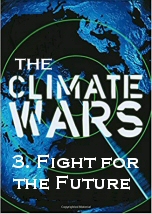


It's a journey that takes him from early attempts to model the climate system with dishpans, to supercomputers, and to the frontline of climate research today: Greenland. Most worryingly he discovers that scientists are becoming increasingly concerned that their models are actually underestimating the speed of changes already underway.