This series deals with two of the deepest questions there are - what is everything, and what is nothing? In two epic, surreal and mind-expanding films, Professor Jim Al-Khalili searches for an answer to these questions as he explores the true size and shape of the universe and delves into the amazing science behind apparent nothingness. he first part, Everything, sees Professor Al-Khalili set out to discover what the universe might actually look like. The journey takes him from the distant past to the boundaries of the known universe. Along the way he charts the remarkable stories of the men and women who discovered the truth about the cosmos and investigates how our understanding of space has been shaped by both mathematics and astronomy.
Reese Witherspoon explains the world of female Macaques, who use sexually ways to ensure their baby monkeys will grow up with strong male protectors. These females have helped to shape one of the most caring primate societies on earth.
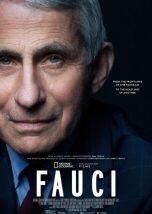
A portrait of Dr. Anthony Fauci, the public servant, scientist, physician, husband and father whose career spans seven presidents and is bookended by two pandemics: HIV/AIDS, which shaped him, and of course, COVID-19; the latter bringing him countless TV appearances in American homes on an almost daily basis over the course of nearly two years.
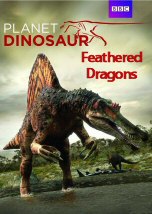
In a late Jurassic forest in what is now China, an Epidexipteryx escapes from a juvenile Sinraptor by climbing a tree. It finds a beetle grub in the tree bark, being shown to use its elongated fingers in a similar way to a modern day aye-aye. However, its prey is stolen by another, larger Epidexipteryx, and after a brief bout of posturing, the smaller individual goes to find more food. It drops a second grub to the forest floor, where the other Epidexipteryx retrieves it, only to be killed by the juvenile Sinraptor. The episode then cuts to a desert in late Cretaceous Mongolia, where a Saurornithoides is shown brooding a nest of eggs. When it leaves the nest, an Oviraptor raids it, fleeing when the troodontid returns. The Saurornithoides is suddenly attacked and eaten by a Gigantoraptor, which then heads to compete in a breeding ritual for mates. The males use their feathers for display, a brief fight between two erupting at one point, allowing the females to choose the best suitor. The episode finally cuts to an early Cretaceous forest in China, where a Xianglong is being hunted by a Microraptor, which uses its feathers to pursue the gliding lizard in the air. A Sinornithosaurus attacks it, and after a brief chase the Microraptor manages a lucky escape. The Sinornithosaurus, alongside two other members of its species is then shown hunting a Jeholosaurus and its three young. The group brings down the parent, the narrator explaining that their possibly venomous bite allowed them to tackle animals much larger than themselves. A montage is then shown of the feathered dinosaurs featured in the programme, with the narrator saying that Microraptor not only hints at how flight might have developed, but also that dinosaurs still live amongst us today, as birds.
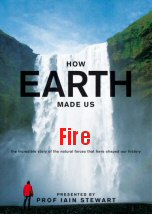
Iain explores man's relationship with fire. He begins by embarking on an extraordinary encounter with this terrifying force of nature - a walk right through the heart of a raging fire. Fire has long been our main source of energy and Iain shows how this meant that the planet played a crucial role in Britain's industrial revolution, whilst holding China's development back. Along the way he dives in a mysterious lake in Oregon, climbs a glacier of salt, crawls through an extraordinary cave in Iran and takes a therapeutic bath in crude oil.









he first part, Everything, sees Professor Al-Khalili set out to discover what the universe might actually look like. The journey takes him from the distant past to the boundaries of the known universe. Along the way he charts the remarkable stories of the men and women who discovered the truth about the cosmos and investigates how our understanding of space has been shaped by both mathematics and astronomy.