The next great voyage of human exploration has already begun: the search for life on planets orbiting distant stars. With extraordinary CGI, the world's most inspiring scientists, via extreme environments on Earth and around the solar system, the film takes viewers aboard the next generation of space ships, across the cosmos and beneath the clouds of the exo-planets to discover The Living Universe. Part 1: 'The Planet Hunters' For as long as we’ve had eyes to see and minds to wonder we’ve marveled at the stars. Since the discovery of the first so-called exoplanet in 1994, the Planet Hunters have transformed the way we see the universe. It is the year 2157, and spacecraft Artemis enters the final phase of construction.
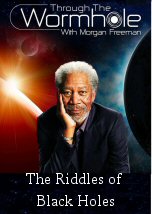
They are the most powerful objects in the universe. Nothing, not even light, can escape the gravitational pull of a black hole. Astronomers now think there are billions of them out in the cosmos, swallowing up planets, even entire stars in violent feeding frenzies. New theoretical research into the twisted reality of black holes suggests that three-dimensional space could be an illusion. That reality actually takes place on a two-dimensional hologram at the edge of the universe.
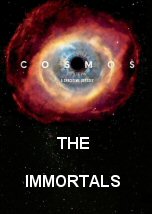
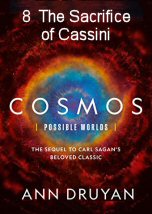
The 8th episode reviews Giovanni Cassini's life. His observations of Saturn and its moons would have an enduring effect on the scientific world. Neil deGrasse Tyson also narrates the mysterious untold story of the scientist who figured out how to go the Moon while fighting for his life in a WWI trench. Aleksandr Shargei changed his name to Yuri Kondratyuk out of fear for his life and wrote a manuscript on rocket motion and space colonization. This letter would end up capturing the attention of an engineer working on the Apollo program, John Houbolt, and would made the Apollo Mission possible. We will also know the saga of the twenty-year long odyssey of Cassini-Huygens spacecraft, a robotic explorer ordered to commit suicide on another world.
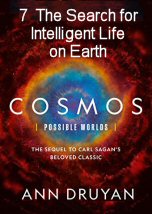
Episode 7 focuses specifically on first contact and the search for intelligent life in the vastness of the cosmos. Are humans ready to make first contact with other intelligent beings? Is our technology even sophisticated enough to detect communication signals from another world? Who are we to search for alien intelligence when we can't even recognize or respect the consciousness all around us, or even beneath our feet. Neil deGrasse Tyson reveals the hidden underground network that is a collaboration of four kingdoms of life, and a true first contact story between humans and beings who communicate in a symbolic language and have maintained a representative democracy for many tens of millions of years.
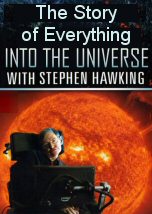
In less than two eye-popping hours, Stephen Hawking reveals the wonders of the cosmos to a new generation. Delve into the mind of the world's most famous living scientist and reveal the splendor and majesty of the universe as never seen before. See how the universe began, how it creates stars, black holes and life -- and how everything will end.
Professor Brian Cox journeys across the vastness of time and space revealing epic moments of sheer drama that changed the universe forever. The series begins this epic exploration of the cosmos with a hymn to the great luminous bodies that bring light and warmth to the universe: the stars. It is estimated that there are two hundred trillion stars in the universe, each playing their part in an epic story of creation- a great saga that stretches from the dawn of time, with the arrival of the first star, through diverse generations until the arrival of our own star, the sun, and a civilization that has grown up in its light.








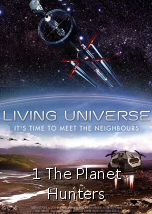





Part 1: 'The Planet Hunters' For as long as we’ve had eyes to see and minds to wonder we’ve marveled at the stars. Since the discovery of the first so-called exoplanet in 1994, the Planet Hunters have transformed the way we see the universe. It is the year 2157, and spacecraft Artemis enters the final phase of construction.