Christopher Reeve was a world movie star, but in 1995 he suffered a near-fatal horseback riding accident that left him paralyzed from the neck down. He later became an activist for spinal cord injury treatment and the rights of people with disabilities. This film offers a poignant exploration of Christopher Reeve's extraordinary life, weaving together intimate interviews with his children, Matthew, Alexandra, and Will. It chronicles his journey from a difficult childhood and a strained relationship with his father to his meteoric rise as Superman, a role that made him a global icon. The narrative transitions seamlessly between his career highs—starring in acclaimed films, enduring public missteps, and returning to the stage—and the personal challenges that shaped him, including his complex relationships, the birth of his children, and his eventual romance with Dana Morosini, the love of his life. After the devastating horse-riding accident that left him paralyzed, Reeve's unwavering spirit redefined heroism. The film highlights his advocacy for spinal cord research, the creation of the Christopher Reeve Foundation, and the enduring impact he and Dana had on disability rights. Their story is one of resilience, love, and inspiration, with their children now carrying on their legacy. Through moments of triumph and heartbreak, this film celebrates a man who truly embodied the spirit of Superman, both on and off-screen.
Directed by award-winning filmmaker Jenner Furst, the film delves into the origins of COVID-19, exploring the possibility of a bio-arms race with China and what could be one of the largest cover-ups in modern history. Furst embarks on a quest for answers from Dr. Anthony Fauci, analyzing extensive documents and consulting with scientists, intelligence analysts, former government officials, and whistleblowers. This investigative journey aims to depoliticize a highly controversial topic, presenting an urgent scientific docu-thriller that has been described as "Oppenheimer meets Outbreak." The documentary has garnered attention for its compelling narrative and in-depth investigation. Critics have noted its ability to present complex information in an engaging manner, leaving viewers both informed and intrigued. For those interested in the intricate details of the COVID-19 pandemic's origins and the controversies surrounding it, "Thank You, Dr. Fauci" provides a thought-provoking and meticulously researched perspective.
Explore how Artificial Intelligence will change your job as new research shows how much of what you do could be done by robots. From truckers to lawyers & doctors, we bring affected workers face to face with AI experts. How can we prepare for the coming changes to the world economy? We are on the precipice of another technological transformation. The last industrial revolution turned society upside down. It ultimately delivered greater prosperity and many more jobs, as well as the eight hour day and weekends.
But the transition was at times shocking and violent. The question is, can we do better this time? We don't realize that the future is not inevitable. The future is the result of the decisions we make today. These technologies are morally neutral, they can be used for good or for bad.
There's immense good things they can do, they can eliminate many disease,
they can help eliminate poverty, they can tackle climate change. Equally, the technology can be used for lots of bad. It can be used to increase inequality,it can be used to transform warfare. It can be used to make our lives much worse. We get to make those choices.
In recent years, close study of the aging process has opened up new ways that could help us all live healthier for longer. Can we move beyond treating individual diseases, and instead treat the aging process itself? But would a longer life necessarily be a better life? A loose-knit group of researchers believe the real breakthrough is extending our health span - the period of life spent free of disease". Hear from Laura Deming, who dropped out of M.I.T. at the age of 14 and committed herself to finding and funding projects that can expand the human health span, and Dr. Brian Kennedy, whose work in the basic biology of aging has been crucial to the development of countless other researchers' work.
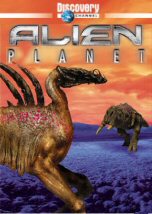
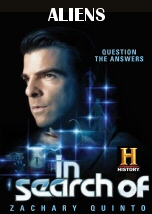
Quinto sets out to discover whether aliens exist and what evidence we have to prove it. He meets with several who say they have encountered extra-terrestrial life–a man who has been abducted by aliens several times since childhood; a man who claims to have extracted an alien implant; and a woman who shows Zachary what it feels like to be abducted into a spacecraft. Zachary also meets with the world's leading scientists at SETI in Green Banks, West Virginia. There, utilizing the world's largest telescope, they show him the methods they employ to communicate with potential other-worldly visitors and what this research has taught them about a mysterious radio signal they picked up 3 billion light years away.
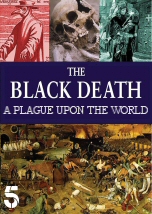
In an enthralling documentary, Dan Snow and archaeologist Raksha Dave delve into the catastrophic impact of the Black Death on Britain 700 years ago, a pandemic that extinguished around half of the population, or three million people. The duo embarks on a journey to trace the origins and merciless spread of the plague, starting from its arrival on Britain's South coast in June 1348, through the bustling trade routes that brought the disease to Melcombe Regis, Dorset. Their investigation takes them to various hotspots of the outbreak, including the Old Operating Theatre in London and Wildwood Animal Sanctuary in Kent, where they explore the role of rats in dispersing the bubonic plague. Through dramatic reconstructions and visits to places like Nottingham University's biomedical laboratories, they uncover the rapid spread and deadly impact of the plague, offering a month-by-month account of how it ravaged the country, decimating cities, towns, and villages alike. The documentary not only showcases the horrific symptoms and desperate attempts at cures through brutal medical practices of the time but also leverages cutting-edge research to explain why the Black Death remains the deadliest pandemic in history. The personal stories of victims, from princes to paupers, are brought to light, revealing the indiscriminate nature of the disease. Dan's visit to Canterbury Cathedral and Raksha's investigation into the recent discovery of mass graves beneath a tranquil London square underline the widespread desperation and devastation. Their journey through the history of the Black Death, culminating in the discovery of its indiscriminate toll and the unveiling of mass graves in London, not only sheds light on the darkest chapters of British history but also ignites a profound understanding of the tragedy, making a compelling case for why this documentary is a must-watch for anyone interested in the profound impacts of pandemics on human society.





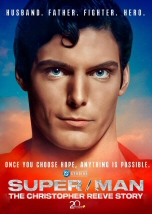



This film offers a poignant exploration of Christopher Reeve's extraordinary life, weaving together intimate interviews with his children, Matthew, Alexandra, and Will. It chronicles his journey from a difficult childhood and a strained relationship with his father to his meteoric rise as Superman, a role that made him a global icon. The narrative transitions seamlessly between his career highs—starring in acclaimed films, enduring public missteps, and returning to the stage—and the personal challenges that shaped him, including his complex relationships, the birth of his children, and his eventual romance with Dana Morosini, the love of his life.
After the devastating horse-riding accident that left him paralyzed, Reeve's unwavering spirit redefined heroism. The film highlights his advocacy for spinal cord research, the creation of the Christopher Reeve Foundation, and the enduring impact he and Dana had on disability rights. Their story is one of resilience, love, and inspiration, with their children now carrying on their legacy. Through moments of triumph and heartbreak, this film celebrates a man who truly embodied the spirit of Superman, both on and off-screen.