The film follows Opportunity, the Mars exploration rover launched in 2003, affectionately dubbed Oppy by her creators and scientists at NASA. Oppy was originally expected to live for only 90 days but she ultimately explored Mars for nearly 15 years. With access to archival and interview footage with scientists and engineers and re-creations of the rover's treks over the Martian landscape in search of water, we will explore her groundbreaking journey on Mars and the remarkable bond forged between a robot and her humans creators millions of miles away. The narrative interrogates the significance of Opportunity's endurance for the future of interstellar discovery.
In astronomy, we've been looking at different kinds of light and opening up the universe a little bit more of the time. But then in 2015, the roof came off. Something happened that changed everything, the ability to see waves in space and time itself. Gravitational waves help us roll back the clock to the dawn of time, discover epic cosmic collisions, on make Earth-shaking discoveries. Gravitational waves are the biggest game changer since the invention of the telescope. We have a completely new universe to view now. A new exploration of space is just beginning.
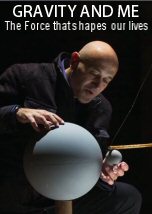
Professor Jim Al-Khalili investigates the amazing science of gravity. A fundamental force of nature, gravity shapes our entire universe. It sculpts galaxies and warps space and time. But gravity’s strange powers also affect our daily lives in the most unexpected ways. This is a story with surprises in store for Jim himself. In telling the story of gravity, his own understanding of the nature of reality comes to be challenged. Finally, Jim discovers that, despite incredible progress, gravity still has many secrets to unveil.
Sodom and Gomorrah, a tale of two cities incinerated by a hail of fire and brimstone. Is this a fantastic fable, or could it be a near apocalyptic disaster from space? In this episode, we will check into the mysteries relating to the destruction of both cities. Were they astronomical events? Newly discovered evidence might hold the secrets to one of the Bible's greatest mysteries.
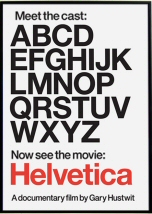
Helvetica is a feature-length independent film about typography, graphic design and global visual culture. It looks at the proliferation of one typeface (which celebrated its 50th birthday in 2007) as part of a larger conversation about the way type affects our lives. The film is an exploration of urban spaces in major cities and the type that inhabits them, and a fluid discussion with renowned designers about their work, the creative process, and the choices and aesthetics behind their use of type. The film encompasses the worlds of design, advertising, psychology, and communication, and invites us to take a second look at the thousands of words we see every day. Interviewees in Helvetica include some of the most illustrious and innovative names in the design world, including Erik Spiekermann, Matthew Carter, Massimo Vignelli, Wim Crouwel, Hermann Zapf, Neville Brody, Stefan Sagmeister, Michael Bierut, David Carson, Paula Scher, Jonathan Hoefler, Tobias Frere-Jones, Experimental Jetset, Michael C. Place, Norm, Alfred Hoffmann, Mike Parker, Bruno Steinert, Otmar Hoefer, Leslie Savan, Rick Poynor, and Lars Müller.
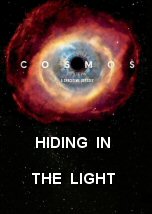
This episode explores the wave theory of light as studied by mankind, noting that light has played an important role in scientific progress, with such early experiments from over 2000 years ago involving the camera obscura by the Chinese philosopher Mozi. Tyson describes the work of the 11th century Arabic scientist Ibn al-Haytham, considered to be one of the first to postulate on the nature of light and optics leading to the concept of the telescope, as well as one of the first researchers to use the scientific method. Tyson proceeds to discuss the nature of light as discovered by mankind. Work by Isaac Newton using diffraction through prisms demonstrated that light was composed of the visible spectrum, while findings of William Herschel in the 19th century showed that light also consisted of infrared rays. Joseph von Fraunhofer would later come to discover that by magnifying the spectrum of visible light, gaps in the spectrum would be observed. These Fraunhofer lines would later be determined to be caused by the absorption of light by electrons in moving between atomic orbitals when it passed through atoms, with each atom having a characteristic signature due to the quantum nature of these orbitals. This since has led to the core of astronomical spectroscopy, allowing astronomers to make observations about the composition of stars, planets, and other stellar features through the spectral lines, as well as observing the motion and expansion of the universe, and the existence of dark matter.






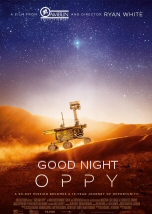



With access to archival and interview footage with scientists and engineers and re-creations of the rover's treks over the Martian landscape in search of water, we will explore her groundbreaking journey on Mars and the remarkable bond forged between a robot and her humans creators millions of miles away. The narrative interrogates the significance of Opportunity's endurance for the future of interstellar discovery.