

Last Watched

"Science"  Sort by

Breaking Boundaries: The Science of Our Planet

   2021    Nature
David Attenborough and the world-renowned scientist Johan Rockström examine Earth's biodiversity collapse. The film explains how humanity has pushed our planet beyond the boundaries that have kept it stable since the dawn of life, but also that this crisis can still be averted, thinking and acting with one unified purpose to ensure that Earth forever remains healthy and resilient.
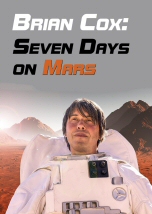
Brian Cox: Seven Days on Mars

   2022    Technology
Professor Brian Cox fulfils a childhood dream by going behind the scenes at Nasa’s Jet Propulsion Laboratory (JPL), mission control for Mars 2020 – one of the most ambitious missions ever launched that may finally reveal if life ever existed on the red planet.
In 1980, a young Brian Cox wrote to JPL asking for photos from some of their missions to the planets. The pictures they sent him from Voyager and the Viking mission to Mars were a source of inspiration that set him on the path to becoming a physicist.
Now, over 40 years later, he has been granted privileged access to JPL, including key mission areas that are usually off-limits to film crews. Brian spends a week following the team who guide the Perseverance rover and the Ingenuity helicopter - the first powered aircraft ever sent to another planet - across the surface of Mars during a critical stage of the mission.
Perseverance’s goal is to search for signs of long extinct life on the surface of Mars in an area called Jezero Crater, which, 3.8 billion years ago, was filled by a vast lake. If it finds evidence of that life, it could change everything we know about life in the universe - and even transform our understanding of our own origins.

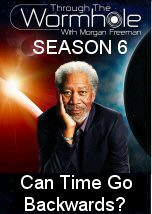
Can Time Go Backwards

   2015    Science
We move around in space, but we are stuck in a prison of time moving ever forwards. Einstein said, 'The distinction between past, present and future is only a stubbornly persistent illusion.' Is our experience of the ticking clock merely a trick of the mind? Could science ever make the clock move backwards? Experiments in quantum physics are showing that the future influences the present: what happens later limits the choices we think we have now. The laws of physics say visiting or talking to ourselves in the past is possible – but changing history once we get there is not.
Series: Through the Wormhole Season 6

Can We Build a Brain

   2018    Technology    HD
Artificially intelligent machines are taking over. They’re influencing our everyday lives in profound and often invisible ways. They can read handwriting, interpret emotions, play games, and even act as personal assistants. They are in our phones, our cars, our doctors’ offices, our banks, our web searches... the list goes on and is rapidly growing ever longer. But how does today’s A.I. actually work—and is it truly intelligent? And for that matter, what is intelligence?
The world’s brightest computer programmers are trying to build brighter machines by reverse-engineering the brain and by inventing completely new kinds of computers, with exponentially greater speed and processing power. The documentary looks at how far we’ve come and where machines are headed as their software becomes ever more... cerebral. How close are we from a world in which computers take over—from diagnosing cancer to driving our cars to targeting weapons? If we place more and more of our lives under the control of these artificial brains, what are we putting at risk?
Series: Nova Wonders

Can We Have Unlimited Power

   2010    History
We are the most power-hungry generation that has ever lived. This film tells the story of how that power has been harnessed - from wind, steam and from inside the atom. In the early years the drive for new sources of power was led by practical men who wanted to make money. Their inventions and ideas created fortunes and changed the course of history, but it took centuries for science to catch up, to explain what power is, rather than simply what it does. This search revealed fundamental laws of nature which apply across the universe, including the most famous equation in all of science, e=mc2.
Series: The Story of Science

Can We Make Life

   2018    Medicine
'It's alive!' Since Dr. Frankenstein spoke those famous words, we've been alternately enthralled and terrified by the idea of creating life in the lab. Now, a revolution in genetic engineering and thrilling innovations in synthetic biology are bringing that dream—or nightmare, as the case may be—closer to reality. New tools allow researchers to use cells to create their own DNA and edit it into existing genomes with more ease and less cost than ever before.
Along with renewed hopes for treating some genetic diseases, there's serious talk of using the newest technologies to bring long-extinct animals back from the dead – like the team hoping to resurrect the woolly mammoth. Science fiction is quickly becoming science fact. Another daring genetic experiment to bioengineer animals could prevent Lyme disease. But the power to make life comes with deep ethical questions. What are the potential rewards—and dangers—of tinkering with nature? This films explores the benefits and the burden of risk surrounding the controversial new technology.
Series: Nova Wonders
Pets: Wild at Heart

Pets: Wild at Heart

2015  Nature
The Putin Interviews

The Putin Interviews

2017  Culture
Frozen Planet

Frozen Planet

2011  Nature
The Universe

The Universe

2011  Science
Zeitgeist

Zeitgeist

2007  Culture
Prehistoric Planet II

Prehistoric Planet II

2023  Science
Top Gear

Top Gear

2012  Technology