It all begins as a study on the psychology of prison life led by Stanford psychology professor Dr. Philip Zimbardo. 24 volunteers - 12 guards and 12 prisoners - have agreed to spend the next two weeks recreating life in a correctional facility. Normal people can become monsters, given the right situation, that's the standard narrative of the Stanford Prison Experiment, one of the most famous psychological experiments of all time. But what if the cause of its participants' cruel behavior wasn't what we've always been told?
Through ancient manuscripts and oral tales Michael Wood charts the first human migrations out of Africa. He travels from the tropical backwaters of South India through lost ancient cities in Pakistan to the vibrant landscapes of the Ganges plain. In Turkmenistan dramatic archaeological discoveries cast new light on India’s past.
Ancient Aliens explores the controversial theory that extraterrestrials have visited Earth for millions of years. From the age of the dinosaurs to ancient Egypt, from early cave drawings to continued mass sightings. In this episode researchers discuss the possibility that the great technological developments made by inventor Nikola Tesla were inspired by extraterrestrials
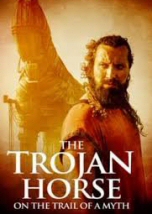
Was the famous wooden structure a clever war tactic—or pure invention? This documentary dives into ancient clues, archaeological digs, and expert theories to uncover the truth behind this iconic tale. It challenges long-held beliefs about the fall of Troy. With vivid reenactments and insights from leading historians, it blurs the line between legend and reality, revealing a story more intriguing than we ever imagined.
The German army launched Operation Barbarossa, the invasion of the East, with supreme confidence in its own superiority. High Command was sure that victory would come as quickly and as easily as in France. At the onset, the troops advanced rapidly and the Panzer forces under General Guderian were unbeatable. There were, however, far more casualties and more wear-and-tear on equipment than anticipated. The invading force got bogged down short of Moscow and the withdrawal from there was a severe psychological blow to the men. When an extremely severe winter set in, morale sank further. The soldiers were not equipped for such low temperatures and their guns and machinery could not cope. Hitler ordered his troops to stand firm.
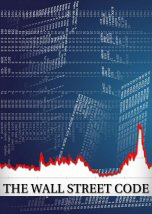
Super quick computers and advanced mathematical formulas have taken over trading on the financial markets from human beings -algorithms- which seem to have a life of their own. The only ones who understand the system in any way are its architects, the algorithm developers. Haim Bodek is one such algo-developer. After finding some strange wrongdoings he set out on a personal crusade against this elusive system". The machinery behind our financial markets, consisting of mathematical models, data centers and miles and miles of fiber optic cables, is disguised by technological complexity and secrecy. The builders of this financial system are a new breed of Wall Street employees -quants- mathematicians and physicists who are responsible for a technological revolution. Haim Bodek is a quant; he specialized in artificial intelligence and worked for Goldman Sachs. He knows the system from the inside, he helped build it. Haim Bodek was invited to tell his story at the "Battle of the Quants" - a recurring event where quants discuss high-frequency trading, amongst other things. Bodek wrote an algorithm for trading machines that would generate guaranteed income - a money machine that weathered the financial meltdown of 2008. But then from one day to the next the algorithm stopped working.





















But what if the cause of its participants' cruel behavior wasn't what we've always been told?