How can we cope with the tricky coronavirus now rampant worldwide? As the pandemic tightens its grip on the world, there are important unanswered questions about this novel virus: Why does this infection spread so rapidly from people with no symptoms? Why do some people become critical while others don't? Will a definitive treatment be found? The underlying key to these questions lie in our immune system. Immune cells are microscopic warriors, combating viruses and another pathogens. Through the high-tech 'eyes' of next-generation microscopes and computer-generated imagery, we will see how our immune defense corps combat against microbes and what mechanism is expected to help develop treatment.
In the third programme of the series, Aleks gives the lowdown on how, for better and for worse, commerce has colonized the web - and reveals how web users are paying for what appear to be 'free' sites and services in hidden ways. Joined by some of the most influential business leaders of today's web, including Eric Schmidt (CEO of Google), Chad Hurley (CEO of YouTube), Bill Gates, Martha Lane Fox and Reed Hastings (CEO of Netflix), Aleks traces how business, with varying degrees of success, has attempted to make money on the web. She tells the inside story of the gold rush years of the dotcom bubble and reveals how retailers such as Amazon learned the lessons. She also charts how, out of the ashes, Google forged the business model that has come to dominate today's web, offering a plethora of highly attractive, overtly free web services, including search, maps and video, that are in fact funded through a sophisticated and highly lucrative advertising system which trades on what we users look for. Aleks explores how web advertising is evolving further to become more targeted and relevant to individual consumers. Recommendation engines, pioneered by retailers such as Amazon, are also breaking down the barriers between commerce and consumer by marketing future purchases to us based on our previous choices. On the surface, the web appears to have brought about a revolution in convenience. But, as companies start to build up databases on our online habits and preferences, Aleks questions what this may mean for our notions of privacy and personal space in the 21st century
A.I. can be used in many ways that are very beneficial for society. But the current use of A.I. isn't necessarily aligned with the goals of building a better society, unfortunately. But, but we could change that. A.I. will be viewed as an age of enlightenment. Our children and their children will see A.I. as serendipity, that A.I. is here to liberate us from having to do routine jobs, and push us to do what we love, and push us to think what it means to be human. But what if humans mishandle this new power?
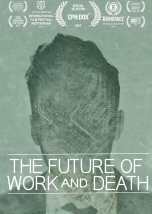
The film explores the growth of exponential technology and where it is taking us. It focuses on how future technology could significantly change the two inevitable features of the human experience; punching the clock and fading away. 'The Future of Work and Death' explores how advanced automation, AI and technological singularity could be achievable in the next 30 years. How job obsolescence and technological unemployment could consequently occur and how digital immortality can occur may not be a thing of science fiction. But what are the socio-political repercussions of these innovations and are we ready for them? Does working less mean living more and is ending ageing incumbent on us? Worldwide experts in the fields of futurology, anthropology, neuroscience and philosophy share their thoughts on these future advancements.
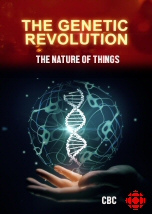
Trailblazing scientists are making ground-breaking discoveries in the rapidly evolving world of genetic engineering. Technologies like CRISPR are making it possible to quickly and cheaply change the DNA of all living things, including humans. Today, genes can be edited almost as easily as words on a computer screen. This new ability to alter our DNA holds the promise of curing disease , saving threatened species, solving the problem of world hunger and maybe even obtaining human perfection. But will the promise be fulfilled and at what cost? The ability to gain control of our DNA is ground-breaking and revolutionary but there are varying opinions among scientists as to how the technology should be used responsibly. This documentary follows the science as it progresses at a breakneck speed.
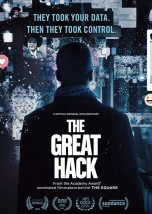
A film about the Facebook–Cambridge Analytica data scandal. Have you ever filled out an online survey? Do you wonder why you receive ads for products that you happened to research the day before? Data has surpassed oil as the world’s most valuable asset, and it is being weaponized to wage cultural and political wars. We’re in a battle for control over our most intimate personal details. The Great Hack uncovers the dark world of data exploitation through the compelling personal journeys of players on different sides of the explosive Cambridge Analytica/Facebook data breach that rocked the world.
















Through the high-tech 'eyes' of next-generation microscopes and computer-generated imagery, we will see how our immune defense corps combat against microbes and what mechanism is expected to help develop treatment.