






Last Watched

"Biology"  Sort by

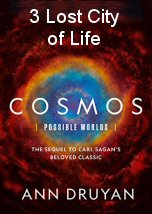
Lost City of Life

   2020    Science
Episode 3 delves into how life began on a roiling, violent Earth and explores the story behind Victor Goldschmidt, the man who found the first clues to life's beginnings on our planet. Neil deGrasse Tyson takes viewers on a journey through space and time to witness the tenacity and creativity of life on Earth and the prospects of life throughout the universe.
Series: Cosmos: Possible Worlds
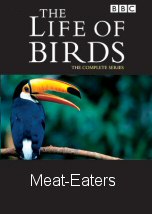
Meat-Eaters

   1998    Nature
This episode examines those birds whose sustenance comes from flesh and their methods of hunting. In New Zealand, Sir Attenborough observes Keas, parrots that do not eat meat exclusively, raiding a shearwater's burrow for a chick. However, it is the dedicated birds of prey, such as owls, buzzards, eagles, falcons and vultures, to which much of the programme is devoted. In order to spot and pursue their victims, senses of sight and hearing are very acute. Vultures are the exception, in that they eat what others have left, and once a carcass is found, so many birds descend on it that the carrion seems submerged beneath them. The Turkey Vulture is an anomaly within its group, as it also has a keen sense of smell. Eagles defend their territory vigorously, and a pair of sea eagles are shown engaging in an aerial battle. The Galápagos Hawk hunts Marine Iguanas, but can only do so when its quarry is vulnerable, during the breeding season. The African Harrier Hawk has adapted to extracting burrowing animals by virtue of an especially long, double-jointed pair of legs. By contrast, a shrike is not equipped with the requisite sharp beak and talons needed for butchery, and so dismembers its kill by impaling it on the thorns of acacias. The Lammergeier eats bones, and will drop them on to rocks from a great height in order to break them down to a digestible size. Also featured are the Eurasian Sparrowhawk, Goshawk and Peregrine Falcon.
Series: The Life of Birds

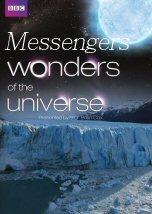
Messengers

   2011    Science
Professor Brian Cox travels from the fossils of the Burgess Shale to the sands of the oldest desert in the world to show how light holds the key to our understanding of the whole universe, including our own deepest origins. To understand how light holds the key to the story of the universe; you first have to understand its peculiar properties. Brian considers how the properties of light that lend colour to desert sands and the spectrum of a rainbow can lead to profound insights into the history and evolution of our universe. Finally, with some of the world's most fascinating fossils in hand, Brian considers how but for an apparently obscure moment in the early evolutionary history of life, all the secrets of light may have remained hidden. Because although the universe is bathed in light that carries extraordinary amounts of information about where we come from, it would have remained invisible without a crucial evolutionary development that allowed us to see. Only because of that development can we now observe, capture and contemplate the incredible wonders of the universe that we inhabit.
Series: Wonders of the Universe

Mighty Amazon

   2005    Nature
A look at the unique habitat which is formed every year when the Amazon floods an area of forest the size of England. It creates a world that is home to turtles, caiman and giant otters, and where fish fly through the air and dolphins hunt amongst the tree tops.
Series: Wild South America

Monogamy

   2018    Culture
From virtually the moment we're born, there's a story that's preached across cultures and continents. It's a familiar fairy tale, that finding one true love is the key to a fulfilled and happy life. As an adult, we're forced to reconcile the messaging on monogamy with one simple fact: humans are terrible at it.
What do biology, human history and the promiscuity of bonobos reveal about monogamy? Experts and everyday couples weigh in on shifting cultural norms.
Series: Explained

More Than Human

   2015    Technology
Scientific advancements are challenging the concept of what it means to be human. Technology embedded in our bodies is fairly common: artificial limbs, pacemakers. But new research is taking us beyond replacement parts and into a new realm that is changing the nature of the human body and the human mind. Will the fusion of biology and technology change how we think, how we feel, how we experience the world?
Leonardo Da Vinci

Leonardo Da Vinci

2024  History
Becoming Martian

Becoming Martian

2021  Technology
Science and Islam

Science and Islam

2017  History
Trainwreck

Trainwreck

2025  Culture
Planet Dinosaur

Planet Dinosaur

2011  Science
The Sky at Night

The Sky at Night

2023  Science
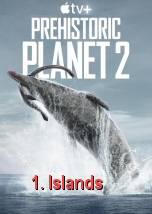
Prehistoric Planet II

Prehistoric Planet II

2023  Science