Now in HD and with a new 3D version. In May 2009, NASA astronauts embark on a mission to perform maintenance and repairs to the Hubble Space Telescope. As they go about their tasks, danger and beauty are never far away. The nature of space indicates that even the simplest routine can go fatally awry, while amazing photographs taken by the telescope celebrate the wonder of Earth's celestial surroundings. An IMAX 3D camera chronicled the effort of 7 astronauts aboard the Space Shuttle Atlantis to repair the Hubble Space Telescope.
Recently, the Event Horizon Telescope project captured the first image ever of a black hole. Now, new discoveries might finally reveal how supermassive black holes are made, and using the latest technology, experts are on the verge of understanding how these monsters grow and how they affect life on our planet. Supermassive black holes: Gargantuan monsters that lurk at the center of galaxies. Right now you are travelling at half a million miles an hour around a giant black hole four million times the mass of the sun. But there's a mystery about these colossal beasts. We have no idea where they came from. How did they get so big so quickly?
For decades, scientists have sought to unlock the secrets of ancient DNA, a fragile genetic blueprint that rarely survives millions of years. Danish biologist Eske Willerslev had a groundbreaking idea: instead of searching for DNA in fossils or ancient tissues, he looked to frozen sediment. Initially dismissed as impossible, his work led to the recovery of genetic traces from over two million years ago, revealing lush ecosystems that existed before the Ice Age. These discoveries offer unprecedented insights into long-extinct species that thrived in warm, verdant Arctic landscapes.
Willerslev’s perseverance revolutionized DNA research, enabling scientists to reconstruct vanished ecosystems and uncover the genetic secrets of ancient worlds. By examining the DNA of past climates, researchers are paving the way to better understand Earth's deep history and adapt to current environmental challenges. This landmark breakthrough demonstrates that ancient DNA acts as a "time machine," allowing humanity to explore its distant past and draw lessons for the future.
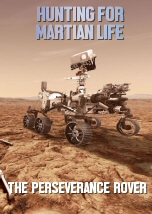
Meet Perseverance, NASA's latest rover, as it heads to Mars to answer one question: did life exist on the red planet? On the way, it will lay the foundation for human exploration of our closest neighbour. Today, Mars is hostile to life. It's too cold for water to stay liquid on the surface, and the thin atmosphere lets through high levels of radiation, potentially sterilizing the upper part of the soil. But it wasn't always like this. Some 3.5 billion years ago or more, water was flowing on the surface. It carved channels still visible today and pooled in impact craters. A thicker carbon dioxide atmosphere would have blocked more of the harmful radiation. The Mars 2020/Perseverance rover is designed to better understand the geology of Mars and seek signs of ancient life. The mission will collect and store a set of rock and soil samples that could be returned to Earth in the future. It will also test new technology to benefit future robotic and human exploration of Mars, as the Ingenuity Helicopter.
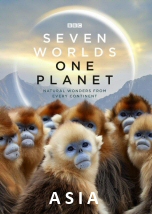
Asia, the largest and most extreme continent on Earth, is home to animals that inhabit the world's hottest deserts, tallest jungles, and highest mountains. Explore the enchanting world of Asia's wildlife in a captivating film that showcases its extraordinary creatures, from the intriguing vocalizations of the Sumatran rhinoceros to the majestic whale shark. However, it also sheds light on the pressing issues of deforestation, particularly due to the palm oil industry, which threatens the survival of countless species, including the iconic orangutan. Witness the efforts of researchers and conservationists dedicated to protecting these endangered animals in reserves like Gunung Palung National Park. This documentary serves as a poignant reminder of our shared responsibility to safeguard our planet's remarkable biodiversity. Don't miss this visually stunning and informative journey through Asia's diverse landscapes and the urgent call for conservation.
How did the Chinese government turn pandemic cover ups in Wuhan into a triumph for the Communist party? Award-winning filmmaker Nanfu Wang recounts the experiences of people on the ground in the earliest days of the novel coronavirus and the way two countries dealt with its initial spread, from the first days of the outbreak in Wuhan to its rampage across the United States. The film explores the early confusion and parallel campaigns by authorities to try to contain the virus as well as shape the public narrative through misinformation, resulting in a devastating impact on citizens of both countries. With emotional first-hand accounts from medical professionals, patients, and grieving family members, and startling, on-the-ground footage from both Wuhan and the U.S., In The Same Breath is a revelatory illustration of the devastating toll that resulted from official missteps at containment of the infection and the widespread phenomenon of social media misinformation, while also highlighting the strength and resilience of the people who risked everything to communicate the truth.




















An IMAX 3D camera chronicled the effort of 7 astronauts aboard the Space Shuttle Atlantis to repair the Hubble Space Telescope.