Can new emission-free electric planes replace our polluting airliners and revolutionize personal transportation in our cities? The film takes a ride in some quiet, energy-efficient, prototypes that are vying for success as electric flight takes off. The race is on to stop the climate emergency and we're seeing more and more people really paying attention to their carbon footprint. Aviation is a fast-growing offender, but is it too slow to respond. Could rapid progress in electric technology change the equation?
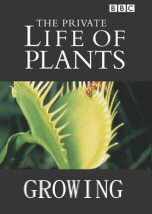
The second episode is about how plants gain their sustenance. Sunlight is one of the essential requirements if a seed is to germinate, and Attenborough highlights the cheese plant as an example whose young shoots head for the nearest tree trunk and then climb to the top of the forest canopy, developing its leaves en route. Using sunshine, air, water and a few minerals, the leaves are, in effect, the "factories" that produce food. However, some, such as the begonia, can thrive without much light. To gain moisture, plants typically use their roots to probe underground. Trees pump water up pipes that run inside their trunks, and Attenborough observes that a sycamore can do this at the rate of 450 litres an hour — in total silence. Too much rainfall can clog up a leaf's pores, and many have specially designed 'gutters' to cope with it. However, their biggest threat is from animals, and some require extreme methods of defence, such as spines, camouflage, or poison. Some can move quickly to deter predators: the mimosa can fold its leaves instantly when touched, and the Venus flytrap eats insects by closing its leaves around its prey when triggered. Another carnivorous plant is the trumpet pitcher that snares insects when they fall into its tubular leaves. Attenborough visits Borneo to see the largest pitcher of them all, Nepenthes rajah, whose traps contain up to two litres of water and have been known to kill small rodents.
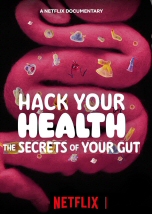
The film unveils the profound impact of our gut on overall health, an area often overlooked despite its significance. Delving into the complexities of the gut microbiome, this documentary reveals how this ‘second brain’ influences everything from weight management and disease prevention to mental health. By exploring personal stories and scientific research, the film illustrates the dynamic relationship between what we eat and how we feel, urging viewers to reconsider their diets and understand the powerful connection between gut health and wellness. As the documentary progresses, viewers are introduced to cutting-edge research and therapies that are reshaping our understanding of health. Through expert interviews and captivating case studies, ‘Hack Your Health: The Secrets of Your Gut’ not only informs but also inspires a reevaluation of lifestyle choices. This eye-opening journey through the intricate world of gut health highlights the potential for radical improvements in public health, making it a must-watch for anyone interested in the latest advancements in science and wellness.
Global superstar Jennifer Lopez reflects on her multifaceted career and the pressure of life in the spotlight in this intimate film. The documentary also unveils the characteristics that make the superstar the figure she is: from her performances on stages around the world, to her halftime show at the 2020 Super Bowl, one of the most controversial performances in the history of this show. It also addresses how the international superstar, who has inspired people for decades with her perseverance, creative brilliance and cultural contributions, takes the reins of her career, using her voice for a greater purpose. Jennifer Lopez exposes her insecurities, the pressures the media has placed on her career and the effect paparazzi and tabloids have on the life of a star.
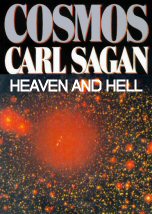
Sagan discusses comets and asteroids as planetary impactors, giving recent examples of the Tunguska event and a lunar impact described by Canterbury monks in 1178. It moves to a description of the environment of Venus, from the previous fantastic theories of people such as Immanuel Velikovsky to the information gained by the Venera landers and its implications for Earth's greenhouse effect. The Cosmos Update highlights the connection to global warming.
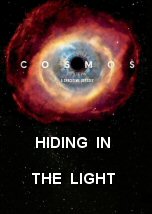
This episode explores the wave theory of light as studied by mankind, noting that light has played an important role in scientific progress, with such early experiments from over 2000 years ago involving the camera obscura by the Chinese philosopher Mozi. Tyson describes the work of the 11th century Arabic scientist Ibn al-Haytham, considered to be one of the first to postulate on the nature of light and optics leading to the concept of the telescope, as well as one of the first researchers to use the scientific method. Tyson proceeds to discuss the nature of light as discovered by mankind. Work by Isaac Newton using diffraction through prisms demonstrated that light was composed of the visible spectrum, while findings of William Herschel in the 19th century showed that light also consisted of infrared rays. Joseph von Fraunhofer would later come to discover that by magnifying the spectrum of visible light, gaps in the spectrum would be observed. These Fraunhofer lines would later be determined to be caused by the absorption of light by electrons in moving between atomic orbitals when it passed through atoms, with each atom having a characteristic signature due to the quantum nature of these orbitals. This since has led to the core of astronomical spectroscopy, allowing astronomers to make observations about the composition of stars, planets, and other stellar features through the spectral lines, as well as observing the motion and expansion of the universe, and the existence of dark matter.







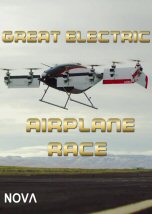





The race is on to stop the climate emergency and we're seeing more and more people really paying attention to their carbon footprint. Aviation is a fast-growing offender, but is it too slow to respond. Could rapid progress in electric technology change the equation?