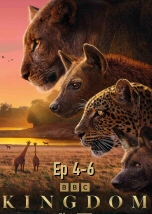
In the final three episodes, life in this Zambian stronghold reaches a decisive turning point as survival becomes more fragile than ever. An injured wild dog named Flint defies the odds by helping care for Storm’s largest litter of pups, while leopard Mutima continues her perilous search for a territory to call home. At the same time, the lions face pressures beyond their control, forcing shifts in dominance as age, injury, and the land itself begin to reshape the balance of power. The closing chapter deepens the drama and the emotion. Leopard Olimba struggles with the weight of old age, the wild dogs’ story takes an unexpected turn, and both lions and hyenas experience a baby boom that raises a final question: who truly rules this kingdom now? The series concludes by revealing the unseen human effort behind the scenes, introducing the filmmakers, conservationists, and anti-poaching teams whose extraordinary work protects South Luangwa and the fragile lives that depend on it.
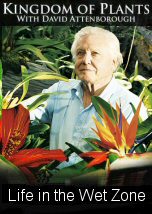
Written and presented by David Attenborough, who said: 'One of the most wonderful things about filming plants is that you can reveal hidden aspects of their lives, you can capture the moment as one plant strangles another, and as they burst into flower. But whilst time-lapse photography allows you to see things that no human being has ever seen before". David begins his journey inside the magnificent Palm House, a unique global rainforest in London. Here, he explores the extraordinary plants that are so well adapted to wet and humid environments and unravels the intimate relationships between wet zone plants and the animals that depend on them. It was in the wet zones of the world that plants first moved on to land and in the Waterlily House David reveals how flowers first evolved some 140 million years ago. Watching a kaleidoscope of breath-taking time-lapses of these most primitive of flowers swelling and blooming in 3D, he is able to piece together the very first evolutionary steps that plants took to employ a wealth of insects to carry their precious pollen for the first time. David discovers clues to answer a question that even had Charles Darwin stumped: how did flowering plants evolve so fast to go on to colonise the entire planet so successfully?
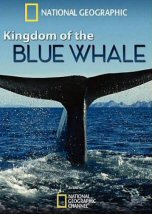
Blue whales are the largest animals to ever live on earth, yet they are difficult to find or track. Even some of the locations where they birth their young are great secrets. Join some of the world's eminent blue whale scientists as they embark on a revolutionary mission to identify and tag California blue whales as they migrate to a spot known as the Costa Rica Dome. This incredible voyage yields unforgettable new footage and insight into these amazing creatures' lives. Scientists use DNA analysis, recordings of whale songs, homing devices, and sea dives to shed light on the blue whale's breeding and birthing habits
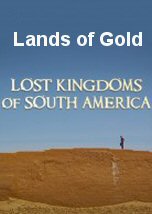
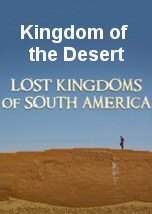
In the spectacular deserts of coastal Peru, archaeologist Dr Jago Cooper explores the dramatic rise and fall of Chimor, the first empire of South America. His journey begins among the ruins of a vast lost city once home to an all-powerful monarchy, whose subjects transformed the desert landscape, created gold and silver treasures and believed so strongly in the power of their gods that they made the most shocking of sacrifices. Chimor thrived despite facing some of the most extreme climate conditions in the world, but not even this powerful empire could withstand the forces that eventually destroyed it.
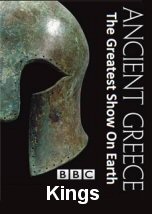
Dr Michael Scott looks at the dramatic decline of Athens and the remarkable triumph and transformation of theatre. During the 4th century BC Athens would lose its Empire, its influence and even its democracy. But theatre, that most Athenian of inventions, would thrive, spreading throughout the Greek world and beyond and giving rise to a new kind of comedy, one so popular and prevalent that it is still at the heart of our comedy today.
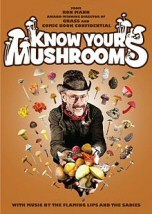
Ron Mann investigates the miraculous, near-secret world of fungi. Visionaries Gary Lincoff and Larry Evans lead us on a hunt for the wild mushroom and the deeper cultural experiences attached to the mysterious fungi. The oldest and largest living organisms recorded on Earth are both fungi. And their use by a new, maverick breed of scientists and thinkers has proven vital in the cleansing of sites despoiled by toxins and as a "clean" pesticide, among many other environmentally friendly applications. Combining material filmed at the Telluride Mushroom Fest with animation and archival footage, along with a neo-psychedelic soundtrack by The Flaming Lips, this film opens the doors to perception, taking the audience on an extraordinary trip where the fungi might well guide humanity to a saner, safer place.





The closing chapter deepens the drama and the emotion. Leopard Olimba struggles with the weight of old age, the wild dogs’ story takes an unexpected turn, and both lions and hyenas experience a baby boom that raises a final question: who truly rules this kingdom now? The series concludes by revealing the unseen human effort behind the scenes, introducing the filmmakers, conservationists, and anti-poaching teams whose extraordinary work protects South Luangwa and the fragile lives that depend on it.