Huge asteroids have smashed into the earth, and turned it into an enveloped fire, uninhabitable to almost all life on the surface. The world will get hit again. It's just a matter of when. So, what should we do as a species? Should we just, like the dinosaurs, look up and die? The reasons the dinosaurs are extinct is they didn't have a space program. We do. We have the capability to perhaps escape the Earth. Astronaut Chris Hadfield believes the only chance for human survival is to escape from Earth and build a space colony, but there are real barriers.
What if death didn't have to be the final goodbye? ‘Eternal You’ is a gripping documentary that delves into the emerging industry of startups using AI to create digital avatars of the deceased. By harnessing the digital footprints left behind, these companies offer grieving individuals a chance to interact with their lost loved ones, blurring the lines between life and afterlife. The film explores this groundbreaking technology and its impact on bereaved families, delving deep into our innate desire for immortality. But at what cost does this technological resurrection come? ‘Eternal You’ raises profound questions about the ethics of commodifying grief and the psychological consequences of defying traditional notions of mortality. Does interacting with a digital echo of a loved one aid the healing process, or does it make letting go even harder? As we stand on the cusp of unprecedented technological possibilities, this documentary challenges us to consider whether we truly want—and are ready for—this new reality.
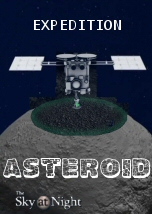
A look at two missions attempting one of the most difficult feats of space exploration - to collect a rock from another world. The film checks in on the US and Japanese attempts to bring a piece of an asteroid back to Earth. The missions have taken decades of planning, but the results will be worth it. We find out how studying these space rocks can teach us about the origins of our solar system and may one day help save Earth from a catastrophic collision.
The digital era gives rise to unprecedented opportunity to exploit, and be exploited. Troves of child pornography are available at the click of a mouse. Who are these children - and who profits from their abuse? While facilitating the darker side of our impulses, technology is also being touted as a cure to rehabilitate predators. In this episode meet the children who are forced to perform sex acts on camera; people who use the same technology to protect kids and nab the perpetrators; plus, a pedophile who reveals the roots of his addiction.
This remarkable science-history series investigates the blistering pace of human endeavour in space exploration, computing, energy, resources, Earth science and our understanding of the evolution of life itself. Across the last 50 years, humans have set a blistering pace and scientific discovery. We've crossed the boundaries of our solar system, made machines that can learn harnessed the power of the sun and built life from scratch. It's a period like no other in history, where human endeavour is changing everything: this is The Great Acceleration. As we race toward the future, we must examine the journey. In the first episode, Dr Shalin Naik explores the ambitious space shuttle mission that began in the '70s plus the future colonization of Mars. Over the past 50 years, space has become central to everything, from communications to entertainment to climate modelling. And as private enterprise enters space exploration, our understanding of the universe will only continue to expand. We will know if we can survive on other objects - the moon, maybe Mars, maybe even some of the moons of Jupiter and Saturn. Deep space is the last and infinite frontier. That's what we do as human beings. We explore, we learn, we make discoveries, from the moment we're born to the moment we die.
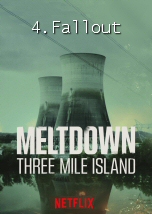
In the last episode, despite disturbing revelations of wrongdoing at Three Mile Island before and after the accident, the utility fights to bring the plant back online. Its Unit 1 had its license temporarily suspended following the incident at Unit 2. Although the citizens of the three counties surrounding the site voted by an overwhelming margin to retire Unit 1 permanently in a non-binding resolution in 1982, it was permitted to resume operations in 1985 following a 4–1 vote by the Nuclear Regulatory Commission. In 2017, it was announced that operations would cease by 2019 due to financial pressure from cheap natural gas, unless lawmakers stepped in to keep it open. Unit 1 shut down on September 20, 2019. Billed as the worst nuclear incident in U.S. history, what’s particularly scary here is how close Three Mile Island incident came to becoming a national disaster. Without giving away the whole story, cost-cutting 'solutions' almost cause a catastrophic disaster.












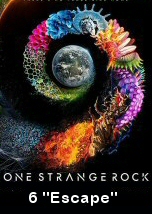










Astronaut Chris Hadfield believes the only chance for human survival is to escape from Earth and build a space colony, but there are real barriers.