


Last Watched

"Brian Cox"  Sort by

Life of a Universe Creation

   2017    Science    HD
In this 2-part special, Professor Brian Cox tackles the biggest story of them all, the story of our Universe. In the first episode, Creation, Brian probes our moment of creation. How did our Universe come into existence? Was there a time before the Big Bang? Do our laws of physics inexorably lead to the existence of us?
Series: Life of a Universe
Messengers

   2011    Science
Professor Brian Cox travels from the fossils of the Burgess Shale to the sands of the oldest desert in the world to show how light holds the key to our understanding of the whole universe, including our own deepest origins. To understand how light holds the key to the story of the universe; you first have to understand its peculiar properties. Brian considers how the properties of light that lend colour to desert sands and the spectrum of a rainbow can lead to profound insights into the history and evolution of our universe. Finally, with some of the world's most fascinating fossils in hand, Brian considers how but for an apparently obscure moment in the early evolutionary history of life, all the secrets of light may have remained hidden. Because although the universe is bathed in light that carries extraordinary amounts of information about where we come from, it would have remained invisible without a crucial evolutionary development that allowed us to see. Only because of that development can we now observe, capture and contemplate the incredible wonders of the universe that we inhabit.
Series: Wonders of the Universe

Place in Space and Time

   2014    Science
On a trip to the fortified Moroccan village of Ait-Ben-Haddou in the Atlas Mountains, Professor Brian Cox reveals how by watching the stars' motion across the night sky, it is quite natural for man to think he is at the centre of everything. That view was held for many ages, but innate human curiosity has eventually led to an understanding of mankind's true place in space and time, and an appreciation that Earth is not a focal point but a mere particle of rock in a possibly infinite expanse of space, 13.8 billion years from the beginning of the universe.
Series: Human Universe

Science Britannica: Frankenstein Monsters

   2013    Culture
Professor Brian Cox grapples with science's darker side, asking why, when science has done so much for us, it often gets such a bad press. Starting with the original Frankenstein - the grisly 19th century tale of George Foster's hanging and subsequent 'electrocution', Brian confronts the idea that science can go 'too far'. From the nuclear bomb to genetic modification, British science has always been at the cutting edge of discovery, but are British scientists feckless meddlers, or misunderstood visionaries whose gifts to humanity are corrupted by the unscrupulous?

Space: How Far Can We Go

   2021    Technology
Professor Brian Cox tackles some of the most challenging and intriguing questions facing science. He looks back on a decade of discovery and towards the next space frontier.
Brian believes we are at the start of a new age of space travel, where space flight is on the verge of becoming routine. In this episode, he explores the latest science and takes a new look at his old films and asks: how far can we go in our exploration of the cosmos?
Series: Brian Cox Adventures in Space and Time

Stardust

   2011    Science
In the second stop in his exploration of the wonders of the universe, Professor Brian Cox goes in search of humanity's very essence to answer the biggest questions of all: what are we? And where do we come from? This film is the story of matter - the stuff of which we are all made. Brian reveals how our origins are entwined with the life cycle of the stars. But he begins his journey here on Earth. In Nepal, he observes a Hindu cremation. Hindu philosophy is based on an eternal cycle of creation and destruction, where the physical elements of the body are recycled on to the next stage. Brian draws a parallel with the life cycle of the stars that led to our own creation. Next, he explains how the Earth's resources have been recycled through the ages. How every atom that makes up everything we see, was at some time a part of something else. Our world is made up of just 92 elements, and these same 92 elements are found throughout the entire universe. We are part of the universe because we are made of the same stuff as the universe.
Series: Wonders of the Universe
History of the Eagles

History of the Eagles

2013  History
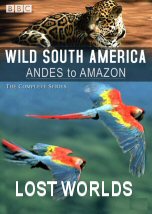
Wild South America

Wild South America

2005  Nature
The Art of Russia

The Art of Russia

2009  Art
Planet Earth

Planet Earth

2007  Nature
Cosmos

Cosmos

1980  Science
The Germanic Tribes

The Germanic Tribes

2007  History
The Planets

The Planets

2000  Science
P.U.L.S.E

P.U.L.S.E

2006  Art