


Last Watched

"Galaxy "  Sort by

Nebulas

   2008    Science
Take a tour through the Art Gallery of the Galaxy and view what are considered the "crown jewels" of the heavens. Nebulas are mysterious clouds of gas that aren't classified as stars, planets, moons or asteroids. Astronomers use the most sophisticated techniques to view them since they are practically invisible to the naked eye. Nothing less than stunning, nebulas glow, reflect or obscure the galaxy's light with amazing swirls of color. Nebulas mark the regions where the nothingness of space first coalesces, where stars are born and where stars die. Cutting-edge computer graphics are used to bring the universe down to earth.
Series: The Universe
Nova Wonders Are We Alone

   2018    Science    HD
The search for extraterrestrial life is an age-old quest. But recent breakthroughs make today an era like no other in the history of astronomy. From the exhilarating probing of our own solar system and the Kepler mission’s astounding discovery of thousands of extrasolar planets, to the next-generation telescopes under development, the prospects for finding life beyond Earth have never been stronger.
Still, daunting hurdles remain. How can we study anything light years away, let alone a little planet? In the vast universe, where should we even start to look? Is our failure to hear any other voices in the galaxy a sign that we are special? Join leading explorers now searching the galaxy for life and intelligence on other planets—and asks, if we do find other life in the universe... what would that mean?
Series: Nova Wonders

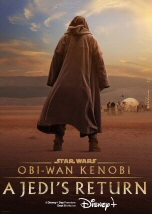
Obi-Wan Kenobi: A Jedi Return

   2022    Art
Step behind the curtain and discover how one of the most iconic stories in the Star Wars universe was brought back to life. Through exclusive behind-the-scenes footage, intimate interviews with cast and crew, and rare glimpses inside the legendary creature shop and props department, this captivating documentary reveals the artistry, passion, and vision that resurrected a beloved Jedi for a new generation.
Whether you're a lifelong fan or a newcomer to the galaxy far, far away, this journey into the heart of the Force will leave you inspired and eager to watch the saga unfold again.

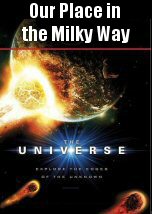
Our Place in the Milky Way

   2012    Science
An exploration of Earth's cosmic neighbourhood. Looking beyond the borders of our solar system, what's nearby in our galaxy? How do the other objects in our local area influence life on Earth? And, how did Earth's place in the galaxy make it the perfect place for the development of advanced life? Now that the Voyagers have visited the outer planets of the solar system they are heading for new adventures in places astronomers call the Oort Cloud, the heliopause, heliosheath and eventually they may encounter double stars and exoplanets, some of which may pay a visit to the solar system one day or explode showering us with radiation. If the Voyagers live so long they will experience the local fluff, local bubble and other parts of the habitable zone of the galaxy.
Series: The Universe

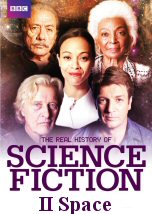
Space

   2014    Art
What if we could explore the vastness of Space? Science fiction has always fed upon our need to explore – to wonder what is out there. Space journeys from Jules Verne’s earliest ideas about attempts to leave our planet, to the Star Wars far away galaxy through to Nichelle Nichols revealing how her groundbreaking role as Lt. Uhura in Star Trek led to her participation in the recruitment of NASA’s astronauts. It explores the deep sea inspiration for Avatar, finds out why Ursula K Le Guin wrote The Left Hand of Darkness and discovers how Stanley Kubrick was able to make 2001: A Space Odyssey seem so believable. In addition, the program looks at the way Dune and The Mars Trilogy embraced the challenge of world building and discusses the appeal of the beaten up ‘dirty space’ of Dark Star and Firefly. From the horrifying scenes of Alien, to the epic spectacle of Star Wars, this is a journey to the stars and the alien encounters that await us there.
Series: The Real History of Science Fiction

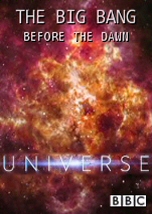
The Big Bang: Before the Dawn

   2021    Science
How did the universe come to be? Thanks to a series of discoveries, our most powerful space missions have unravelled 13.8 billion years of cosmic evolution and revealed the story of our universe from its birth all the way to the arrival of our nascent civilization. Our guide on this odyssey back to the dawn of time is light. Telescopes are time machines - by looking out into the distant universe, they open a window to the past. One telescope more than any other has helped us journey through the history of the universe: NASA’s Hubble Space Telescope. Remarkably, Hubble has even found one of the first galaxies ever to exist in the universe, which was born some 13.4 billion years ago. It's a discovery that hints at the beginnings of our own Milky Way. Vivid CGI brings this ancient galaxy to life, allowing us to witness for ourselves the first dawn. It was the beginning of a relationship between stars and planets that would, on a faraway world, lead to the origin of life - and ultimately to us.
Hubble’s incredible discoveries have allowed scientists to piece together much of our cosmic story, but it cannot take us back to the most important moment in history: the Big Bang. For decades, the moment the universe began was the subject of pure speculation, but by combining astronomy and cosmology, scientists have finally found a way to put their theories to the test and study the momentous events that took place during the Big Bang. They can do this because the European Space Agency’s Planck space telescope has seen the afterglow of the Big Bang itself – something we call the Cosmic Microwave Background. The unparalleled detail Planck gave us has helped confirm something remarkable: the Big Bang may not be the beginning. There was a time before the dawn – a place beyond anything we can comprehend. Professor Brian Cox transports us back to the fraction of a second before the Big Bang, when the seeds of our universe were planted.
Series: Universe