












Last Watched

"Titan"  Sort by

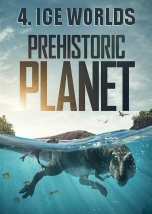
Ice Worlds

   2007    Nature
The Arctic and Antarctic experience the most extreme seasons on Earth. Time-lapse cameras watch a colony of emperor penguins, transforming them into a single organism. The film reveals new science about the dynamics of emperor penguin behaviour. In the north, unique aerial images show a polar bear swimming more than 100km. Diving for up to two minutes at a time. The exhausted polar bear later attacks a herd of walrus in a true clash of the Titans.
Series: Planet Earth
Ice Worlds.

   2024    Science    3D    HD
Episode 4 explores the far reaches of our solar system, where ice behaves in extraordinary ways. Frozen moons orbiting giant planets may conceal vast oceans beneath their crusts—possible homes for alien life. From spectacular icy eruptions to entire worlds shaped by cold forces, this journey reveals that ice can be as dynamic and powerful as fire. A stunning look at some of the most mysterious and potentially life-supporting places in space.
Series: Solar System

In Cold Blood

   2023    Science
The fourth episode of the series takes you on an epic journey through time, beginning 252 million years ago, in a world devastated by the greatest mass extinction in history. Discover how, from the ashes of this cataclysm, fungi become the dominant form of life in an almost apocalyptic landscape. Witness the astonishing story of survival and adaptation of the Lystrosaurus, curious ancestors of mammals, who emerge as the unlikely heirs of the Earth and transform into the dominant creatures, only to be eventually dethroned by new giant predators like the Erythrosuchus. The documentary culminates with the impressive era of dinosaurs and how they adapted to a constantly changing world, and the reigns of the plesiosaurs and pterosaurs, rulers of the oceans and the air. Finally, learn how these titans gave way to modern reptiles and current birds, leaving a legacy that endures to this day.
This documentary is a window into the fascinating evolutionary history of our planet, showing the resilience and diversity of life through the ages. Prepare to be amazed, informed, and deeply moved by this spectacular chronicle of life on our planet.
Series: Life on Our Planet

Is Saturn Alive

   2014    Science
Saturn's secrets are out. The ferocious weather, the evolving ring system and the discovery of active geology on Saturn's moons has rewritten the textbooks. Scientists are looking for life on Saturn's moons and they may have found it on Titan.
Series: How the Universe Works

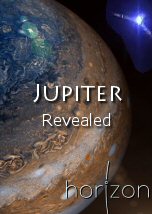
Jupiter Revealed

   2018    Science    HD
This documentary journeys with the scientists into the heart of a giant. Juno is the Nasa mission designed to peer through Jupiter's swirling clouds and reveal the wonders within. By projecting a 70-foot-wide, life-size Juno on a Houston rooftop, Scott Bolton, head of Juno, shows us how its fragile electronics are encased in 200kg of titanium. As Scott puts it, 'we had to build an armoured tank to go there.' Professor Andrew Ingersoll, Juno's space weatherman, reveals they have seen lightning inside Jupiter, perhaps a thousand times more powerful than Earth's lightning. This might be evidence for huge quantities of water inside Jupiter.
Under the extreme conditions of Jupiter thousands of miles under the surface, hydrogen becomes a liquid metal. Juno is finding out how much liquid metallic hydrogen is inside Jupiter, and scientists hope to better understand how this flowing metal produces the most powerful aurora in the Solar System. But what is at Jupiter's heart? In Nice, Prof Tristan Guillot explains how Juno uses gravity to map the planet's centre. This can take scientists back to the earliest days of the solar system, because Jupiter is the oldest planet and it should contain clues to its own creation. By chalking out an outline of the Jupiter, Tristan reveals there is a huge rocky core - perhaps ten times the mass of Earth.

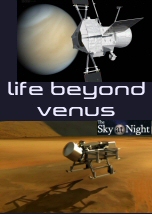
Life Beyond Venus

   2020    Science
Chris Lintott and Maggie Aderin-Pocock report on the reaction to the dramatic announcement of the discovery of phosphine gas in the clouds of Venus, a gas that could be a sign of life. Venus remains an inhospitable and unlikely host. But if not Venus, where in the solar system is the best place to look for alien life? Chris and Maggie investigate the latest missions to Mars and the icy moons of Jupiter and Saturn. Away from the search for life, Pete Lawrencepreviews the best meteor showers of the year.
Series: The Sky at Night
Minimalism

Minimalism

2015  Culture
Empire of the Tsars

Empire of the Tsars

2017  History
Blood of the Vikings

Blood of the Vikings

2001  History
Top Gear

Top Gear

2012  Technology
History of the Eagles

History of the Eagles

2013  History
Becoming Human

Becoming Human

2010  History
The Last Dance

The Last Dance

2020  Culture
The Jinx

The Jinx

2015  History