Join us on an unforgettable voyage through one of the most desolate periods in human history as the rulers, conflicts, and cataclysmic societal breakdown of Early Middle Ages are brought to light. At its height in the second century A.D., the Roman Empire was the beacon of learning, trade, power and prosperity in the western world. But the once-powerful Rome--rotten to the core by the fifth century--lay open to barbarian warriors who came in wave after wave of invasion, slaughtering, stealing, and ultimately, settling. As chaos replaced culture, Europe was beset by famine, plague, persecutions, and a state of war that was so persistent it was only rarely interrupted by peace. The documentary profiles those who battled to shape the future, from the warlords whose armies threatened to case the demise of European society, like Alaric, Charles the Hammer, and Clovis; to the men and women who valiantly tended the flames of justice, knowledge, and innovation including Charlemagne, St. Benedict, Empress Theodora, and other brave souls who fought for peace and enlightenment. It was in the shadows of this turbulent millennium that the seeds of modern civilization were sown.
This episode covers the nature of how life may have developed on Earth and the possibility of life on other planets. Tyson begins by explaining how the human development of writing systems enabled the transfer of information through generations, describing how Princess Enheduanna ca. 2280 BCE would be one of the first to sign her name to her works, and how Gilgamesh collected stories, including that of Utnapishtim documenting a great flood comparable to the story of Noah's Ark. Tyson explains how DNA similarly records information to propagate life, and postulates theories of how DNA originated on Earth, including evolution from a shallow tide pool, or from the ejecta of meteor collisions from other planets. In the latter case, Tyson explains how comparing the composition of the Nakhla meteorite in 1911 to results collected by the Viking program demonstrated that material from Mars could transit to Earth, and the ability of some microbes to survive the harsh conditions of space. With the motions of solar systems through the galaxy over billions of years, life could conceivably propagate from planet to planet in the same manner. Tyson then moves on to consider if life on other planets could exist. He explains how Project Diana performed in the 1960s showed that radio waves are able to travel in space, and that all of humanity's broadcast signals continue to radiate into space from our planet. Tyson notes that projects have since looked for similar signals potentially emanating from other solar systems. Tyson then explains that the development and lifespan of extraterrestrial civilizations must be considered for such detection to be realized. He notes that civilizations can be wiped out by cosmic events like supernovae, natural disasters such as the Toba disaster, or even self-destruct through war or other means, making probability estimates difficult. Tyson describes how elliptical galaxies, in which some of the oldest red dwarf stars exist, would offer the best chance of finding established civilizations. Tyson concludes that human intelligence properly applied should allow our species to avoid such disasters and enable us to migrate beyond the Earth before the Sun's eventual transformation into a red giant.
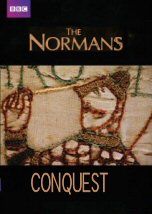
Professor Robert Bartlett explores the impact of the Norman conquest of Britain and Ireland. Bartlett shows how William the Conqueror imposed a new aristocracy, savagely cut down opposition and built scores of castles and cathedrals to intimidate and control. He also commissioned the Domesday Book, the greatest national survey of England that had ever been attempted. England adapted to its new masters and both the language and culture were transformed as the Normans and the English intermarried. Bartlett shows how the political and cultural landscape of Scotland, Wales and Ireland were also forged by the Normans and argues that the Normans created the blueprint for colonialism in the modern world.
Professor Robert Bartlett explores how the Normans developed from a band of marauding Vikings into the formidable warriors who conquered England in 1066. He tells how the Normans established their new province of Normandy -'land of the northmen' - in northern France. Under the leadership of Duke William, they conquered England. The Battle of Hastings marked the end of the Anglo-Saxon aristocracy and monarchy. The culture and politics of England would now be transformed by the Normans.
Professor Robert Bartlett explores the impact of the Normans on southern Europe and the Middle East. The Normans spread south in the 11th century, winning control of southern Italy and the island of Sicily. There they created their most prosperous kingdom, where Christianity and Islam co-existed in relative harmony and mutual tolerance. It became a great centre of medieval culture and learning. But events in the Middle East provoked the more aggressive side of the Norman character. In 1095, the Normans enthusiastically answered the Pope's call for holy war against Islam and joined the first crusade. They lay siege to Jerusalem and eventually helped win back the holy city from the muslims. This bloody conquest left a deep rift between Christianity and Islam which is still being felt to this day.
Hundreds of years ago in faraway Iceland the Vikings began to write down dozens of stories called sagas - sweeping narratives based on real people and real events. But as Oxford University's Janina Ramirez discovers, these sagas are not just great works of art, they are also priceless historical documents which bring to life the Viking world. Dr Ramirez travels across glaciers and through the lava fields of Iceland to the far north west of the country to find out about one of the most compelling of these stories - the Laxdaela Saga.













The documentary profiles those who battled to shape the future, from the warlords whose armies threatened to case the demise of European society, like Alaric, Charles the Hammer, and Clovis; to the men and women who valiantly tended the flames of justice, knowledge, and innovation including Charlemagne, St. Benedict, Empress Theodora, and other brave souls who fought for peace and enlightenment. It was in the shadows of this turbulent millennium that the seeds of modern civilization were sown.