







Last Watched

"Lion"  Sort by

Frozen Planet: Spring

   2011    Nature
Spring arrives in the polar regions, and the sun appears after an absence of five months; warmth and life return to these magical ice worlds - the greatest seasonal transformation on our planet is underway. Male Adelie penguins arrive in Antarctica to build their nests - it takes a good property to attract the best mates and the males will stop at nothing to better their rivals! But these early birds face the fiercest storms on the planet. In the Arctic, a polar bear mother is hunting with her cubs. Inland, the frozen rivers start to break up and billions of tons of ice are swept downstream in the greatest of polar spectacles. This melt-water fertilizes the Arctic Ocean, feeding vast shoals of Arctic cod and narwhal. The influx of freshwater accelerates the breakup of the sea-ice - an area of ice the size of Australia will soon vanish from the Arctic. On land, a woolly bear caterpillar emerges from the snow having spent the winter frozen solid. Caterpillars normally become moths within months of hatching, but life is so harsh here that the woolly bear takes 14 years to reach adulthood. Once mature it has only days to find a mate before it dies! Alongside the caterpillars white Arctic wolves race to raise their adorable cubs before the cold returns.
Series: Frozen Planet
Frozen Planet: Summer

   2011    Nature
It is high summer in the Polar Regions, and the sun never sets. Vast hordes of summer visitors cram a lifetime of drama into one long, magical day; they must feed, fight and rear their young in this brief window of plenty. Summer is a tough time for the polar bear family, as their ice world melts away and the cubs take their first swimming lesson. Some bears save energy by dozing on icy sun beds, while others go egg-collecting in an Arctic tern colony, braving bombardment by sharp beaks. There are even bigger battles on the tundra; a herd of musk oxen gallop to the rescue as a calf is caught in a life and death struggle with a pair of Arctic wolves. But summer also brings surprises, as a huge colony of 400,000 king penguins cope with an unlikely problem - heat. The adults go surfing, while the woolly-coated chicks take a cooling mud bath. Nearby, a bull fur seal is prepared to fight to the death with a rival. Fur flies as the little pups struggle desperately to keep out of the way of the duelling giants. Further south, a minke whale is hunted amongst the ice floes by a family of killer whales. The dramatic chase lasts over 2 hours and has never been filmed before. The killers harry the minke whale, taking it in turns to wear it down. Eventually it succumbs to the relentless battering. Finally, comical adelie penguins waddle back to their half a million strong colony like clockwork toys. The fluffy chicks need constant feeding and protection as piratical skuas patrol the skies. When an unguarded chick is snatched, a dramatic "dogfight" ensues.
Series: Frozen Planet

Frozen Planet: To the Ends of the Earth

   2011    Nature
Our journey begins with David Attenborough at the North Pole, as the sun returns after six months of darkness. We follow a pair of courting polar bears, which reveal a surprisingly tender side. Next stop is the giant Greenland ice cap, where waterfalls plunge into the heart of the ice and a colossal iceberg carves into the sea. Humpback whales join the largest gathering of seabirds on earth to feast in rich Alaskan waters. Further south, the tree line marks the start of the Taiga forest, containing one third of all trees on earth. Here, 25 of the world's largest wolves take on formidable bison prey. At the other end of our planet, the Antarctic begins in the Southern Ocean where surfing penguins struggle to escape a hungry sea-lion and teams of orcas create giant waves to wash seals from ice floes -a filming first. Diving below the ice, we discover prehistoric giants, including terrifying sea spiders and woodlice the size of dinner plates. Above ground, crystal caverns ring the summit of Erebus, the most southerly volcano on earth. From here we retrace the routes of early explorers across the formidable Antarctic ice-cap - the largest expanse of ice on our planet. Finally, we rejoin David at the South Pole, exactly one hundred years after Amundsen then Scott were the first humans to stand there
Series: Frozen Planet

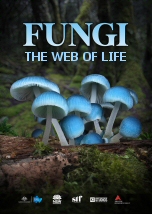
Fungi: The Web of Life

   2023    Nature    HD
Acclaimed biologist Dr. Merlin Sheldrake seeks a rare blue mushroom in Tasmania's ancient Tarkine rainforest, revealing fungi's extraordinary abilities. Fungi may provide solutions to humanity's problems, with millions more species yet to be discovered.
All life on Earth is connected by a great mystery we are only just beginning to unravel. Hidden between the world of plants and animals, another world exists… Fungi’s web of life. We’ll begin in the mysterious world of the forest floor, where fungi are the central players in nature’s story of birth, death, and rebirth to discover that life as we know it simply would not exist without them. Dr. Sheldrake will show us some the grandest and strangest organisms ever discovered, showcased through jaw-dropping time-lapse cinematography, in a landscape largely unchanged from the time of the dinosaurs.
Fungi have important lessons to teach humanity about survival through cooperation. Indeed, these incredible lifeforms may hold the key to solving some of humanity’s most urgent problems. With millions more species to discover, our journey into the secret world of fungi has only just begun.

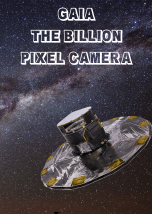
Gaia The Billion Pixel Camera

   2015    Technology
The Milky Way, our galaxy, is a magnificent sight in the night sky, but we know surprisingly little about it for certain. What is its shape? How many stars does it actually contain? What lies at its centre? The Gaia space telescope will answer these questions, being armed with the most advanced camera to leave our planet, and it will allow us to see our galaxy as we've never seen it before. The Sky at Night visits the factory in Chelmsford that made the astonishing sensor at the heart of the mission.
Series: The Sky at Night

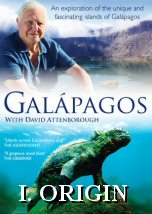
Galapagos with David Attenborough Origin

   2013    Nature    3D    HD
Sir David Attenborough returns to the Galápagos Islands and travels throughout the archipelago to explain their origins and their unique fauna in evolutionary terms. He has captured a new species of pink iguana on film for the first time. In the first episode, the islands of the Galapagos rose explosively from the ocean four million years ago. Although life would not seem viable in such a remote Pacific outpost, the first arrivals landed as the fires still burned. David Attenborough explores the islands for the animals and plants that descend from these pioneers: from the sea birds carrying the seeds that made a tentative foothold on these rocks, to equator-dwelling penguins and a dancing bird with blue feet. This is a story of treacherous journeys, life-forms that forged unlikely companionships, and surviving against all odds. It is the story of an evolutionary melting pot in which anything and everything is possible.
Series: Galapagos with David Attenborough
Get Gotti

Get Gotti

2023  History
Hidden Kingdoms

Hidden Kingdoms

2014  Nature
Arnold

Arnold

2023  History
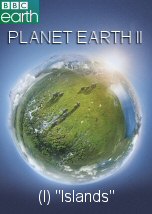
Planet Earth II

Planet Earth II

2016  Nature
Leonardo Da Vinci

Leonardo Da Vinci

2024  History