Last Watched

"City"  Sort by

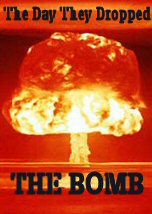
The Day they Dropped the Bomb

   2015    History
August 6th 1945 marked the start of a terrifying new episode in human history. This documentary marks the 70th anniversary of the day when the world's first atomic bomb was dropped on the Japanese city of Hiroshima by a Boeing B-29 USAF Superfortress bomber, nicknamed Enola Gay after the pilot's mother". Up to 80,000 people - 30 per cent of the population - were killed by the blast and resulting firestorm and over 70,000 were injured. This documentary gives a minute-by-minute account of what happened on that fateful day, through the testimony of people who were there and rarely-seen archive footage from the time. Made on location in Hiroshima and the USA, it features unique interviews with eyewitnesses who have seldom, if ever, spoken about the experience. Several of them are no longer alive, they include the last surviving member of the crew of the Enola Gay - navigator Dutch Van Kirk who died in July 2014.

The Devil Bible

       Art
The Codex Gigas, or Devil's Bible, is the world's largest and most enigmatic medieval manuscript, said to be crafted from 160 donkey skins and weighing a staggering 165 pounds. Its chilling full-page portrait of the Devil, believed to be the result of a monk's desperate pact with dark forces, is just the beginning of its mysteries. Written in the Kingdom of Bohemia, this legendary text blends biblical scripture with forbidden demonic spells, making it both sacred and cursed.
Filled with mystical medical formulas and cryptic incantations, the Codex Gigas holds mysteries that have fascinated historians for centuries. The haunting contrast between a Heavenly City and the devil's image adds to its mystique. This documentary dives deep into one of history's most mysterious artifacts, uncovering secrets that have captivated the world for generations.
Series: The Truth Behind

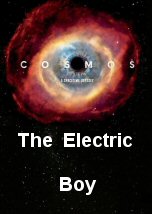
The Electric Boy

   2014    Science
This episode provides an overview of the nature of electromagnetism, as discovered through the work of Michael Faraday. Tyson explains how the idea of another force of nature, similar to gravitational forces, had been postulated by Isaac Newton before. Tyson continues on Faraday, coming from poor beginnings, would end up becoming interested in studying electricity after reading books and seeing lectures by Humphry Davy at the Royal Institution. Davy would hire Faraday after seeing extensive notes he had taken to act as his secretary and lab assistant. After Davy and chemist William Hyde Wollaston unsuccessfully tried to build on Hans Christian Ørsted's discovery of the electromagnetic phenomena to harness the ability to create motion from electricity, Faraday was able to create his own device to create the first electric motor by applying electricity aligned along a magnet. Davy, bitter over Faraday's breakthrough, put Faraday on the task of improving the quality of high-quality optical glass, preventing Faraday from continuing his research. Faraday, undeterred, continued to work in the Royal Institution, and created the Christmas Lectures designed to teach science to children. Following Davy's death, Faraday returned to full time efforts studying electromagnetism, creating the first electrical generator by inserting a magnet in a coil of wires. Tyson continues to note that despite losing some of his mental capacity, Faraday concluded that electricity and magnetism were connected by unseen fields, and postulated that light may also be tied to these forces. Using a sample of the optical glass that Davy had him make, Faraday discovered that an applied magnetic field could affect the polarization of light passing through the glass sample (a dielectric material), leading to what is called the Faraday effect and connecting these three forces. Faraday postulated that these fields existed across the planet, which would later by called Earth's magnetic field generated by the rotating molten iron inner core, as well as the phenomena that caused the planets to rotate around the sun. Faraday's work was initially rejected by the scientific community due to his lack of mathematical support, but James Clerk Maxwell would later come to rework Faraday's theories into the Maxwell's equations that validated Faraday's theories. Their combined efforts created the basis of science that drives the principles of modern communications today.
Series: Cosmos: A Spacetime Odyssey

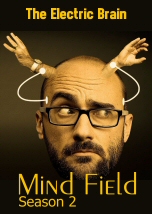
The Electric Brain

   2018    Medicine
The nervous system is fundamentally electric. When we move our arm, it moves because a electric signal has been sent to the muscle that controls it. Now, because the brain is electric, we could also use electricity to record what the brain is doing or bypass it entirely, and control a body. That means that we could restore movement to people who are paralyzed, feel through an artificial hand as if it was our own, and even read people's minds.
Michael Stevens explores how electricity can be used to move cockroaches, control other peoples' limbs and even read peoples' thoughts.
Series: Mind Field Season 2

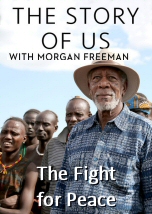
The Fight for Peace

   2018    Culture
Morgan Freeman travels the world to study the cycles of war and peace. From the ritualized combat of the sacred Tinku festival in Bolivia to Rwanda's post-genocide reconciliation program, this episode deals with humanity's enormous capacity for violence and the endless pursuit of harmony. Conflict can drive innovation, but is war necessary?
Series: The Story of Us

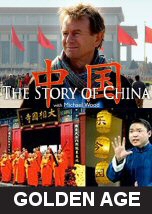
The Golden Age

   2016    History
This episode tells the tale of what's broadly considered China's most creative dynasty - the Song (960-1279). Michael Wood heads to the city of Kaifeng, the greatest city in the world before the 19th century. Here in Twin Dragon Alley, locals tell him the legend of the baby boys who became emperors.
He explores the ideas and inventions that made the Song one of greatest eras in world culture, helped by China's most famous work of art, the Kaifeng scroll, which shows the life of the city in around 1120. A chef makes Michael a recipe from a Song cookbook, while a guide to 'how to live happy, healthy lives for old people', published in 1085 and still in print, is discussed with local women doing their morning exercises. The Song was also a great era for scientific advance in China. Michael steers a huge working replica of an astronomical clock, made by China's Leonardo da Vinci.
Then at a crunch Chinese Premier League match, Michael tells us the Chinese invented football! The golden age of the northern Song ended in 1127, when invaders sacked Kaifeng, but they survived in the south. At their new capital, Hangzhou, Wood joins locals dancing by the West Lake, while in the countryside he meets Mr Xie with his records of 40 generations of ancestors. The final defeat of the Song took place in a naval battle in the estuary of the Pearl River in 1279. When all was lost, rather than surrender to the Mongols, a loyal minister jumped into the sea with the young boy emperor in his arms. 'So ended the glory of the Song', Wood concludes, 'but a new age would arise... as in China, it always has!'.
Series: The Story of China