The Sundarbans mangrove forest, in Bangladesh near the Indian border, is a tidal jungle where Ganges and Brahmaputra enter the Indian Ocean. Its has some 400 Bengal tigers - the largest population in the world, and the only to be hardly scared of men. The downside is tigers kill up the 50 Bangladeshis a year, even from neighbouring villages, so keeping them inside the reserve is key to long-term survival. A recent project tries to train local mongrels, not pets but fiercely self-reliant dogs, to spot and even scare off tigers from villages. An individual tiger can turn into a man-eater in order to survive - this process may occur due to an injury or old age (and so cannot hunt agile prey) or even accidentally tasting human flesh.
Dallas entrepreneur Bill Moore is convinced that penis enlargement can become as normal as Botox. From his cosmetic clinic, he promotes injectable treatments that promise greater size, confidence and sexual self-esteem, attracting men willing to endure pain, expense and repeated procedures in pursuit of an ideal body. But behind the sales pitch lies a much broader story about insecurity, shame, pornography, social pressure and the growing business built around male dissatisfaction. Following Moore and several of his clients, the documentary moves from darkly comic consultations to far more troubling consequences. A father of five becomes increasingly obsessed with enhancement while his finances and family life suffer, while another man seeks help after a disastrous permanent-filler procedure leaves him facing reconstructive surgery. With unusual access and unexpected empathy, the film examines addiction, body image and the fragile myths of masculinity, asking what happens when personal insecurity becomes something that can be measured, marketed and sold back as a cure.
A man who overcame insurmountable odds to become one of the most loved and respected athletes of all time. From a starving teenager who fought to feed his family, to a Congressman working tirelessly to improve the lives of his people, Manny is a hard hitting feature length documentary film that explores the many triumphs and tribulations of Filipino boxing sensation Manny Pacquiao.
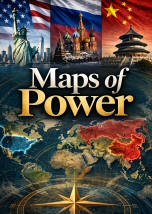
Geography has shaped the rise and fall of nations long before modern borders existed. Across the United States, Russia and China, mountains, rivers, deserts, oceans and natural resources have influenced migration, settlement, warfare, trade and political ambition. From the first peoples of North America and the waterways that helped build the United States into a superpower, to Russia’s vast exposed landmass and centuries-long search for secure borders and warm-water ports, the series reveals how physical geography repeatedly becomes political destiny. China completes the global picture, showing how the Himalayas, the Gobi Desert, the Yellow and Yangtze rivers and its position at the heart of Eurasian trade helped shape one of the world’s oldest civilizations and its modern rise. Presented here with all three episodes combined into a single video, the documentary connects ancient history with today’s struggle for global influence, revealing why the geography of the USA, Russia and China still plays a decisive role in the balance of world power.
Professor Jerry Brotton reveals that maps are far more than neutral guides to places: they are expressions of the societies that create them and powerful instruments for shaping territory, belief and authority. Beginning with some of the earliest known maps, he traces how cartography evolved from marking land and ownership to serving kings, empires, scientists and governments. From Henry VIII’s coastal surveys and the Cassini family’s scientific breakthroughs to the drawing of modern national borders, the series shows how maps can define who controls land, who belongs where and even how entire peoples understand the world around them. Across the three episodes, presented here together in a single uninterrupted video, the journey moves from ancient and medieval worldviews to imperial expansion and the digital age. Brotton explores religious maps, Aztec symbolism, Victorian attempts to classify societies, the politics behind projections of the globe, and the rise of Google Earth and data-driven mapping. He then follows the mapmakers and explorers who turned distant lands into targets for conquest and profit, from Ptolemy and Columbus to Walter Raleigh and the trading empires that followed. The story ends in the Arctic, where new maps are once again being used to stake claims over oil, gas and minerals, proving that even in the twenty-first century, cartography remains inseparable from power, plunder and possession.
It tells the story of FIFA World Cup of 1950, highlighting (but also showing other nations) the path of the two teams who played the final match: Uruguay and Brazil. The high quality of the footage is amazing, the text is smart and humorous, the music has been very well chosen in order to represent both the emotions involved in each moment and the contrast between the calmness of Uruguayan preparation and the crowded days of Brazilian team." The whole story shows not only one side. While Uruguayan team acquired confidence after an initial mistrust, Brazil was by far the best team in the competition but was heavily influenced by the environment in Brazilian society, the influence of politics and the pressure of the fans. While Uruguay overcame heroically all the constraints and, led by Obdulio Varela, won a title that few people believed, Brazilians got shocked because they considered themselves champions even before the final match, and their players became stigmatized until nowadays, not being celebrated as the fantastic team they were.























A recent project tries to train local mongrels, not pets but fiercely self-reliant dogs, to spot and even scare off tigers from villages. An individual tiger can turn into a man-eater in order to survive - this process may occur due to an injury or old age (and so cannot hunt agile prey) or even accidentally tasting human flesh.