In this curious series, the minds behind history's most iconic toy franchises will discuss the rise (and sometimes fall) of their billion-dollar creations. In 1977, after being rejected by Mattel and Hasbro, Lucasfilm signed with Kenner Products to have toys produced for their sci-fi film Star Wars. This was a huge gamble, as Kenner was a small toy company at the time and the negotiation process started late due to George Lucas' secrecy over the ship designs. Since then, toy sales of the Star Wars franchise have totaled to US$14 billion worldwide.
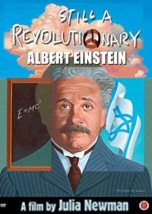
Albert Einstein, the most famous scientist of all time, was a world-renowned celebrity, greeted like a rock star when he appeared in public. An anti-war firebrand, Einstein also spoke out on issues ranging from women's rights and racism to immigration and nuclear arms control. But today, his image has been neutered into that of a charmingly absent-minded genius. He was, in fact, a powerful force for social change and a model for political activism. Using a wealth of rarely-seen archival footage, correspondence, and new and illuminating interviews, filmmaker Julia Newman makes the case that Albert Einstein's example of social and political activism is as important today as are his brilliant, groundbreaking theories.
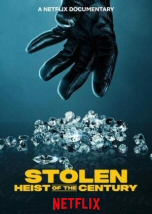
In early 2003, a team of Italian thieves orchestrated one of the boldest robberies in modern history: The disappearance of hundreds of millions in diamonds from the heavily guarded vaults of Antwerp. Through unprecedented access to archival footage, police records, and newly recorded interviews, the film reconstructs the intricate planning that allowed the so-called School of Turin to bypass what was believed to be impenetrable security. Told with a balance of suspense and reflection, it confronts investigators with the alleged mastermind, weaving a story of ambition, betrayal, and the mystery of gems never recovered. Beyond the spectacular details of the heist, it examines the toll on jewelers, insurers, and investigators, while questioning how ingenuity, greed, and betrayal blur the lines between admiration and crime.
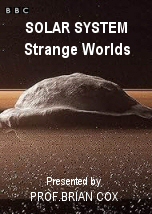
In this final journey through our celestial neighborhood, Professor Brian Cox ventures beyond the familiar into the utterly bizarre. He uncovers a dwarf planet shaped like an egg that defies scientific logic, a tiny moon resembling a flying saucer, and a chilling ocean world locked in orbit around Jupiter. These strange and haunting places challenge everything we thought we knew about the solar system—making this the most mind-bending chapter of the series.
Perhaps there is no architectural feature more distinctly Angeleno than a strip mall. The city is full of them with their busy facades and bright neon signage. Their wonderfully eclectic, multi-purpose tenants give shape and home to the multitudes of ethnic communities that make up LA’s diverse population. Trois Mec and Petit Trois can be found side-by-side in a Hollywood strip mall, nestled between a dry cleaners and a Yum Yum donut. Ludo’s restaurants and the dishes he creates for them embody the cultural mash-up and high/low flair that is the strip mall philosophy.
Beef and brine. This 'Best Of' episode of the Mind of a Chef explores the wet and dry side of our culinary world. Magnus Nilsson dry-ages a steak in kidney fat as long as he possibly can, April Bloomfield hallucinates while at a butcher shop, Ed Lee makes a ribeye with eel puree, and more.








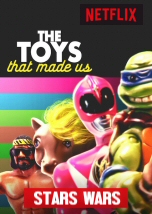



In 1977, after being rejected by Mattel and Hasbro, Lucasfilm signed with Kenner Products to have toys produced for their sci-fi film Star Wars. This was a huge gamble, as Kenner was a small toy company at the time and the negotiation process started late due to George Lucas' secrecy over the ship designs. Since then, toy sales of the Star Wars franchise have totaled to US$14 billion worldwide.