












Last Watched

"Places on the Globe"  Sort by

The Andes

   2020    Culture
The fourth episode starts off with the two riding through Santa Cruz, Argentina. The plan is to cross over into Chile and then going up into the Andes. Ewan and Charley head through Argentina’s red rock landscape while a member of their team copes with altitude sickness. The duo are well and truly underway and the first signs of all are well is how well the Harleys hold up in challenging conditions. The roads alternate between unforgiving and pleasant and these e-bikes push through effortlessly. As they ride through Chilean Andes, the audience is shown a picturesque view of the beauty of the countryside, an experience which Boorman calls 'magical.'
Series: Long Way Up
The Arctic

   2011    Culture
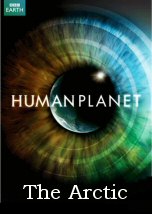
The Arctic is the harshest environment on Earth: little food grows, it's dark for months on end, and temperatures stay well below freezing for much of the year. Yet four million people manage to survive here. Human Planet tells remarkable stories of extraordinary people who make their homes in nature's deep freeze. In springtime, Amos and Karl-Frederik set out across the sea ice with their dogs to catch a real-life sea monster: a Greenland shark! Inuit mussel-gatherers venture underneath the sea ice at low tide for a perilous race against time as they gather their food. And the children of Churchill, Manitoba, set out on the most dangerous trick or treating Halloween in the world: they risk coming face-to-face with deadly polar bears on the streets of their town. Who'll get the tastiest snack?
Series: Human Planet

The Arctic Ocean

   2009    Nature
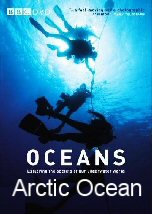
With much of it covered in ice all year round and with no daylight from October to March, the Arctic Ocean is one of the world's most remarkable oceans. Its home to a multitude of unique life forms, all highly adapted to cope with the extreme and seasonal conditions. The impacts of climate change are more strongly felt here than anywhere else in the world.
Series: Oceans

The Arid Heart

   2024    Nature    3D    HD
In the sixth episode, you’ll journey through Asia’s vast deserts and steppes, where life thrives against all odds. Meet the elusive Gobi bear, one of the rarest mammals on Earth, scent-marking ancient trees in its territory. In the densely populated Thar Desert, thousands of demoiselle cranes migrate from Siberia to be greeted with offerings of grain by the local Jain community. Discover how wild horses and gazelles endure harsh conditions and outsmart predators. This chapter reveals the remarkable resilience and adaptability of wildlife in one of the planet’s most unforgiving environments.
Series: Asia

The Atlantic

   2009    Nature
The Atlantic is the second largest ocean on the planet. It is the resting place of the Titanic, home to the mysterious Bermuda Triangle and is the youngest of the Earth's great oceans. It reaches depths of 8,500 metres. Oceans investigates this influential body of water from a group of islands in its western reaches - the Bahamas.
Series: Oceans

The Big Freeze

   1993    Nature
As almost all animal inhabitants of Antarctica are forced to migrate north, the sea underneath the frozen ice still provides a home to many specially adapted fish whose cells are protected from freezing through an 'antifreeze' liquid. Many of them feed on the faeces of other animals. The most notable larger animal that does not migrate north is perhaps the Weddell Seal, which can be found as close as 1300 kilometres to the pole. Groups of seals tear holes into the ice to dive for food and come up to breathe. The females come back to the ice to give birth. This episode also describes primitive plant life such as lichen, which can still be found on the continent in winter, even in the extremely dry and permanently frozen valleys conditions under which dead animals can lie frozen for many centuries without decomposing. It details the life of the Emperor Penguin, 'the only birds to lay their eggs directly on ice'. While other animals retreat, Emperors migrate not just to the ice, but into the Antarctic continent. The females lay eggs which are incubated by the males under the harshest conditions on Earth (huddling closely together for warmth), while the females return to the sea.
Series: Life in the Freezer
The Story of the Jews

The Story of the Jews

2013  History
The Jinx

The Jinx

2015  History
Life

Life

2009  Nature
Clarkson Farm

Clarkson Farm

2021  Nature
Leaving Neverland

Leaving Neverland

2019  Culture
Cooked

Cooked

2016  Culture