Moral psychology isn't always an easy thing to study. Experiments that actually puts people in what feels like a real scenario may get realistic results, but researchers must always balance the benefits of what we could learn with the safety and well-being of the people they study. Often what we learn from moral psychology experiments doesn't make humans look good. We are imperfect creatures. But the more we learn about why and how we make the moral choices that we do, the better we'll be able to tackle difficult questions in the future.
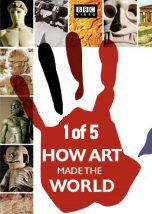
Embark on a thrilling journey through time and five continents to the heart of creativity. Fusing social history, politics, science, nature, archaeology and religion, this international landmark series unravels a universal mystery - why the world around us looks like it does. Modern-day mysteries are answered by journeying back to the beginning of civilisation via some of the most amazing man-made creations in the world. In the first episode, one image dominates our contemporary world above all others: the human body. How Art Made the World travels from the modern world of advertising to the temples of classical Greece and the tombs of ancient Egypt to solve the mystery of why humans surround themselves with images of the body that are so unrealistic.
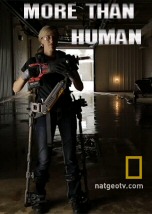
Scientific advancements are challenging the concept of what it means to be human. Technology embedded in our bodies is fairly common: artificial limbs, pacemakers. But new research is taking us beyond replacement parts and into a new realm that is changing the nature of the human body and the human mind. Will the fusion of biology and technology change how we think, how we feel, how we experience the world?
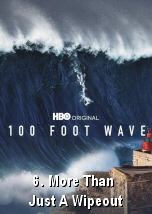
The day of the Nazaré competition has arrived, and Garrett McNamara decides not to compete but instead support his long-time friend and teammate Andrew 'Cotty' Cotton. The competition does not go smoothly, with a major accident that has secondary effects on Cotty. After the competition, Garrett tries surfing at Nazaré again and realizes that can resume big-wave surfing. The episode concludes with retrospectives from a number of the surfers who appeared on various episodes throughout the season.
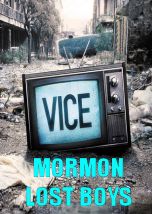
'Mormon Lost Boys' Young men have been thrown out of their homes because of an edict allowing polygamist church elders to monopolize young girls. 'The Fat Farms of Mauritania' In the West African country of Mauritania, parents send their daughters to rural fattening camps. 'Mumbai Slumscraper' A visit to Mumbai, where slums sit below billion-dollar, single-family skyscrapers.
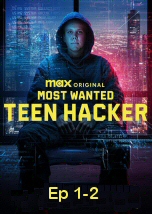
Through interviews with victims, cybersecurity experts, and a former FBI agent, this gripping miniseries dives into the dark frontier of online crime, where a teenage Finnish prodigy transforms into one of the most notorious hackers of his generation. The series exposes the hidden alliances, moral gray zones, and devastating consequences of a digital war waged in silence — where lines blur between rebellion, genius, and destruction. It’s a portrait of a hyper-connected world where a single keyboard can shake governments and ruin lives. In the first two episodes, the hunt starts and intensifies: the FBI infiltrates DEF CON in Las Vegas in search of the elusive figure known as Zeekill. What follows is a chain of chaos as Kivimäki launches false emergency calls that mobilize armed units, turning quiet suburbs in Connecticut into war zones and drawing one FBI agent into a personal nightmare that reveals just how fragile digital order really is.












We are imperfect creatures. But the more we learn about why and how we make the moral choices that we do, the better we'll be able to tackle difficult questions in the future.