COVID-19 is far from the first pandemic to wreak havoc in the world. A long line of infectious diseases have devastated and in some cases destroyed entire societies. Almost all of them started in animals and made the jump to humans. The Black Death spread across Europe and Asia in the 14th century leaving millions dead in its wake. Between the 15th and 18th centuries, European colonists brought smallpox to the Americas, the Pacific region and to Australia. In Europe, the 17th century saw a series of major epidemics. And at the end of the First World War, more people died of the Spanish flu than on the battlefield. This documentary examines the causes of these epidemics - whether it be lack of hygiene, interaction with animals, overcrowding, or the growth of cities - and how people travelling helped to spread disease and promote pandemics. It also sheds a light on the impact these infectious diseases have had on politics and societal change. Over the centuries, scientists managed to develop treatments and medicines to help control or even eradicate infectious diseases. Virologists are facing that task again with the coronavirus, as the world frantically searches for ways to overcome a pandemic which threatens our modern way of life.
The world's deserts are lands of extremes that force animals to come up with ingenious ways of coping with hostile conditions, giving rise to the most incredible survival stories on earth. A pride of desert lions are so hungry they risk hunting a giraffe several times their size, while male sandgrouse fly 120 miles each day to the nearest waterhole and dice with death to collect water for their chicks. Filmed for the first time, a tiny bat does battle with one of the world's deadliest scorpions, and in Madagascar, a locust swarm of biblical proportions is seen as never before.
Grasslands cover one quarter of all land and support the vast gatherings of wildlife, but to survive here animals must endure the most hostile seasonal changes on the planet. From Asia's bizarre-looking Saiga antelope to the giant anteaters of Brazil, grassland animals have adapted in extraordinary ways to cope with these extremes. In the flooded Okavango, lions take on formidable buffalo in epic battles, on the savannah bee-eaters take advantage of elephants to help catch insects and, on the freezing northern tundra, caribou embark on great migrations shadowed by hungry Arctic wolves.
Experience the world from the viewpoint of animals themselves. From spellbinding wildlife spectacle to intimate encounters, Planet Earth II takes you closer than ever before. Remote islands offer sanctuary for some of the planet's strangest and rarest creatures. The rare pygmy three-toed sloth enjoys a peaceful existence on an idyllic Caribbean island, while nesting albatross thrive in predator-free isolation. But island life always comes at a cost. On the Galapagos Islands, young marine iguana must escape an onslaught of deadly racer snakes the moment they hatch from the sand. On the sub-Antarctic island of Zavodovski, life gets more extreme still. Every day, one and a half million penguins risk being battered against the rocks by fierce waves as they try to get on and off the island.
Jungles provide the richest habitats on the planet - mysterious worlds of high drama where extraordinary animals attempt to survive in the most competitive place on earth. Flooded forests are home to caiman-hunting jaguars and strange dolphins that swim amongst the tree tops, while in the dense underworld, ninja frogs fight off wasps and flying dragons soar between trees. Acrobatic indri leap through the forests of Madagascar, while the jungle night conceals strange fungi and glow-in-the-dark creatures never filmed before.
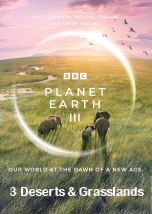
The third episode takes viewers on a riveting journey to some of the world's most extreme and breathtaking deserts and grasslands, where nature puts on its most dramatic show. It begins in the arid landscapes of Central Africa's Guelta d'Archei and the Namib Desert in Southwest Africa, places where water is scarce, and survival is a daily battle. The focus then shifts to the remarkable adaptability of creatures like ostriches, who brave the scorching heat and predators to raise their young and a handful of leopards who learned to hunt from trees on the African plains. In Australia, viewers witness the intricate courtship rituals of the spotted bowerbird, a species facing challenges due to climate change. The narrative then takes us to the vast Eurasian Steppe, home to the unique Saiga antelope, and to Brazil's Cerrado, a biodiverse grassland where the elusive maned wolf plays a crucial role in maintaining the ecosystem. The episode highlights not only the resilience and beauty of these creatures but also the fragility of their habitats, emphasizing the urgent need for conservation efforts.















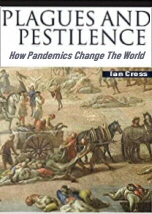






This documentary examines the causes of these epidemics - whether it be lack of hygiene, interaction with animals, overcrowding, or the growth of cities - and how people travelling helped to spread disease and promote pandemics. It also sheds a light on the impact these infectious diseases have had on politics and societal change. Over the centuries, scientists managed to develop treatments and medicines to help control or even eradicate infectious diseases. Virologists are facing that task again with the coronavirus, as the world frantically searches for ways to overcome a pandemic which threatens our modern way of life.