The tale of one of China's most famous dynasties begins with the amazing story of Hongwu, a peasant rebel who founded one of greatest eras in Chinese history. The film takes us to his great capital Nanjing, with its 21 miles of walls, each brick stamped with the name of the village that made it. Following the trail, we go to the Bao family village and see the villagers act a Ming murder story. Like many authoritarian states, the Ming were obsessive about architecture. We see the giant fortifications of the Great Wall, the ritual enclaves of the Forbidden City in Beijing and travel with bargeman Mr Hu down the Grand Canal, China's great artery of commerce right up to the present day. We then hear about Admiral Zheng He's voyages to Africa and the Gulf decades before Columbus, watch the construction of an ocean-going wooden boat 250ft long, and hitch a ride on a replica Ming junk in the South China Sea. As state prosperity grew, so did a rising middle class. Wood looks at Ming culture in Suzhou, the 'Venice of China'. Staying in a merchant's house, he discovers the silk, ceramic and lacquer-making industries, and visits one of the most beautiful gardens in the city. Then on to Macao and the arrival of Jesuit missionary Matteo Ricci, who hoped to convert China to Christianity. In the cathedral in Beijing, we learn more about these fateful exchanges with the west. Finally in Shaoxing, we visit the house of the 'Ming Proust' and at grassroots the Zhao family in Fujian where the film ends in an elegiac mood with the fall of the Ming in 1644.
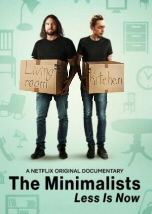
Longtime friends Joshua Fields Millburn and Ryan Nicodemus share how our lives can be better with less. The film's title was inspired by the popular maxim 'Less is more,' popularized by architect Ludwig Mies van der Rohe, who used this aphorism to describe his design aesthetic; his tactic was one of arranging the necessary components of a building to create an impression of extreme simplicity. The Minimalists have reworked this phrase to create a sense of urgency for today's consumer culture: now is the time for less.
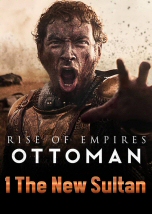
Ottoman Sultan Mehmed II wages an epic campaign to take the Byzantine capital of Constantinople. Twenty-three armies have tried to take the legendary city and all have failed. Out of the carnage, one ruler will emerge victorious and shapes the course of history for centuries. For one empire to rise, another must fall. The Ottomans, former Anatolian warlords and nomads who've built a burgeoning empire are the biggest threat to the Romans' 1100-year reign. The death of Ottoman Sultan Murad II in 1451 unleashes a chain of events that will soon bring the Ottomans and Romans to the brink of war. After claiming the Ottoman throne, Mehmed II sends an unmistakable signal to Byzantine emperor Constantine XI.
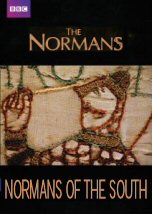
Professor Robert Bartlett explores the impact of the Normans on southern Europe and the Middle East. The Normans spread south in the 11th century, winning control of southern Italy and the island of Sicily. There they created their most prosperous kingdom, where Christianity and Islam co-existed in relative harmony and mutual tolerance. It became a great centre of medieval culture and learning. But events in the Middle East provoked the more aggressive side of the Norman character. In 1095, the Normans enthusiastically answered the Pope's call for holy war against Islam and joined the first crusade. They lay siege to Jerusalem and eventually helped win back the holy city from the muslims. This bloody conquest left a deep rift between Christianity and Islam which is still being felt to this day.
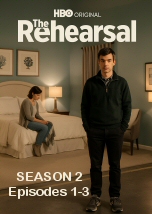
Nathan Fielder returns with a daring new season that elevates the concept of constructed reality to extraordinary extremes. This season dives even deeper into ethically charged scenarios, where real people rehearse life-altering choices inside meticulously engineered simulations. As the line between performance and authenticity dissolves, the series confronts our deepest questions about control, identity, and the limits of preparation. Disturbing, brilliant, and darkly hilarious—it’s an experience like no other. The opening three episodes raise the stakes immediately. A father struggles to reveal a devastating truth to his son—but the rehearsal begins to unravel his own sense of self. A woman prepares for a proposal that may never arrive, as emotional tension distorts her reality. And in a startling turn, Fielder inserts himself into the most personal rehearsal yet, facing consequences he may no longer be able to manage. With emotional weight, narrative twists, and biting satire, these episodes pull you in and don’t let go.
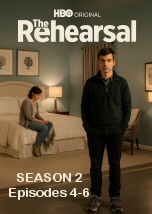
In the final arc of the season, Nathan Fielder pushes the boundaries of simulated reality to a disturbing new level. What begins as a controlled exercise in human rehearsal quickly unravels, as the participants lose sight of where the performance ends and real life begins. Nathan’s interventions grow increasingly invasive, blurring the lines between creator and subject, until the emotional weight of the experiment turns on him. With each scene, the series peels back another layer of reality, revealing unsettling truths about identity, manipulation, and control. By the final episode, the line between authenticity and artifice collapses—leaving viewers questioning everything they’ve witnessed.




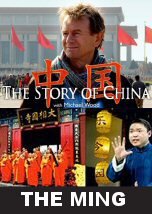




Like many authoritarian states, the Ming were obsessive about architecture. We see the giant fortifications of the Great Wall, the ritual enclaves of the Forbidden City in Beijing and travel with bargeman Mr Hu down the Grand Canal, China's great artery of commerce right up to the present day. We then hear about Admiral Zheng He's voyages to Africa and the Gulf decades before Columbus, watch the construction of an ocean-going wooden boat 250ft long, and hitch a ride on a replica Ming junk in the South China Sea.
As state prosperity grew, so did a rising middle class. Wood looks at Ming culture in Suzhou, the 'Venice of China'. Staying in a merchant's house, he discovers the silk, ceramic and lacquer-making industries, and visits one of the most beautiful gardens in the city. Then on to Macao and the arrival of Jesuit missionary Matteo Ricci, who hoped to convert China to Christianity. In the cathedral in Beijing, we learn more about these fateful exchanges with the west. Finally in Shaoxing, we visit the house of the 'Ming Proust' and at grassroots the Zhao family in Fujian where the film ends in an elegiac mood with the fall of the Ming in 1644.