According to recent science the Neanderthals are not the knuckle-dragging apemen of popular imagination. The first part of the film investigates what Neanderthals looked like and how they lived in their Ice Age world. They were faster, smarter, better looking - and much more like us than we ever thought. Our guide is Ella Al-Shamahi, who enlists the skills of Andy Serkis, the master of performance capture, and a group of experts to investigate deeply Neanderthals appearance. In the second part, Ella explores the fate of the Neanderthals - asking why they became extinct, and discovering how they live on inside of us today. About 2% of the DNA of most people is of Neanderthal origin - and it continues to affect us today. Neanderthals were a people who were supremely well adapted to their environment. But about 40,000 years ago they disappeared. Why?
Take a tour through the Art Gallery of the Galaxy and view what are considered the "crown jewels" of the heavens. Nebulas are mysterious clouds of gas that aren't classified as stars, planets, moons or asteroids. Astronomers use the most sophisticated techniques to view them since they are practically invisible to the naked eye. Nothing less than stunning, nebulas glow, reflect or obscure the galaxy's light with amazing swirls of color. Nebulas mark the regions where the nothingness of space first coalesces, where stars are born and where stars die. Cutting-edge computer graphics are used to bring the universe down to earth.
The Joker, Lex Luthor, Catwoman, Doomsday, Bane. What makes them so thrillingly watchable? So terribly wonderful? So extremely vital to our super heroes and their worlds? This feature-length documentary explores these questions across seven decades of DC Comics’ hallowed Rogues’ Gallery of infamous evildoers. Narrated by esteemed film villain Christopher Lee,examines the tortured psyches of your favorite animation, comic book, game, TV and feature film baddies – both from the past and into the future – against the backdrop of culture, history and society. Insights from famed creators and storytellers, including Zack Snyder, Guillermo del Toro, Jim Lee, Geoff Johns and Richard Donner, shine a fascinating light on those malevolent, charismatic characters who thrive in the dark.
The theory of Némesis, a star that orbits the Sun and causes catastrophic events is explored. Nemesis is a hypothetical red dwarf or brown dwarf, originally postulated in 1984 to be orbiting the Sun at a distance of about 95,000 AU (1.5 light-years) somewhat beyond the Oort cloud, to explain a perceived cycle of mass extinctions in the geological record, which seem to occur more often at intervals of 26 million years.
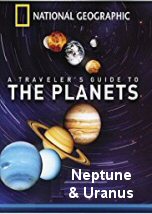
Uranus and Neptune: The 'ice giants'. Strap yourselves in for an incredible voyage to the most remote and intriguing planets of all. There has never been a better time to boldly go where no human has gone before to follow in the footsteps of our robot pioneers and visit the planets of the Solar System. Ever wanted to be an astronaut? Imagine heading into the Ice Zone, the frigid, dark realm beyond the orbit of Saturn. So far from the Sun, you wouldn't expect much to be happening here. From orbit, Uranus appears sedate and calm. But why is the planet on its side? And Neptune: The second blue planet, and the last world in our Solar System. But something is driving its wild winds. And what about its Great Dark Spot? this planet just changes its spots. Leopards don't, but Neptune does.
Inside the world-renowned physics laboratory Fermilab, a team of scientists are constructing an audacious experiment to hunt for a mysterious new ‘ghost’ neutrino. If they find it, this could transform our understanding of the nature and fabric of our universe. The problem is, these tiny particles are almost impossible to detect. Elsewhere, physicists conduct experiments in some of the most extreme environments on the planet: from deep mine shafts in South Dakota to vast ice fields at the South Pole. In these unlikely places supersized neutrino detectors hope to unlock the universe’s deepest secrets. Could neutrinos overturn the most precise theory of particle physics that humans have ever written down? Could they even be a link to a hidden realm of new particles that permeate the cosmos – so called dark matter? Scientists at Fermilab are edging towards the truth.











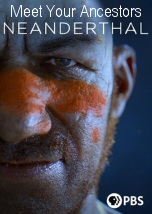






In the second part, Ella explores the fate of the Neanderthals - asking why they became extinct, and discovering how they live on inside of us today. About 2% of the DNA of most people is of Neanderthal origin - and it continues to affect us today. Neanderthals were a people who were supremely well adapted to their environment. But about 40,000 years ago they disappeared. Why?