In episodes 3 and 4, a seemingly simple ingredient becomes the invisible force that has shaped civilizations, fueled exploration, and quietly dictated the fate of empires. From ancient trade routes to modern industry, salt emerges not just as a seasoning, but as a powerful driver of human history and survival. At the same time, the story shifts to something far more familiar yet equally unsettling: the global dominance of a single type of banana. What appears to be abundance hides a fragile system built on uniformity, where one disease could wipe out a staple food relied upon by millions. As the journey unfolds, the narrative exposes the hidden cost of convenience and monoculture, revealing how the loss of biodiversity is not a distant ecological concern but an immediate threat to our food security and future. With striking connections between past and present, these episodes invite you to rethink what you eat, where it comes from, and how something as ordinary as salt or a banana could hold the key to understanding the balance—and imbalance—of our world.
In episodes 5 and 6, you can see how two everyday foods open the door to something far bigger: Memory, survival, tradition and the uneasy bond between humans and the natural world. One journey takes you to La Alberca, in Spain, where the pig is not just an animal but part of a living ritual charged with history, pride and contradiction. The other leads into the rice fields of Kerala, India, where every grain carries the weight of climate, heritage and the fight to preserve ways of life that are slipping away. These chapters do far more than show food on a plate: they reveal beauty, tension and the hidden forces that sustain entire cultures, making each scene feel rich, intimate and impossible to forget.
In the last two episodes of this series, you can see how coffee and corn open the door to stories far beyond what we consume every day. From the demanding journey of the coffee bean—shaped by history, craftsmanship and human effort—to the rise of corn from a sacred crop to a dominant force in global food systems, these episodes reveal how simple ingredients carry profound meaning. What begins as a look at familiar foods quickly becomes a deeper exploration of culture, industry and survival, uncovering the fragile balance behind what we eat and leaving a lasting sense of how much is at stake in the most ordinary things.
Drazen Petrovic and Vlade Divac were two friends who grew up together sharing the common bond of basketball. Together, they lifted the Yugoslavian National team to unimaginable heights. After conquering Europe, they both went to America where they became the first two foreign players to attain NBA stardom. But with the fall of the Soviet Union on Christmas Day 1991, Yugoslavia split up. A war broke out between Petrovic's Croatia and Divac's Serbia. Long buried ethnic tensions surfaced. And these two men, once brothers, were now on opposite sides of a deadly civil war. As Petrovic and Divac continued to face each other on the basketball courts of the NBA, no words passed between the two. Then, on the fateful night of June 7, 1993, Drazen Petrovic was killed in an auto accident. "Once Brothers" will tell the gripping tale of these two men, how circumstances beyond their control tore apart their friendship, and whether Divac has ever come to terms with the death of a friend before they had a chance to reconcile.
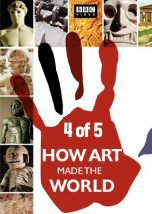
The power of visual storytelling is not a modern phenomenon, feature films today are using techniques developed way back in the distant past. For thousands of years, artists grappled with ways to bring their stories alive, to engage their audience. This is the story of how our ancient ancestors made the discoveries that have given films such a hold over our imaginations.
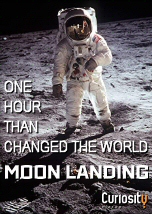
The Moon Landing celebrates the historic 50th anniversary of Apollo 11, in a fresh and distinctive style. This inspiring documentary subverts usual conventions by beginning with the momentous event, exploring the preceding dramatic sixty minutes in granular detail. Packed with surprising details which reveal a whole new perspective on the story of how humans landed on the moon, this documentary rewinds one hour before Neil Armstrong's famous footstep to reveal a whole untold story, hidden in the forensic moment-by-moment details driven by powerful footage from the time and authentic audio recordings from the capsule and the command module and mission control in Houston. In the last 60 minutes, the Apollo mission could fall apart. Without dazzling on-the-spot ingenuity, a 240,000-mile helpline to Houston, and almost unnatural abilities to remain calm under incredible pressure, the first step onto another world might not happen at all.











As the journey unfolds, the narrative exposes the hidden cost of convenience and monoculture, revealing how the loss of biodiversity is not a distant ecological concern but an immediate threat to our food security and future. With striking connections between past and present, these episodes invite you to rethink what you eat, where it comes from, and how something as ordinary as salt or a banana could hold the key to understanding the balance—and imbalance—of our world.