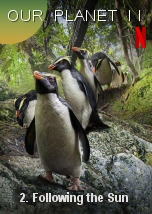
As summer spreads across our planet, honey bees toil, snow geese breed, tadpoles awaken and lions stalk wildebeest in search of lush grass. Our planet is solar-powered. But due to the Earth's tilt, it doesn't strike its surface evenly. This solar energy arrives in varying amounts at different times of the year. The huge increase that comes with summer also triggers countless migrations.
Across the world, rising demands for food, water and materials have pushed resources to the limit. Many parts of the world have major challenges over fresh water. A lot of soils have a lot of residual pesticides and herbicides. At the same time waste is piling higher. All this demands a new wave of innovation. The challenge is to make more of the things we need without the environmental cost.
Last year, just before Thanksgiving, I approached my dad, Leonard Nimoy, about the possibility of working together on a film about Mr. Spock. I had skimmed through some of the books on the making of Star Trek and felt there was so much more to explore about the creation and development of Mr. Spock. And the timing seemed right, as the 50th anniversary of Star Trek the original series was not that far away. Dad agreed that now was the right time, and that he was 100% committed to collaborating with me on this project. He also reminded me that we were (then) just days away from the 50th anniversary of the start of production on 'The Cage,' the original pilot for Star Trek in which dad first appeared as Mr. Spock.
One hundred years after Columbus' arrival in the Caribbean, Spanish Conquistadors and Priests, push into North America in search of gold and to spread Catholicism. With the arrival of the British in North America, the two colonial systems produce contrasting societies that come in conflict as Manifest Destiny pushes the U.S into the Mexican territories of the South West. As the Gold Rush floods California with settlers, complex and vital communities are overwhelmed. The elites, including Mariano Vallejo and Apolinaria Lorenzana lose their land. Mexicans and Mexican Americans are treated as second-class citizens, facing discrimination and racial violence. Resistance to this injustice appears in New Mexico as Las Gorras Blancas (The White Caps), burn Anglo ranches and cut through barbed wire to prevent Anglo encroachment. At the same time, New Mexicans manage to transform themselves through education, managing to preserve Hispano culture in New Mexico and their standing in the midst of an era of conquest and dispossession.
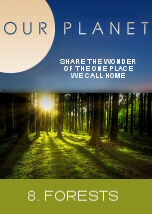
The last episode examines the fragile interdependence that exists between forests' wide variety of residents, including bald eagles, hunting dogs and Siberian tigers. Over half of all the world's trees, evergreen and deciduous, stand in great assemblies. For many of us, they are places of mystery and darkness. They are key to our climate, and home to countless unique species. The boreal forest contains 750 billion trees, and it stores over 40 percent of the world's carbon, making it a vital element in the fight against climate change. In the past, we have destroyed them without hesitation. Yet, forests do have an astonishing ability to recover. If we choose to give forests time and space, they could reclothe the earth with much of the rich and varied communities of animals and plants of which we have, so recently, robbed it. A future with more forests is key to the resilience of our planet.
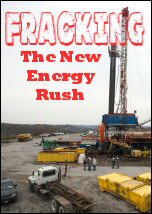
Iain Stewart investigates a new and controversial energy rush for the natural gas found deep underground. Getting it out of the ground involves hydraulic fracturing - or fracking. We travel to America to find to find out what it is, why it is a potential game changer and what we can learn from the US experience". Sometimes, this is right under the places people live in. He meets some of the people who have become rich from fracking as well as the communities worried about the risks. Director Jeff Wilkinson











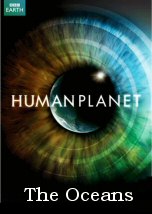




Our planet is solar-powered. But due to the Earth's tilt, it doesn't strike its surface evenly. This solar energy arrives in varying amounts at different times of the year. The huge increase that comes with summer also triggers countless migrations.