Lucy Worsley travels to Russia to tell the extraordinary story of the dynasty that ruled the country for more than three centuries. It's an epic tale that includes giant figures such as Peter the Great and Catherine the Great, the devastating struggle against Napoleon in 1812, and the political murders of Nicholas II and his family in 1918 which brought the dynasty to a brutal end. In this first episode, Lucy investigates the beginning of the Romanovs' 300-year reign in Russia. In 1613, when Russia was leaderless, 16-year-old Mikhail Romanov was plucked from obscurity and offered the crown of Russia. Lucy also charts the story of Peter the Great, the ruthless and ambitious tsar who was determined to modernise Russia at the end of the 17th century.
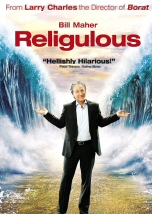
Political humorist and author Bill Maher travels around the globe interviewing people about God and religion. Known for his analytical skills, wit and commitment to never pulling a punch, Maher brings his characteristic honesty to an unusual spiritual journey. Muslims, Jews and Christians of many kinds pass before his jaundiced eye. He goes to a Creationist Museum in Kentucky, which shows that dinosaurs and people lived at the same time 5000 years ago. Maher speaks to a rabbi in league with Holocaust deniers. He talks to a Muslim musician who preaches hatred of Jews. Maher finds the unlikeliest of believers and, in a certain Vatican priest, he even finds an unlikely skeptic.
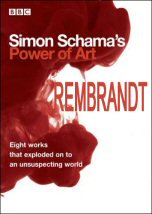
Rembrandt's success in his early years was as a portrait painter to the rich denizens of Amsterdam at a time when the city was being transformed from a small nondescript port into the economic capital of the world. His historical and religious paintings also gave him wide acclaim.
Despite being known as a portrait painter Rembrandt used his talent to push the boundaries of painting. This direction made him unpopular in the later years of his career as he shifted from being the talk of the town to becoming adrift in the Amsterdam art scene and criticised by his peers.
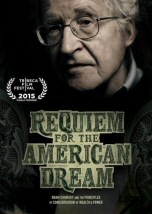
The definitive discourse with Noam Chomsky on the defining characteristic of our time - the deliberate concentration of wealth and power in the hands of a select few. Chomsky unpacks the principles that have brought us to the crossroads of historically unprecedented inequality - tracing a half century of policies designed to favour the most wealthy at the expense of the majority. "Requiem for the American Dream" is profoundly personal and thought provoking. Chomsky provides penetrating insight into what may well be the lasting legacy of our time - the death of the middle class, and swan song of functioning democracy. A potent reminder that power ultimately rests in the hands of the governed, "Requiem for the American Dream" is required viewing for all who maintain hope in a shared stake in the future.
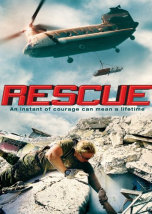
The film captures the dynamics and drama of disaster response, giving the audience an insiders view of a truly remarkable force for good in a world that is increasingly in need of it. From the individual civilian at risk for their life adrift at sea to a massive natural disaster threatening thousands of lives, there is a mechanism and resources in place to help save lives. Oddly, the instrument of hostility, the military, is even more often the instrument for saving civilian lives on both a smaller and larger scale. Disaster Response commands are in place to deploy appropriate resources to trouble spots at a moment's notice, often requiring split second decisions with many lives at stake.
Among the ranks of the Wehrmacht there was limited opposition to Hitler. Most officers initially felt enthusiastic about the prospect of war and were grateful to Hitler whose war-mongering had furthered their personal careers. Furthermore all soldiers had to make an oath of allegiance to the Führer and, up until the very end, there were many who felt unable to break this pledge. There were, however, some officers who opposed Hitler. For some it was on moral grounds and for others because they thought that his military tactics would lose them the war. There were plots against Hitler and attempted coups, the best known being the July bomb plot led by Claus von Stauffenberg. Some soldiers refused to bear arms and were shot, others deserted, others still carried out quiet acts of sabotage and subversion. By and large, however, the Wehrmacht carried out the orders Hitler issued, even if it involved perpetrating acts of atrocity.







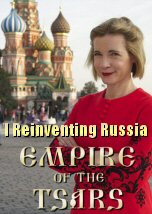





In this first episode, Lucy investigates the beginning of the Romanovs' 300-year reign in Russia. In 1613, when Russia was leaderless, 16-year-old Mikhail Romanov was plucked from obscurity and offered the crown of Russia. Lucy also charts the story of Peter the Great, the ruthless and ambitious tsar who was determined to modernise Russia at the end of the 17th century.