This widely praised by critics film was created with cooperation from Paul McCartney, Ringo Starr and the widows of John Lennon and George Harrison. Filmmaker Peter Jackson delves into invaluable footage archives to make a film that shows the truth about the Beatles recording together the album Let it Be, which had the working title of Get Back. The production employed film restoration techniques developed for Jackson's previous works on sixty hours of film footage and 150 hours of audio, spending four years in editing the series. The final cut covers 21 days in the studio with the Beatles and climaxes with the full 42-minute rooftop concert. In part I, the Beatles begin rehearsing at Twickenham Studios for what is at first meant to be a television special about the recording of their next album leading up to a live show at a location to be determined. During the sessions, Paul McCartney and George Harrison play some songs that would later appear on their respective solo albums. After seven days of rehearsals, Harrison abruptly leaves the group.
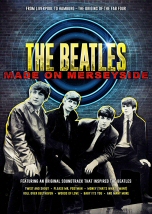
They defined music and popular culture like no other band ever will - but how did The Beatles make the journey from Merseyside teenagers to international pop stars in the 1960s? Made on Merseyside - The Beatles discovers how American rock 'n' roll and rhythm and blues dragged post-war Liverpool into one of the most vibrant music cities ever with the Mersey Sound. Featuring revealing interviews from those involved in the early years of The Beatles in Liverpool and Hamburg and unique archive, the incredible story of The Beatles' previous band formations and why it took so long for them to achieve success makes riveting viewing. From school bands, to colleges; Hamburg to The Cavern Club, The Beatles changed the world of pop music forever, but was Pete Best's sacking from the band and Ringo's replacement the final part of the jigsaw?
The rock revolution of the 1960s seen through the life and music of Jimi Hendrix. We see how he became the first, ultimately doomed, icon of rock. The Birth Of Rock also explores the influence of rhythm & blues on a generation of British musicians such as The Rolling Stones, Cream and The Who, and how the song-writing of Bob Dylan and studio developments of The Beatles transformed the possibilities and ambitions of rock.
This episode is centered around how science, in particular the work of Clair Patterson (voiced in animated sequences by Richard Gere[33]) in the middle of the 20th century, has been able to determine the age of the Earth. Tyson first describes how the Earth was formed from the coalescence of matter some millions of years after the formation of the Sun, and while scientists can examine the formations in rock stratum to date some geological events, these can only trace back millions of years. Instead, scientists have used the debris from meteor impacts, such as the Meteor Crater in Arizona, knowing that the material from such meteors coming from the asteroid belt would have been made at the same time as the Earth. Patterson also examined the levels of lead in the common environment and in deeper parts of the oceans and Antarctic ice, showing that lead had only been brought to the surface in recent times. He would discover that the higher levels of lead were from the use of tetraethyllead in leaded gasoline resulting in government-mandated restrictions on the use of lead.
Marcus du Sautoy uncovers the patterns that explain the shape of the world around us. Starting at the hexagonal columns of Northern Ireland's Giant's Causeway, he discovers the code underpinning the extraordinary order found in nature - from rock formations to honeycomb and from salt crystals to soap bubbles. Marcus also reveals the mysterious code that governs the apparent randomness of mountains, clouds and trees and explores how this not only could be the key to Jackson Pollock's success, but has also helped breathe life into hugely successful movie animations.
'The Coldest War': With the polar ice caps shrinking due to global warming, new trade routes are being exposed, along with billions of dollars' worth of natural-resource reserves. The five nations bordering the Arctic are readying themselves to fight for it. The problem is that there's one non-NATO country that already considers itself rightful owner of the region: Russia. With Vladimir Putin's recent military annexation of Crimea, there's a definite possibility its aggressions will boil over, returning the international community to precarious Cold War footing. We will head north to witness NATO forces participating in the largest polar military exercise in history. 'Heroin Warfare': Since the U.S. occupation of Afghanistan, heroin production in the region has skyrocketed, making the country the number-one producer by a large margin. Though Iran, Afghanistan's neighbor, is an ultraconservative country, Afghan heroin flowing across the border has actually caused Iran to have the worst heroin use problem in the world. Suroosh Alvi gets a rare look inside Iran to meet the suffering heroin addicts, and see how the country is coping with the illegal drug trade.










In part I, the Beatles begin rehearsing at Twickenham Studios for what is at first meant to be a television special about the recording of their next album leading up to a live show at a location to be determined. During the sessions, Paul McCartney and George Harrison play some songs that would later appear on their respective solo albums. After seven days of rehearsals, Harrison abruptly leaves the group.