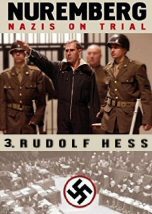
Episode three explores the mind of one of the most fanatical of all Nazis and the insight that gives into the psychology of dictatorship. Hess is brought to Nuremberg from the UK where he had flown 4 years earlier much to the bemusement of the British. Overy explains that they must have quickly realised he was not normal. In the intervening time Hess’s mental state has further deteriorated and when interviewed by Chief Interrogator Colonel John Amen proclaims amnesia. Chief Interpreter Richard Sonnenfeldt explains that they brought in Göring to confront Hess but that he too failed to make an impression. Psychopathologist Prof. Edgar Jones proposes Hess’s behaviour patterns may be his way of escaping reality as he is forced to face the extent of the atrocities and choose between accepting his part of the blame or forsaking his Führer. However, as history Professor Robert Gellatel explains it is difficult to construct a case against Hess as he was imprisoned in England when the worst of the atrocities were carried out so British Prosecutor Mervyn Griffith-Jones must argue a conspiracy charge linking the pre-1939 persecutions to the post-1939 atrocities and a crimes against peace charge proving the flight to Scotland was merely a ruse.
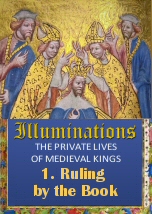
Dr Janina Ramirez unlocks the secrets of illuminated manuscripts that were custom-made for kings and explores the medieval world they reveal. 'Ruling by the Book.' Janina begins her journey with the first Anglo-Saxon rulers to create a united England, encountering books in the British Library's Royal manuscripts collection which are over a thousand years old and a royal family tree which is five metres long. Janina finds out about a king who had a reputation for chasing nuns and reads a book created as a wedding gift for a ten-year-old prince. She roams from Westminster Abbey to other ancient English spiritual sites such as Winchester, St Albans and Malmesbury, and sees for herself how animal skins can be transformed into the finest vellum.
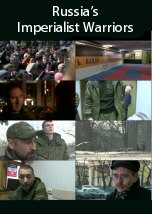
Tim Whewell is in St Petersburg to meet the self-styled Russian nationalists and patriots who are volunteering to join the fighting in eastern Ukraine. He joins a group of volunteers as they undertake military training, and travels to Ukraine to see how the volunteer force is fighting on the ground.
For generations, Monopoly has been America's favorite board game, a love letter to unbridled capitalism and — for better or worse — the impulses that make our free-market society tick. But behind the myth of the game's creation is an untold tale of theft, obsession and corporate double-dealing. Contrary to the folksy legend spread by Parker Brothers, Monopoly's secret history is a surprising saga that features a radical feminist, a community of Quakers in Atlantic City, America's greatest game company, and an unemployed Depression-era engineer. And the real story behind the creation of the game might never have come to light if it weren't for the determination of an economics professor and impassioned anti-monopolist.
Back one million years ago, South America was a continent of exotic oversized creatures found nowhere else on Earth - huge terror birds, giant ground sloths and spiky-tailed relatives of the armadillo as big as cars. The deadliest animal of them all was smilodon, the largest of the sabre-tooth cats, with canines like carving knives. The programme follows the fortunes of an individual male, Half Tooth. Ousted from his clan by a pair of rival males, his life suddenly becomes a struggle to survive in this alien world.
Award winning wildlife photographers Jonathan and Angela Scott have travelled the world, always returning home to Kenya. There they introduced the world to the big cats of the Maasai Mara and now they are part of its fight for survival.
























Psychopathologist Prof. Edgar Jones proposes Hess’s behaviour patterns may be his way of escaping reality as he is forced to face the extent of the atrocities and choose between accepting his part of the blame or forsaking his Führer. However, as history Professor Robert Gellatel explains it is difficult to construct a case against Hess as he was imprisoned in England when the worst of the atrocities were carried out so British Prosecutor Mervyn Griffith-Jones must argue a conspiracy charge linking the pre-1939 persecutions to the post-1939 atrocities and a crimes against peace charge proving the flight to Scotland was merely a ruse.