
Last Watched

" The Universe"  Sort by

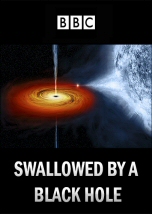
Swallowed by a Black Hole

   2013    Science
The black hole at the centre of the Milky Way is getting ready to feast. A gas cloud three times the size of our planet has strayed within the gravitational reach of our nearest supermassive black hole. And across the globe, telescopes are being trained on the heart of our Milky Way galaxy, some 27,000 light years from Earth, in the expectation of observing this unique cosmic spectacle. For cosmic detectives across the Earth, it is a unique opportunity. For the first time in the history of science, they hope to observe in action the awesome spectacle of a feeding supermassive black hole.
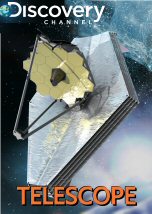
Telescope

   2016    Technology
A dynamic journey behind the scenes of the next step in the evolution of telescopes: NASA's James Webb Space Telescope. A new generation has been inspired to design and build this massive instrument, which is 100 times more powerful than the Hubble Space Telescope and will be a veritable time machine, capable of looking back on the origins of our universe and identifying signatures of potential life on planets far outside our solar system". With unprecedented access to the people and technologies that power its creation, including astrophysicists, engineers at Northrop Grumman, and personnel from NASA'S Goddard Space Flight Center and the Space Telescope Science Institute, the operations center for Hubble and Webb, Telescope spotlights the high-stakes mission of building this massive new scientific instrument. The film is a comprehensive look at the dynamic history of 400 years of telescopes starting with Galileo in 1609. The Webb is the next great telescope in society's ongoing mission to see farther into the universe and answer fundamental questions that have haunted mankind from the beginning of time. Directed by Oscar nominated filmmaker Nathaniel Kahn

The Alien Planets

   2007    Science
Have planet hunters finally found proof of other Earth like worlds? Astronomers have now discovered over two hundred alien worlds, beyond our solar system, that were unknown just a decade ago. Discover planets that rage with fiery hurricanes and bizarre planets covered by water so dense that it forms a kind of hot ice. Among these weird worlds, Earth actually seems like the oddball.
Series: The Universe

The Aliens

   2018    Technology
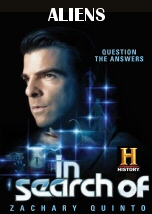
Quinto sets out to discover whether aliens exist and what evidence we have to prove it. He meets with several who say they have encountered extra-terrestrial life–a man who has been abducted by aliens several times since childhood; a man who claims to have extracted an alien implant; and a woman who shows Zachary what it feels like to be abducted into a spacecraft.
Zachary also meets with the world's leading scientists at SETI in Green Banks, West Virginia. There, utilizing the world's largest telescope, they show him the methods they employ to communicate with potential other-worldly visitors and what this research has taught them about a mysterious radio signal they picked up 3 billion light years away.
Series: In Search of

The Big Bang: Before the Dawn

   2021    Science
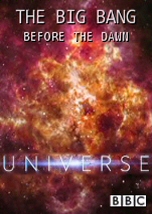
How did the universe come to be? Thanks to a series of discoveries, our most powerful space missions have unravelled 13.8 billion years of cosmic evolution and revealed the story of our universe from its birth all the way to the arrival of our nascent civilization. Our guide on this odyssey back to the dawn of time is light. Telescopes are time machines - by looking out into the distant universe, they open a window to the past. One telescope more than any other has helped us journey through the history of the universe: NASA’s Hubble Space Telescope. Remarkably, Hubble has even found one of the first galaxies ever to exist in the universe, which was born some 13.4 billion years ago. It's a discovery that hints at the beginnings of our own Milky Way. Vivid CGI brings this ancient galaxy to life, allowing us to witness for ourselves the first dawn. It was the beginning of a relationship between stars and planets that would, on a faraway world, lead to the origin of life - and ultimately to us.
Hubble’s incredible discoveries have allowed scientists to piece together much of our cosmic story, but it cannot take us back to the most important moment in history: the Big Bang. For decades, the moment the universe began was the subject of pure speculation, but by combining astronomy and cosmology, scientists have finally found a way to put their theories to the test and study the momentous events that took place during the Big Bang. They can do this because the European Space Agency’s Planck space telescope has seen the afterglow of the Big Bang itself – something we call the Cosmic Microwave Background. The unparalleled detail Planck gave us has helped confirm something remarkable: the Big Bang may not be the beginning. There was a time before the dawn – a place beyond anything we can comprehend. Professor Brian Cox transports us back to the fraction of a second before the Big Bang, when the seeds of our universe were planted.
Series: Universe

The Black Holes

   2001    Science
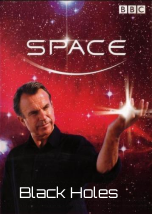
Sam Neill takes the viewer on journeys across the universe. In this episode, we made an exploration of the strange and terrifying world of the universe's ultimate monster - the black hole. Where are they - and is our planet in danger?
Series: Space
Planet Earth II

Planet Earth II

2016  Nature
Rome

Rome

  History
Ancient Rome

Ancient Rome

2006  History
Empire of the Tsars

Empire of the Tsars

2017  History
Untold

Untold

2021  Culture
Natural World

Natural World

2009  Nature