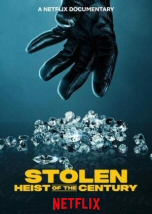
In early 2003, a team of Italian thieves orchestrated one of the boldest robberies in modern history: The disappearance of hundreds of millions in diamonds from the heavily guarded vaults of Antwerp. Through unprecedented access to archival footage, police records, and newly recorded interviews, the film reconstructs the intricate planning that allowed the so-called School of Turin to bypass what was believed to be impenetrable security. Told with a balance of suspense and reflection, it confronts investigators with the alleged mastermind, weaving a story of ambition, betrayal, and the mystery of gems never recovered. Beyond the spectacular details of the heist, it examines the toll on jewelers, insurers, and investigators, while questioning how ingenuity, greed, and betrayal blur the lines between admiration and crime.
Jessie Buckley narrates the extraordinary story of the first transatlantic communications cable. In 16 August 1858, a short message is telegraphed from County Kerry to Newfoundland, 3,000km away: ‘Europe and America are united by telegraph. Glory to God in the highest, on earth peace, good will towards men.’ The Morse code message is conducted along the new underwater transatlantic telegraph cable laid across the bed of the Atlantic Ocean. Sending the same message by ship would have taken at least ten days, but the transmission takes just hours and heralds the dawn of the modern communications age. The quest is driven by visionaries and pioneers. Among them are Cyrus Field, a wealthy businessman who, despite his immense success, ends his life in poverty; Samuel Morse, inventor of the telegraph and Morse code; Isambard Kingdom Brunel, the British engineer who pushes boundaries and budgets; and Belfast physicist Lord Kelvin, who calculates how to achieve what had hitherto been deemed impossible. Together, their ingenuity and relentless pursuit helps realise one of the great scientific accomplishments of their age for which Valentia, on Ireland’s remote western coast, is ground zero.
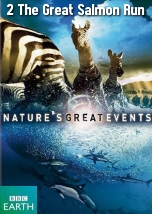
Every year grizzly bear families in North America depend for their survival on a spectacular natural event: the return of hundreds of millions of salmon from the Pacific Ocean to the mountain streams where they were born. The salmon travel thousands of miles to spawn and then die. The great run not only provides food for bears, but for killer whales, wolves, bald eagles, and even the forest itself. The question is: will the salmon return in time to keep hungry bears alive? A mother grizzly and her cubs emerge from their den high in snowy Alaskan mountains. Filming from the air the team capture a TV first, following the bears as they negotiate a near vertical slope on their journey to the coast where they await the return of the salmon. Meanwhile, the salmon are making their way to the to river mouths where they must swim upstream and against the current. The programme reveals how they tackle the torrents and leap over waterfalls, a feat equivalent to a human jumping over a house. Dozens of hungry bears eagerly await the salmon that make it up river. In another TV first, underwater cameras record the ingenuity and fancy footwork they use to collect dead salmon from the bottom of deep pools.
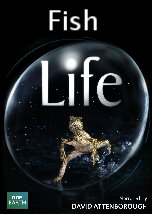
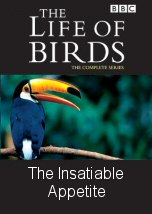
The next instalment focuses on dietary needs and how different species have evolved beaks to suit their individual requirements. The latter come in a multitude of forms. Blue tits and goldfinches have beaks akin to tweezers, with which to extract seeds, while the hawfinch's razor-like bill can deal with a cherry-stone. However, the crossbill is the only finch that can twist its mandibles in opposite directions. Jays store acorns for winter by burying them in the ground, whereas woodpeckers can keep up to 60,000 of them in one tree trunk. Sap is also desirable, and there are a variety of methods used to obtain it. The hoatzin is the only specialised leaf-eater, and accordingly has a digestive system more akin to that of cattle. Plants recruit birds to aid pollination, and offer nectar as a reward. Hummingbirds eat little else, and the sword-bill's beak is the longest of any bird in relation to its body. Insects are also highly prized, and Galapagos finches are shown to possess some ingenuity as they not only strip bark, but also use 'tools' to reach their prey. Crows are hailed as being among the most intelligent birds, and one is shown using a twig to spear a grub within a fallen log. The robin is an opportunist, and Sir Attenborough observes one seizing morsels as he digs a patch of earth. In South America, a cattle tyrant sits atop an obliging capybara and uses its vantage point to spot passing food that may be dislodged by its grazing partner.
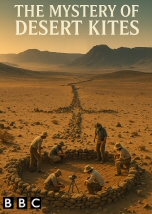
Across the Arabian desert stretch mysterious stone structures, vast kite -shaped formations that have baffled scientists for generations. An international team of archaeologists now sets out to uncover their secrets, combining cutting-edge technology with traditional fieldwork to piece together clues buried beneath the sands. Their discoveries suggest that these enigmatic megastructures may have been used for hunting, ritual, or social gatherings—evidence of a sophisticated culture that thrived thousands of years before the pyramids. From Saudi Arabia’s rugged plateaus to Jordan’s Black Desert, each site reveals astonishing traces of human ingenuity and survival. Sweeping aerial vistas and gripping on-site discoveries immerse us in a mystery that challenges established timelines and forces us to reconsider how early civilizations shaped their world.
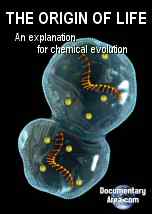
The film, marking our first own production, embarks on an awe-inspiring journey, shedding light on one of science's most profound questions: How did life emerge from the non-living? With a focus on the intricate mechanisms that may have transformed simple molecules into the first microorganisms, this film explores the concept of a chemical evolution that meticulously selected increasingly complex molecules, eventually leading to the genesis of life. By delving into the pivotal role of RNA, viewers are invited to contemplate the plausibility of life spontaneously arising from the basic elements of the universe. The documentary meticulously illustrates a potential pathway for the emergence of life, emphasizing the significance of ribozymes—RNA molecules with catalytic abilities—and their role in a prebiotic chemical evolution. The film posits a compelling argument for the natural processes that might have led to the formation of the first complex lipid vesicles, a critical step towards cellular life. By presenting a theory that bridges gaps in our understanding with scientific ingenuity, ‘The Origin of Life’ invites viewers on an intellectual adventure to discover the origins of existence itself. More information on https://www.javier-serrano.blog/Evolucion/el_origen_de_la_vida_parteI.php






Told with a balance of suspense and reflection, it confronts investigators with the alleged mastermind, weaving a story of ambition, betrayal, and the mystery of gems never recovered. Beyond the spectacular details of the heist, it examines the toll on jewelers, insurers, and investigators, while questioning how ingenuity, greed, and betrayal blur the lines between admiration and crime.