Timothy Treadwell's death was as sensational as his life: Having presumed he could live safely among the grizzly bears of the Alaskan wilderness, the outdoorsman and author (Among Grizzlies)--along with his partner, Amie Huguenard--was eventually killed and devoured by one of the very animals to whom he had devoted years of study. In telling this story, Werner Herzog relies considerably on Treadwell's own video footage, shot during his time in the wild. The famed German director takes Treadwell's story into unexpected emotional frontiers and startling landscapes of the mind. Treadwell is an intriguing, infuriating, perhaps even tragic figure. But Herzog himself is equally compelling, and this brilliant film is just one reason why.
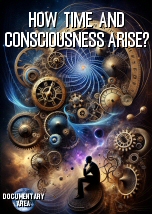
The documentary, an own production, immerses the viewer in a journey that blends science and philosophy, questioning the nature of time and unveiling a 4-dimensional universe, where space and time are integrated. We are invited to consider a universe in which past, present, and future coexist, suggesting that our linear perception of time might be more of a mental construction than a physical reality. The narrative progresses by exploring how quantum particles exist in states of probability until they are observed, at which point they acquire defined properties. Then, the provocative hypothesis is presented that observation also fixes the temporal dimension of the particles. The sensation of the flow of time and the distinction between past, present, and future are introduced as mental constructions, arising from the human brain's limited capacity to process the complexity of reality. It is then proposed that the mind, by observing itself, fixes itself in the temporal dimension, thus creating the illusion of the present. Finally, the impact of these theories on free will is discussed. This documentary challenges viewers to look beyond their everyday perceptions and consider the possibility that reality is much more complex and fascinating than our immediate experiences suggest. It is an invitation to explore the limits of science, philosophy, and the mind itself in search of answers to some of the deepest questions of existence.
More information on https://www.javier-serrano.blog/Ciencia/representacion_tridimensional_del_universo.php
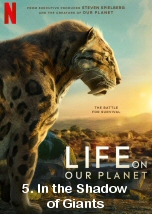
The fifth episode of the series is a fascinating exploration of the dinosaur era and its impact on the evolution of life on Earth. Through a journey of 200 million years, we discover how the breakup of Pangea and tectonic changes shaped biodiversity and created environments for dinosaurs and other forms of life to flourish. From the majestic Diplodocus to the formidable Allosaurus, the documentary brings to life the giants that once dominated our planet. Additionally, it shows the evolution of plants, highlighting the emergence of flowers and their symbiotic relationship with insects, such as termites and ants, whose social and evolutionary dynamics are explored in depth. The narrative also addresses the rise of mammals and their coexistence with dinosaurs, highlighting species such as the Numbat and their struggle for survival. With stunning imagery and a captivating narrative, this episode is an invitation to learn, marvel, and reflect on the extraordinary history of life on Earth.
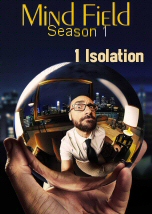
Your brain is like a hungry sponge. It's constantly absorbing information. It thrives when stimulated. Between smartphones and books, and movies, and friends and family, thousands of sensations are constantly going into our heads. But what if it all got cut off?. Imagine being confined to a 10-by-10-foot room in complete isolation. No timekeeping devices, no phones, no books, nothing to write on, no windows. Psychologists say that fewer than three days in a room like this can lead to brain damage. I will be staying in this room for three days. Michael explores the effects of isolation on the human mind by subjecting himself to a very interesting experiment.
In this powerful continuation of his personal journey, Chris Hemsworth takes viewers around the world to test the boundaries of body and mind. Confronted with chronic back pain and concerns about memory decline, he seeks answers not in laboratories but in life-changing challenges designed by scientists, health experts, and elite trainers. From the nerve-racking task of learning to play the drums—culminating in a breathtaking live performance with Ed Sheeran before 70,000 fans—to enduring brutal Special Forces–style trials in South Korea involving electrocution, pepper spray, and freezing waters, each step reveals the fragile balance between vulnerability and resilience. His raw honesty and willingness to fail make the journey as intimate as it is inspiring. On our website, viewers can enjoy the entire adventure with the three episodes combined into a single video, seamlessly following Hemsworth as he explores how to live better, face fear, and unlock the science of resilience and longevity.
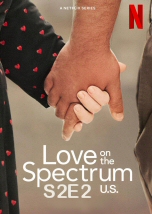
What makes this series particularly compelling is its ability to show that beyond differences, the longing for connection, love, and acceptance is universal. ‘Love on the Spectrum U.S.’ is not just a testament to the resilience and strength of its protagonists but also serves as a source of education and empathy for viewers. Watching it is more than an entertaining experience; it's an invitation to reflect on the nature of love and the importance of celebrating our differences, making it an indispensable addition to the current TV landscape. In the second episode, James goes out with an Instagram admirer. Connor has a pleasant reunion with a former coworker. First-timer Tanner gets dating advice from Jennifer.








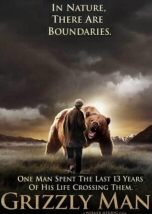





In telling this story, Werner Herzog relies considerably on Treadwell's own video footage, shot during his time in the wild. The famed German director takes Treadwell's story into unexpected emotional frontiers and startling landscapes of the mind. Treadwell is an intriguing, infuriating, perhaps even tragic figure. But Herzog himself is equally compelling, and this brilliant film is just one reason why.