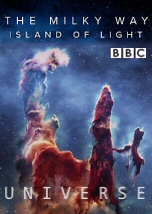
Professor Brian Cox continues his epic exploration of the cosmos by looking at the faint band of light that sweeps across the night sky - our own galaxy, the Milky Way. The Sun is just one of almost 400 billion stars that form this vast, majestic disk of light, our own home in the universe. Thanks to a cutting-edge space we’re finally able to reveal the Milky Way’s dramatic history and predict its cataclysmic future. Our galaxy started out a fraction of the size it is today, and Gaia telescope has revealed how it grew over the eons. Beautifully rendered VFX based on the very latest Gaia data has uncovered the remarkable story of our galaxy’s evolution. As our young galaxy encountered rival galaxies, it experienced a series of violent growth spurts and intense periods of cataclysmic change while battling to survive. Each time our galaxy feeds, a new era of star formation begins, fuelled by incoming torrents of fresh gas and energy. And there is another collision to come. Another, larger galaxy is coming our way. Andromeda is heading straight for us at a quarter of a million miles per hour. The Milky Way’s long-term fate is in the balance.
The magnificent ringed planet Saturn, along with its more than 80 moons, forms the most dynamic planetary system in our neighborhood. With underground oceans and protective magnetic fields, experts are exploring how this collective of satellites has the potential to rewrite the rules of the Solar System. The closer that we look, the more we see these extraordinary moons like worlds of their own -- so dynamic, so Earth-like. Almost a billion miles from the Sun, these icy worlds could be home for Life 2.0. The moons of Saturn offer possibly the best chance of finding extraterrestrial life in our solar system. With each new mission, we get closer to unraveling the mysteries of Saturn's moons.
Take a tour of the cosmic hot zones--black holes, galaxy mergers, gamma ray bursts and magnetars. Super black holes can literally lasso Earth out of the solar system. A clash between two galaxies can result in a ritual called galactic cannibalism. Magnetars are a cosmic magnetic force so strong it could wipe out data on every credit card.
The collision of two supermassive black holes is the most violent event that can occur in the universe; experts explore where a black hole's energy originates and what really happens when the two most powerful objects in the cosmos clash. It is a soul-chilling, mind-crushing amount of energy. Take your ringside seat to the ultimate fight of the universe. Get ready for the final of the cosmos heavyweight championship.
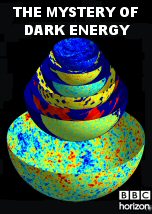
Dark energy - the mysterious force that is unexpectedly causing the universe's expansion to speed up. The effects of dark energy were discovered in 1998 but physicists still don't know what it is. Worse, its very existence calls into question Albert Einstein's general theory of relativity - the cornerstone of modern physics. The hunt for the identity of dark energy is on". Experiments on earth and in space generate data that might provide a clue, but there are also hopes that another Einstein might emerge - someone who can write a new theory explaining the mystery of the dark energy.
There's a killer lurking in our galaxy, a star ready to explode into a supernova. Seen from Earth, a supernova in the Milky Wave would have a terrible beauty. But for us, it could be fatal. In a few seconds, it can release as much energy as the sun will over its entire lifetime. It could be anywhere. It is nearly impossible to predict where and when the next supernova will happen. The hunt is on to find the next supernova before it finds us.




















Our galaxy started out a fraction of the size it is today, and Gaia telescope has revealed how it grew over the eons. Beautifully rendered VFX based on the very latest Gaia data has uncovered the remarkable story of our galaxy’s evolution. As our young galaxy encountered rival galaxies, it experienced a series of violent growth spurts and intense periods of cataclysmic change while battling to survive. Each time our galaxy feeds, a new era of star formation begins, fuelled by incoming torrents of fresh gas and energy. And there is another collision to come. Another, larger galaxy is coming our way. Andromeda is heading straight for us at a quarter of a million miles per hour. The Milky Way’s long-term fate is in the balance.