










Last Watched

"Astronomy"  Sort by

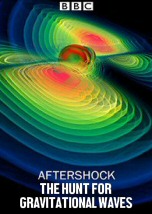
The Hunt for Gravitational Waves

   2015    Science
Travel to the South Pole to discover the inside story of the greatest scientific quest of our time. In March 2014, a team of astronomers stunned the scientific world when they announced that their BICEP2 telescope at the South Pole had possibly detected a signal of 'gravitational waves' from the early universe. This is the inside story of the hunt for gravitational waves from the beginning of time. How the BICEP2 team came close to making one of the greatest discoveries of the century – and what happened when it all began to unravel...
The Inner Planets: Mecury and Venus

   2007    Science
Scorched by their proximity to the sun, Mercury and Venus are hostile worlds; one gouged with craters from cosmic collisions and the other a vortex of sulphur, carbon dioxide and acid rain. Prime examples of planets gone awry, do they serve as a warning for ominous scenarios that might someday threaten Earth?
Series: The Universe

The Invisible Universe

   2018    Science
It is one of the most unnerving discoveries in space science - that most of the universe is missing. We live in a material world, so instinctively we know what normal matter is - the world around us, the planets, stars and interstellar dust. But scientists currently estimate that 95 per cent of everything in the universe is actually - one way or another - invisible.
Some of this is ordinary matter that we just can't easily see. But there's also stuff that's much more weird. For instance, there's a new kind of matter we think is out there, but whose very existence is still largely hypothetical - dark matter. And most mysteriously of all, scientists think there is an unknown form of energy pervading the universe that we know so little about, all it has so far is a name - dark energy. Embark on a tour of this invisible universe, and shows how its existence - or lack of it - will define the fate of the entire universe.
Series: The Sky at Night

The Lives of the Stars

   1980    Science
The simple act of making an apple pie is extrapolated into the atoms and subatomic particles (electrons, protons, and neutrons) necessary. Many of the ingredients necessary are formed of chemical elements formed in the life and deaths of stars (such as our own Sun), resulting in massive red giants and supernovae or collapsing into white dwarfs, neutron stars, pulsars, and even black holes. These produce all sorts of phenomena, such as radioactivity, cosmic rays, and even the curving of spacetime by gravity. Cosmos Update mentions the supernova SN 1987A and neutrino astronomy.
Series: Cosmos

The Milky Way

   2007    Science
We used to think that Earth was at the centre of the universe, but now we know we're not even at the centre of our own galaxy. Countless wonders exist between where earth is situated and the massive black hole at the galactic centre of our galaxy. Within the Milky Way can be found the debris of old, dying stars fuelling the birth of new stars and at the galactic centre hypervelocity stars get catapulted clear beyond the Milky Way's outer rim at unimaginable speeds. Come along for a guided tour of 100,000 light-year-wide family of stars and stellar phenomena we call The Milky Way.
Series: The Universe

The Milky Way: Island of Light

   2021    Science
Professor Brian Cox continues his epic exploration of the cosmos by looking at the faint band of light that sweeps across the night sky - our own galaxy, the Milky Way. The Sun is just one of almost 400 billion stars that form this vast, majestic disk of light, our own home in the universe. Thanks to a cutting-edge space we’re finally able to reveal the Milky Way’s dramatic history and predict its cataclysmic future.
Our galaxy started out a fraction of the size it is today, and Gaia telescope has revealed how it grew over the eons. Beautifully rendered VFX based on the very latest Gaia data has uncovered the remarkable story of our galaxy’s evolution. As our young galaxy encountered rival galaxies, it experienced a series of violent growth spurts and intense periods of cataclysmic change while battling to survive. Each time our galaxy feeds, a new era of star formation begins, fuelled by incoming torrents of fresh gas and energy. And there is another collision to come. Another, larger galaxy is coming our way. Andromeda is heading straight for us at a quarter of a million miles per hour. The Milky Way’s long-term fate is in the balance.
Series: Universe
Cooked

Cooked

2016  Culture
Five Came Back

Five Came Back

2017  Art
Earthflight

Earthflight

2012  Nature
Earth from Space

Earth from Space

2019  Nature
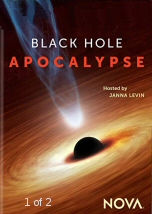
Black Hole Apocalypse

Black Hole Apocalypse

2018  Science
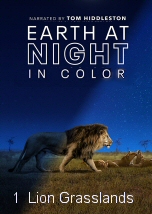
Earth at Night in Color

Earth at Night in Color

2020  Nature