Quinto sets out to discover whether aliens exist and what evidence we have to prove it. He meets with several who say they have encountered extra-terrestrial life–a man who has been abducted by aliens several times since childhood; a man who claims to have extracted an alien implant; and a woman who shows Zachary what it feels like to be abducted into a spacecraft. Zachary also meets with the world's leading scientists at SETI in Green Banks, West Virginia. There, utilizing the world's largest telescope, they show him the methods they employ to communicate with potential other-worldly visitors and what this research has taught them about a mysterious radio signal they picked up 3 billion light years away.
Marc-André Leclerc climbs alone, far from the limelight. On remote alpine faces, the free-spirited 23-year-old Canadian makes some of the boldest solo ascents in history. Yet, he draws scant attention. With no cameras, no rope, and no margin for error, Leclerc's approach is the essence of solo adventure. Nomadic and publicity shy, he doesn't own a phone or car, and is reluctant to let a film crew in on his pure vision of climbing. Filmmaker Peter Mortimer sets out to make a film about Leclerc but struggles to keep up with his elusive subject. Then, Leclerc embarks on a historic adventure in Patagonia that will redefine what is possible in solo climbing.
The images of brothers Tamerlan and Dzhokhar Tsarnaev are released to the public setting off a violent chain of events. Meanwhile, clues from their past tell a complicated story - how was the radicalization of the ethnically Chechen brothers and the existence of potential collaborators. The post-9/11 biases played a role in the investigation.
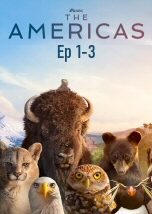
Across two continents and from one pole to the other, this spectacular wildlife series explores the wonders, mysteries and fragilities of the Americas. Narrated by Tom Hanks, it reveals extraordinary animal behaviour, dramatic struggles for survival and some of the planet’s most varied landscapes, from frozen wilderness and ancient forests to deserts, tropical seas and vast grasslands. Filmed over five years and more than 180 expeditions, the series combines intimate wildlife stories with remarkable natural spectacles, showing both the resilience of life and the delicate balance on which these ecosystems depend. In the first three episodes, the journey begins along the Atlantic Coast, where wild horses battle, bald eagles pursue ospreys, sharks move among great shoals of fish, raccoons adapt to city life and black bears search ancient forests for food. It then heads south into Mexico, where deserts meet the tropics and pygmy owls, hunting orcas, orchid bees and mysterious creatures in flooded caves reveal a hidden world of astonishing diversity. Finally, the Wild West brings an even harsher test of survival, as coyotes face a snowbound Yellowstone, hundreds of rattlesnakes emerge from their winter refuges, woodpeckers compete to store food, bison clash across the Great Plains and immense gatherings of cranes continue one of nature’s most ancient migrations.
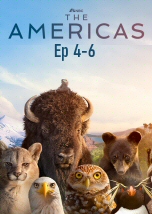
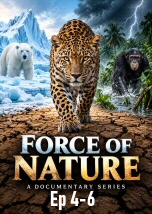
In the next three episodes the journey moves into three radically different worlds where survival depends on mastering water, ice and extreme seasonal change. In the Amazon, giant river otters hunt as a family, black caimans ambush newly hatched turtles, army ants sweep through the forest in highly organized raids and a harpy eagle guards a vulnerable chick high above the jungle floor. The rainforest emerges as a vast living system, shaped by rivers, floods, towering trees and countless species competing for food, space and the chance to raise their young. The story then heads north to Alaska and Canada, where polar bears wait for sea ice, wolves struggle through blizzards, hares evade lynx and immense caribou herds cross dangerous meltwater rivers during their ancient migrations. Finally, along the Gulf Coast, flooded swamps and subtropical wetlands become the stage for black bears, alligators, manatees, burrowing owls and one of America’s rarest wild cats, the ocelot. From the frozen Arctic to the humid marshes of Louisiana, Florida and Texas, these episodes reveal how animals adapt to landscapes that can change completely from one season to the next.
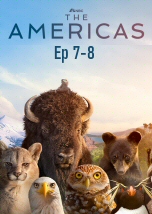
In episodes 7 and 8 of the series, the journey moves from the towering Andes to the tropical Caribbean, revealing two worlds where wildlife survives through astonishing specialization. In the Andes, spectacled bears guide their cubs down perilous cliffs, rare marvelous spatuletail hummingbirds fight and dance for mates, frogs endure freezing nights high beside retreating glaciers, torrent ducks master near-boiling mountain rivers, and thousands of flamingos gather at toxic high-altitude lakes in spectacular courtship displays. The Caribbean offers an entirely different struggle for survival. Sailfish coordinate high-speed attacks on sardine shoals, sperm whales dive into the deep around Dominica, millions of red crabs cross Cuba’s forests on their migration to the sea, and animals on isolated islands develop remarkable ways to exploit scarce resources. On Isla Jicarón, white-faced capuchins even learn to use stones as tools to crack nuts, showing how intelligence and adaptation can make the difference between survival and failure in paradise.
























Zachary also meets with the world's leading scientists at SETI in Green Banks, West Virginia. There, utilizing the world's largest telescope, they show him the methods they employ to communicate with potential other-worldly visitors and what this research has taught them about a mysterious radio signal they picked up 3 billion light years away.