This remarkable science-history series investigates the blistering pace of human endeavour in space exploration, computing, energy, resources, Earth science and our understanding of the evolution of life itself. Across the last 50 years, humans have set a blistering pace and scientific discovery. We've crossed the boundaries of our solar system, made machines that can learn harnessed the power of the sun and built life from scratch. It's a period like no other in history, where human endeavour is changing everything: this is The Great Acceleration. As we race toward the future, we must examine the journey. In the first episode, Dr Shalin Naik explores the ambitious space shuttle mission that began in the '70s plus the future colonization of Mars. Over the past 50 years, space has become central to everything, from communications to entertainment to climate modelling. And as private enterprise enters space exploration, our understanding of the universe will only continue to expand. We will know if we can survive on other objects - the moon, maybe Mars, maybe even some of the moons of Jupiter and Saturn. Deep space is the last and infinite frontier. That's what we do as human beings. We explore, we learn, we make discoveries, from the moment we're born to the moment we die.
Orbits are the dynamics that drive the universe. From the smallest asteroid to the largest super-cluster, everything in the universe is in orbit. We owe our very existence to the stability of earth's orbit — it gave us life and keeps us safe. But we are the freaks. Everywhere else we look we find orbits are chaotic, unstable, and violent. Beyond our solar system we find planets that are blow-torched, stars that eat each other, and black holes that destroy everything in their path. Yet on the very largest scale, orbits are also a creative force. clashing galaxies give birth to new stars and new worlds. on the galactic scale orbits even construct the fabric of the universe itself.
Professor Brian Cox takes on the story of the force that sculpts the entire universe - gravity. Gravity seems so familiar, and yet it is one of the strangest and most surprising forces in the universe. Starting with a zero gravity flight, Brian experiences the feeling of total weightlessness, and considers how much of an effect gravity has had on the world around us. But gravity also acts over much greater distances. It is the great orchestrator of the cosmos. It dictates our orbit around the sun, our relationship with the other planets in our solar system, and even the way in which our solar system orbits our galaxy. Yet the paradox of gravity is that it is actually a relatively weak force. Brian takes a face distorting trip in a centrifuge to explain how it is that gravity achieves its great power, before looking at the role it plays in one of the most extraordinary phenomena in the universe - a neutron star. Although it is just a few kilometres across, it is so dense that its gravity is 100, 000 million times as strong as on Earth. Over the centuries our quest to understand gravity has allowed us to understand some of the true wonders of the universe, and Brian reveals that it is scientists' continuing search for answers that inspires his own sense of wonder.
Stephen Fry embarks on a fascinating journey to discover the stories behind some of the world’s most fantastic beasts. Discover the magic and mystery behind humanity's timeless fascination with mythical creatures in this captivating documentary. Journey through history to uncover the origins of legendary beasts that have captured our imaginations for centuries. Why do these fantastical beings still enchant us in today's world of science and technology? This film reveals the hidden truths behind the myths, showing how real animals often inspired these legendary tales. Embark on an exhilarating adventure to uncover the secrets of beloved mythical creatures, from dragons and unicorns to the phoenix and the elusive Loch Ness Monster. Explore the labyrinthine corridors of the Natural History Museum, meet experts who shed light on ancient legends, and see how cutting-edge technology brings these creatures to life on the big screen. This documentary offers a mesmerizing blend of history, science, and fantasy, showing that the natural world holds wonders that rival even the most magical beasts. Don't miss this enchanting exploration that will leave you questioning what might still be out there, waiting to be discovered.
The Pythagorean Theorem is simple: x2 + y2 = z2. In this form, the equation can be solved. But what if the 2 is replaced with any positive integer greater than 2? Would the equation still be solvable? More than 300 years ago, amateur mathematician Pierre de Fermat said no, and claimed he could prove it. Unfortunately, the book margin in which he left this prophecy was too small to contain his thinking. Fermat's Last Theorem has since baffled mathematicians armed with the most advanced calculators and computers. Andrew Wiles methodically worked in near isolation to determine the proof for this seemingly simple equation.




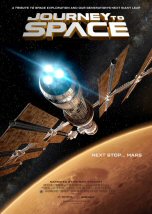







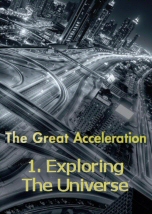






In the first episode, Dr Shalin Naik explores the ambitious space shuttle mission that began in the '70s plus the future colonization of Mars. Over the past 50 years, space has become central to everything, from communications to entertainment to climate modelling. And as private enterprise enters space exploration, our understanding of the universe will only continue to expand. We will know if we can survive on other objects - the moon, maybe Mars, maybe even some of the moons of Jupiter and Saturn. Deep space is the last and infinite frontier. That's what we do as human beings. We explore, we learn, we make discoveries, from the moment we're born to the moment we die.