In the final two episodes, the focus shifts to forests and humanity’s defining role in the planet’s future. Ancient woodlands emerge as powerful engines of climate balance, storing vast amounts of carbon while sustaining intricate webs of life. Through striking visuals and frontline science, the documentary reveals how the health of the world’s forests is inseparable from the stability of Earth’s climate—and how their decline accelerates global risk. The story then turns inward, asking what responsibility humans bear in shaping what comes next. From indigenous stewardship to bold restoration projects, these episodes explore how human choices can either deepen the crisis or unlock nature’s capacity to heal. It’s a compelling conclusion that reframes our relationship with the natural world, showing that the future of nature is, ultimately, the future of humanity itself.
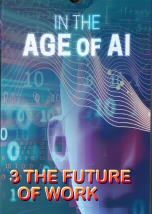
A.I. can be used in many ways that are very beneficial for society. But the current use of A.I. isn't necessarily aligned with the goals of building a better society, unfortunately. But, but we could change that. A.I. will be viewed as an age of enlightenment. Our children and their children will see A.I. as serendipity, that A.I. is here to liberate us from having to do routine jobs, and push us to do what we love, and push us to think what it means to be human. But what if humans mishandle this new power?
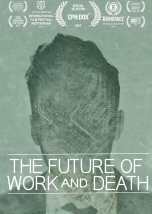
The film explores the growth of exponential technology and where it is taking us. It focuses on how future technology could significantly change the two inevitable features of the human experience; punching the clock and fading away. 'The Future of Work and Death' explores how advanced automation, AI and technological singularity could be achievable in the next 30 years. How job obsolescence and technological unemployment could consequently occur and how digital immortality can occur may not be a thing of science fiction. But what are the socio-political repercussions of these innovations and are we ready for them? Does working less mean living more and is ending ageing incumbent on us? Worldwide experts in the fields of futurology, anthropology, neuroscience and philosophy share their thoughts on these future advancements.
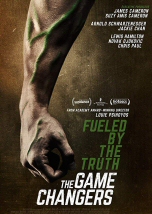
The film is produced by James Cameron, Arnold Schwarzenegger and Jackie Chan and documents the explosive rise of plant-based eating in professional sports, mixing real-time, groundbreaking science with cinematic stories of struggle and triumph. The film features some of the strongest, fastest and toughest athletes on the planet - and it's backed by them too - with additional EPs including Formula One champion Lewis Hamilton, top-ranked tennis player Novak Djokovic, and nine-time NBA All-Star Chris Paul. Follow the story of James Wilks - elite Special Forces trainer and winner of The Ultimate Fighter - as he travels the world on a quest for the truth about meat, protein, and strength. Showcasing elite athletes, special ops soldiers, and visionary scientists. Wilks' journey exposes outdated myths about food that not only affect human performance, but the health of the entire global population.
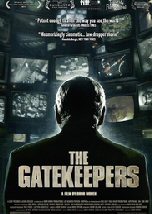
(Click CC for subtitles) Charged with overseeing Israel's war on terror-both Palestinian and Jewish- the head of the Shin Bet, Israel's secret service is present at the crossroad of every decision made. For the first time ever six former heads of the agency agreed to share their insights and reflect publicly on their actions and decisions. The Gatekeepers offers an exclusive account of the sum of their success and failures. It validates the reasons that each man individually and the six as a group came to reconsider their hard-line positions and advocate a conciliatory approach toward their enemies based on a two-state solution.
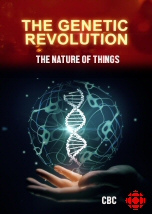
Trailblazing scientists are making ground-breaking discoveries in the rapidly evolving world of genetic engineering. Technologies like CRISPR are making it possible to quickly and cheaply change the DNA of all living things, including humans. Today, genes can be edited almost as easily as words on a computer screen. This new ability to alter our DNA holds the promise of curing disease , saving threatened species, solving the problem of world hunger and maybe even obtaining human perfection. But will the promise be fulfilled and at what cost? The ability to gain control of our DNA is ground-breaking and revolutionary but there are varying opinions among scientists as to how the technology should be used responsibly. This documentary follows the science as it progresses at a breakneck speed.



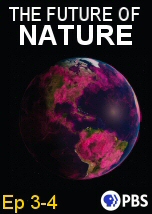





The story then turns inward, asking what responsibility humans bear in shaping what comes next. From indigenous stewardship to bold restoration projects, these episodes explore how human choices can either deepen the crisis or unlock nature’s capacity to heal. It’s a compelling conclusion that reframes our relationship with the natural world, showing that the future of nature is, ultimately, the future of humanity itself.