








Last Watched

"Lion"  Sort by

Penguin Shores

   2005    Nature
A dramatic journey along the coasts of South America, from the Falklands to the tropical Galapagos. The cold currents create rich fisheries, and support such diverse marine life as dolphins, killer whales, sea lions and albatross. But the most biquitous creatures are the penguins, which inhabit surprising locations - lush forest, arid desert and even equatorial areas.
Series: Wild South America
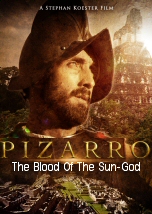
Pizarro: The Blood Of The Sun-God

   2017    History    HD
In 1532, Francisco de Pizarro led fewer than two hundred men into the heart of the Inca Empire and brought a civilization of millions to its knees. What drove this man—from humble beginnings in Spain—to defy impossible odds and confront Atahualpa’s army of 30,000 warriors? Through striking reenactments and expert insight, the film explores how faith, greed, and unyielding ambition collided in one of history’s most shocking encounters, forever changing the fate of two worlds.
Beyond the conquest, it delves into the man himself—visionary and tyrant, believer and betrayer—revealing how his thirst for glory became a symbol of both human courage and moral ruin. Set against the breathtaking landscapes of the Andes, this journey exposes the hidden cost of empire: the blood spilled, the cultures erased, and the myths that still echo through the ruins of Cuzco.

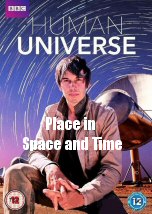
Place in Space and Time

   2014    Science
On a trip to the fortified Moroccan village of Ait-Ben-Haddou in the Atlas Mountains, Professor Brian Cox reveals how by watching the stars' motion across the night sky, it is quite natural for man to think he is at the centre of everything. That view was held for many ages, but innate human curiosity has eventually led to an understanding of mankind's true place in space and time, and an appreciation that Earth is not a focal point but a mere particle of rock in a possibly infinite expanse of space, 13.8 billion years from the beginning of the universe.
Series: Human Universe

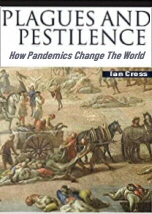
Plagues and Pestilence

   2020    Medicine
COVID-19 is far from the first pandemic to wreak havoc in the world. A long line of infectious diseases have devastated and in some cases destroyed entire societies. Almost all of them started in animals and made the jump to humans. The Black Death spread across Europe and Asia in the 14th century leaving millions dead in its wake. Between the 15th and 18th centuries, European colonists brought smallpox to the Americas, the Pacific region and to Australia. In Europe, the 17th century saw a series of major epidemics. And at the end of the First World War, more people died of the Spanish flu than on the battlefield.
This documentary examines the causes of these epidemics - whether it be lack of hygiene, interaction with animals, overcrowding, or the growth of cities - and how people travelling helped to spread disease and promote pandemics. It also sheds a light on the impact these infectious diseases have had on politics and societal change. Over the centuries, scientists managed to develop treatments and medicines to help control or even eradicate infectious diseases. Virologists are facing that task again with the coronavirus, as the world frantically searches for ways to overcome a pandemic which threatens our modern way of life.

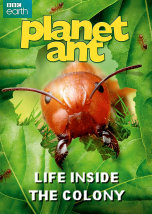
Planet Ant Life inside the Colony

   2013    Nature
Ant colonies are one of the wonders of nature - complex, organised and mysterious. This programme reveals the secret, underground world of the ant colony in a way that's never been seen before. At its heart is a massive, full-scale ant nest, specially designed and built to allow cameras to see its inner workings. The nest is a new home for a million-strong colony of leafcutter ants from Trinidad. For a month, entomologist Dr George McGavin and leafcutter expert Professor Adam Hart capture every aspect of the life of the colony, using time-lapse cameras, microscopes, microphones and radio tracking technology.

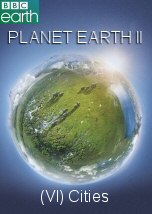
Planet Earth II Cities

   2016    Nature    HD
Cities are growing at a faster rate than any other habitat on Earth. They may seem an unlikely place for animals to thrive, but they can be a world of surprising opportunity. Leopards prowl the streets of Mumbai, peregrine falcons hunt amongst New York's skyscrapers, and a million starlings perform spectacular aerial dances over Rome. In Jodhpur, langurs are revered as religious deities and in Harar, locals live in harmony with wild hyenas. Many animals, however, struggle to cope in the urban jungle. As the architects of this environment, can humans choose to build cities that are homes for both them and wildlife?
Series: Planet Earth II
Zeitgeist

Zeitgeist

2007  Culture
Cosmos

Cosmos

1980  Science
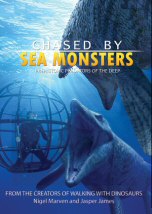
Chased by Sea Monsters

Chased by Sea Monsters

2003  Nature
The Last Dance

The Last Dance

2020  Culture
History of the Eagles

History of the Eagles

2013  History
Racism: A History

Racism: A History

2007  Culture