




Last Watched

"Bat"  Sort by

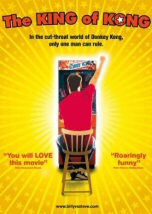
The King of Kong

       Culture
Obsession and the pursuit of excellence push diehard gamers to break World Records on classic arcade games like Q*bert, Joust, Pac-Man, and Donkey Kong. The film follows a middle school science teacher as he battles a hot sauce mogul for the Guinness World Record on the arcade classic Donkey Kong.
The Last Dance Episode X

   2020    Culture
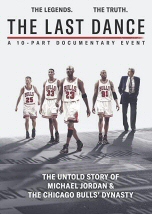
In the 1998 NBA finals, the defending NBA champion Chicago Bulls played against Utah Jazz in a repeat of the previous year's Final. With Utah leading 86-85 and few seconds remaining of the definitive match, John Stockton passed the ball to Karl Malone but Jordan stole the ball away and dribbled down the court to hit a 20-footer to end the finals.
Battered and exhausted, the Bulls conclude their 'Last Dance' with a sixth championship. Michael, Phil Jackson and others reflect on the end of the dynasty.
Series: The Last Dance

The Librarians

   2025    Culture
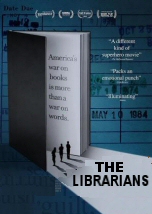
Across the United States, a growing wave of censorship is turning libraries into battlegrounds. This gripping documentary follows a group of librarians in Texas, Florida, and beyond who refuse to stay silent as book bans spread through schools and communities. What begins as a local fight over reading lists becomes a powerful defense of free thought, truth, and democracy itself. Through emotional testimonies and scenes of quiet defiance, the film reveals how the right to read is being tested like never before.
As pressure mounts from political groups and extremist movements, these librarians stand their ground—facing threats, intimidation, and public outrage to protect the stories that shape us all. Their courage transforms a profession built on order and access into a movement for freedom, reminding us that knowledge, once lost, is the hardest thing to reclaim.

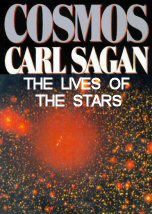
The Lives of the Stars

   1980    Science
The simple act of making an apple pie is extrapolated into the atoms and subatomic particles (electrons, protons, and neutrons) necessary. Many of the ingredients necessary are formed of chemical elements formed in the life and deaths of stars (such as our own Sun), resulting in massive red giants and supernovae or collapsing into white dwarfs, neutron stars, pulsars, and even black holes. These produce all sorts of phenomena, such as radioactivity, cosmic rays, and even the curving of spacetime by gravity. Cosmos Update mentions the supernova SN 1987A and neutrino astronomy.
Series: Cosmos

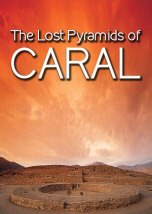
The Lost Pyramids of Caral

   2002    History
The magnificent ancient city of pyramids at Caral in Peru is a thousand years older than the earliest known civilisation in the Americas and, at 2,627 BC, is as old as the pyramids of Egypt. Many now believe it is the fabled missing link of archaeology - a 'mother city'. If so, then these extraordinary findings could finally answer one of the great questions of archaeology: why did humans become civilised?" For over a century, archaeologists have been searching for what they call a mother city. Civilisation began in only six areas of the world: Egypt, Mesopotamia, India, China, Peru and Central America. In each of these regions people moved from small family units to build cities of thousands of people. They crossed the historic divide, one of the great moments in human history. Why? To find the answer archaeologists needed to find a mother city - the first stage of city-building. Caral, is so much older than anything else in South America that it is a clear candidate to be the mother city. It also is in pristine condition. Nothing has been built on it at all. Instead laid out before the world is an elaborate complex of pyramids, temples, an amphitheatre and ordinary houses. Scientists developed a number of theories. Some said it was because of the development of trade, others that it was irrigation. Some even today believe it was all because of aliens. Gradually an uneasy consensus emerged. The key force common to all civilisations was warfare. Crucially, there is not the faintest trace of warfare at Caral; no battlements, no weapons, no mutilated bodies. Instead, Ruth's findings suggest it was a gentle society, built on commerce and pleasure. In one of the pyramids they uncovered beautiful flutes made from condor and pelican bones. They have also found evidence of a culture that took drugs and perhaps aphrodisiacs. Most stunning of all, they have found the remains of a baby, lovingly wrapped and buried with a precious necklace made of stone beads.

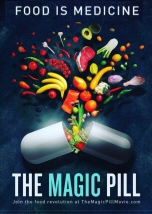
The Magic Pill

   2017    Medicine
The Magic Pill follows doctors, patients, scientists, chefs, farmers and journalists from around the globe who are combating illness through a paradigm shift in eating. According to its followers, this simple change - embracing fat as our main fuel - is showing profound promise in improving the health of people, animals and the planet. The film is highly controversial and was criticized by some medical associations.
The Paleo diet proposes that humans were genetically adapted to eating specifically those foods that were readily available to them in their local environments. Advocates of the diet claim many chronic diseases and degenerative conditions evident in modern Western populations have arisen because of a mismatch between Stone Age genes and modern lifestyles. The Paleo diet typically includes vegetables, fruits, nuts, roots, and meat and excludes foods such as dairy products, grains, sugar, legumes, processed vegetable oils, salt, alcohol or coffee.
Walking with Cavemen

Walking with Cavemen

2003  History
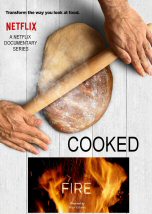
Cooked

Cooked

2016  Culture
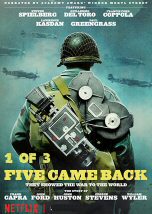
Five Came Back

Five Came Back

2017  Art
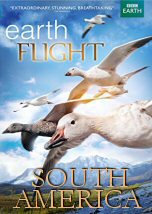
Earthflight

Earthflight

2012  Nature
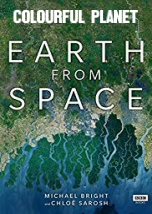
Earth from Space

Earth from Space

2019  Nature
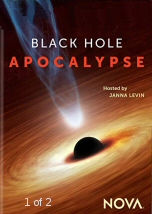
Black Hole Apocalypse

Black Hole Apocalypse

2018  Science
Earth at Night in Color

Earth at Night in Color

2020  Nature