










Last Watched

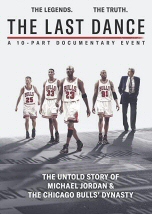
The Last Dance Episode VII

   2020    Culture
Crushed by the death of his father, a mentally exhausted Michael Jordan retires in 1993 - to play baseball. The Chicago Bulls move on with Scottie Pippen in the lead role. In 1998, Jerry Krause confirms this will be Phil Jackson's last year as the coach of the Bulls.
Series: The Last Dance

The Last Dance Episode VIII

   2020    Culture
Michael Jordan's return in 1995 energizes the Chicago Bulls, the city and the NBA, and the playoff loss the previous season fuels him to work harder than ever to get back on top. In 1998, Phil Jackson was given one final season with his legendary squad and thus the last dance of the 90s.
Series: The Last Dance

The Last Dance Episode X

   2020    Culture
In the 1998 NBA finals, the defending NBA champion Chicago Bulls played against Utah Jazz in a repeat of the previous year's Final. With Utah leading 86-85 and few seconds remaining of the definitive match, John Stockton passed the ball to Karl Malone but Jordan stole the ball away and dribbled down the court to hit a 20-footer to end the finals.
Battered and exhausted, the Bulls conclude their 'Last Dance' with a sixth championship. Michael, Phil Jackson and others reflect on the end of the dynasty.
Series: The Last Dance

The Last Days

       History
In late 1944, even as they faced imminent defeat, the Nazis expended enormous resources to kill or deport over 425,000 Jews during the 'cleansing' of Hungary. This Oscar-winning documentary, executive produced by Steven Spielberg, focuses on the plight of five Hungarian Jews who survived imprisonment in Auschwitz. Though these survivors recount the horrors they witnessed and endured as a result of the Nazis' 'Final Solution,' their individual triumphs are a testament to hope and humanity.

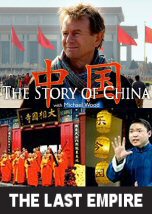
The Last Empire

   2016    History
China's last empire, the Qing, lasted from 1644 to 1912. It began in violence and war as the Manchus swept down from the north, but invaders became emperors, with three generations of one family ruling the country. Among them, Michael Wood argues, was China's greatest emperor - Kangxi. Under the Qing, China doubled in size to include Xinjiang in the far west, as well as Mongolia and Tibet, creating the essential shape of China today. The new dynasty tolerated a diversity of cultures and religions, including Islam. In Kaifeng, Michael visits a women's mosque with a female imam, a delightful scene that ends with laughter and selfies! The Qing also undertook huge cultural enterprises. At a traditional printing house where the wood blocks are hand-carved, we see how the Complete Tang Poems were reproduced - all 48,000 of them. We travel through the wintry countryside to a remote village where a hardy audience watch open-air opera in the snow and visit a painter's studio, and 'storytelling' houses in Yangzhou. In the 18th century, China was arguably the greatest economy in the world, and we get a fabulous sense of the rich culture that came with prosperity. But then came the clash with the British, in the first Opium War, when a British expedition destroyed the Qing navy and extracted territory and trading rights. We leave with a glimpse of the future. 'Every dynasty has risen and declined,' says Michael, 'and has needed new life to regenerate, and this time the catalyst was the British.' Among the ports China ceded was an almost uninhabited island, Hong Kong, one of today's greatest financial centres, and Shanghai, a small town then but now one of the greatest cities in world.
Series: The Story of China

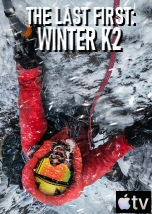
The Last First: Winter K2

   2026    Culture    HD
Click CC for subtitles. In the winter of 2021, K2 remained the last great prize of high-altitude mountaineering: the only 8,000-meter peak never climbed in winter. Icelandic climber John Snorri Sigurjónsson and the legendary Pakistani father-and-son team Ali and Sajid Sadpara arrive determined to claim that historic first, facing temperatures far below zero, hurricane-force winds, exhaustion and a mountain already infamous for killing even the strongest climbers. But the expedition soon becomes more than a battle against nature. Commercial teams, influencer climbers, professional film crews and a fiercely ambitious all-Nepalese team converge on the same slopes, turning the ascent into a tense contest of strategy, reputation and national pride.
As the climb unfolds, the documentary exposes the changing culture of modern mountaineering: the pressure of social media, the commercialization of the world’s highest peaks, the unequal recognition historically given to Western climbers, and the determination of Nepali and Pakistani mountaineers to claim achievements in their own names. The race for the summit culminates in triumph for one team and tragedy for others, leaving five climbers dead and forcing survivors to confront questions of ambition, responsibility and what a “first” is really worth. Built from extraordinary footage shot during the expedition and testimony from those who were there, the film transforms one of mountaineering’s last untouched records into a gripping story about ego, class, nationalism, family and the deadly cost of pushing beyond human limits.